Mosquito complaints across Alicante have fallen sharply this summer, with high temperatures, dry conditions and intensified pest-control treatments all helping to reduce numbers.
By mid-August last year, the Mancomunidad de l’Alacantí, the regional authority responsible for mosquito control, had received 153 reports. During the same period this year, it recorded 117—a reduction of 24%.
Officials said the decline reflected the success of the summer maintenance campaign and scheduled treatments. However, they warned that the mosquito season was not over and continued vigilance would be necessary.
Urbanova has been a notable exception. Residents and businesses in the coastal neighbourhood, south of Alicante city, reported a significant increase in mosquitoes during July. The area’s wetland characteristics create favourable breeding conditions, with insects particularly active during the late afternoon and evening.
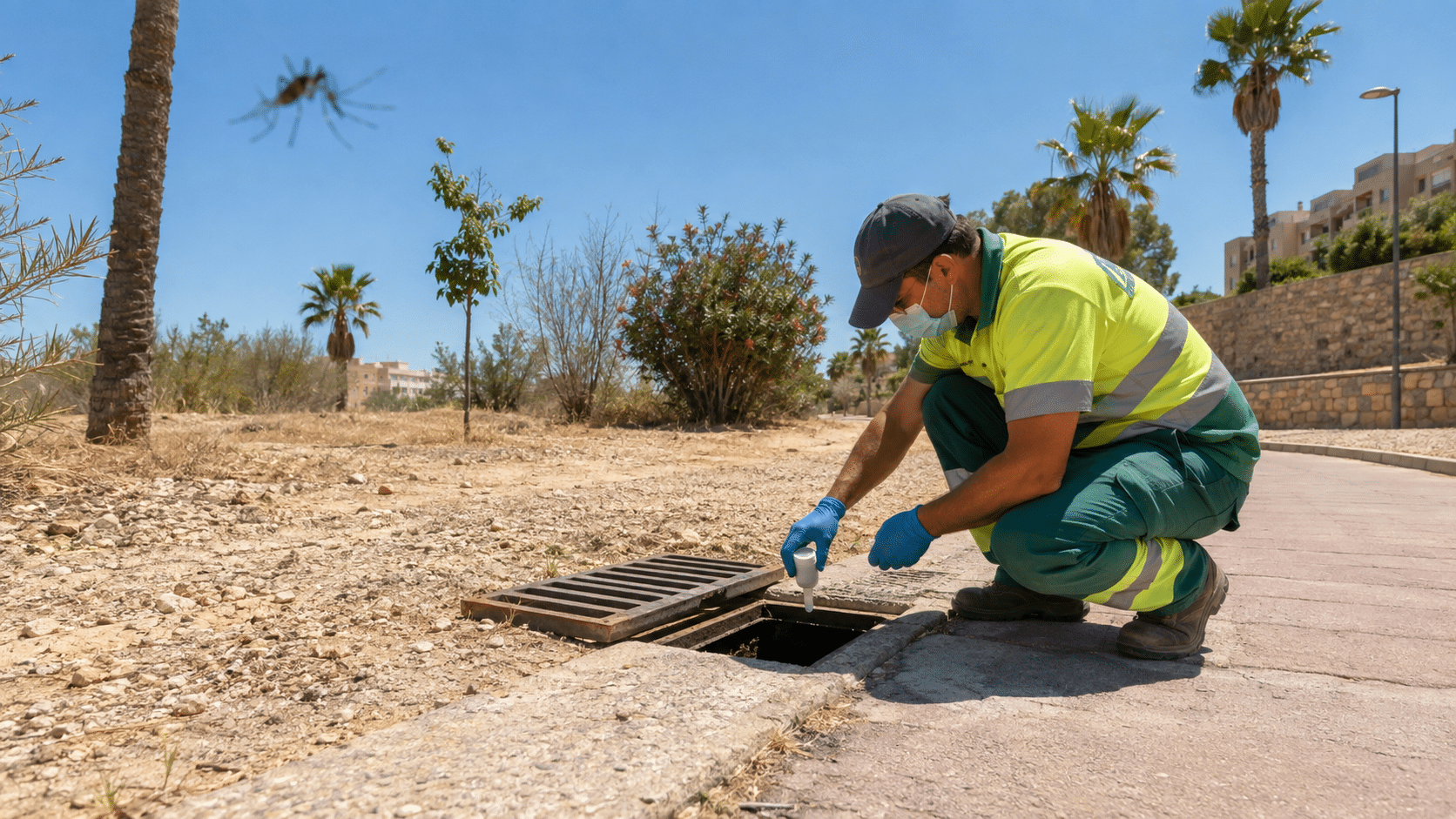
Pest-control teams regularly inspect storm drains, parks and other locations where water may accumulate. Treatments are carried out monthly in urban areas and more frequently in flood-prone zones.
Between April and October, higher-risk areas are monitored weekly. This continuous programme has proved particularly effective against the tiger mosquito, the species most commonly encountered in urban environments.
Rubén Bueno, technical director of pest-control company Lokímica, said mosquito numbers had generally fallen along the Mediterranean coast, especially among tiger mosquitoes.
Heavy rain at the end of winter and beginning of spring initially raised fears of a major outbreak. However, emergency treatments were introduced quickly and were followed by a hot, dry summer.
Although occasional showers created temporary breeding sites, subsequent heatwaves caused standing water to evaporate rapidly. This prevented many mosquito larvae from developing.
“Extreme heat is bad for almost everything, but it is beneficial in situations like this,” Bueno said.
Other mosquito species found around irrigated farmland have remained at similar levels. However, tiger mosquito populations have declined across Alicante and in other Mediterranean regions, including Catalonia, Andalusia and Murcia.
Control measures have also focused on treating small quantities of water trapped beneath storm-drain grates. Larvicides are used to kill mosquitoes during their aquatic juvenile stage, before they can become flying adults.
Drones and helicopters are also used to monitor and treat larger or difficult-to-reach areas. Speed is essential because mosquito larvae can develop into adults in fewer than seven days.
Experts nevertheless warned that rainfall combined with continuing warm temperatures could produce further outbreaks during late August and the first half of September.
Santos Rojo, Professor of Entomology at the University of Alicante, said fewer bites had contributed to the public perception that mosquito numbers were lower. He attributed the improvement to dry weather and innovative control methods, including programmes that sterilise male mosquitoes.
However, he warned against declaring victory too early.
“It is still hot and it will rain again, so further outbreaks are possible,” he said, urging authorities to continue monitoring and treatment programmes despite the fall in complaints.