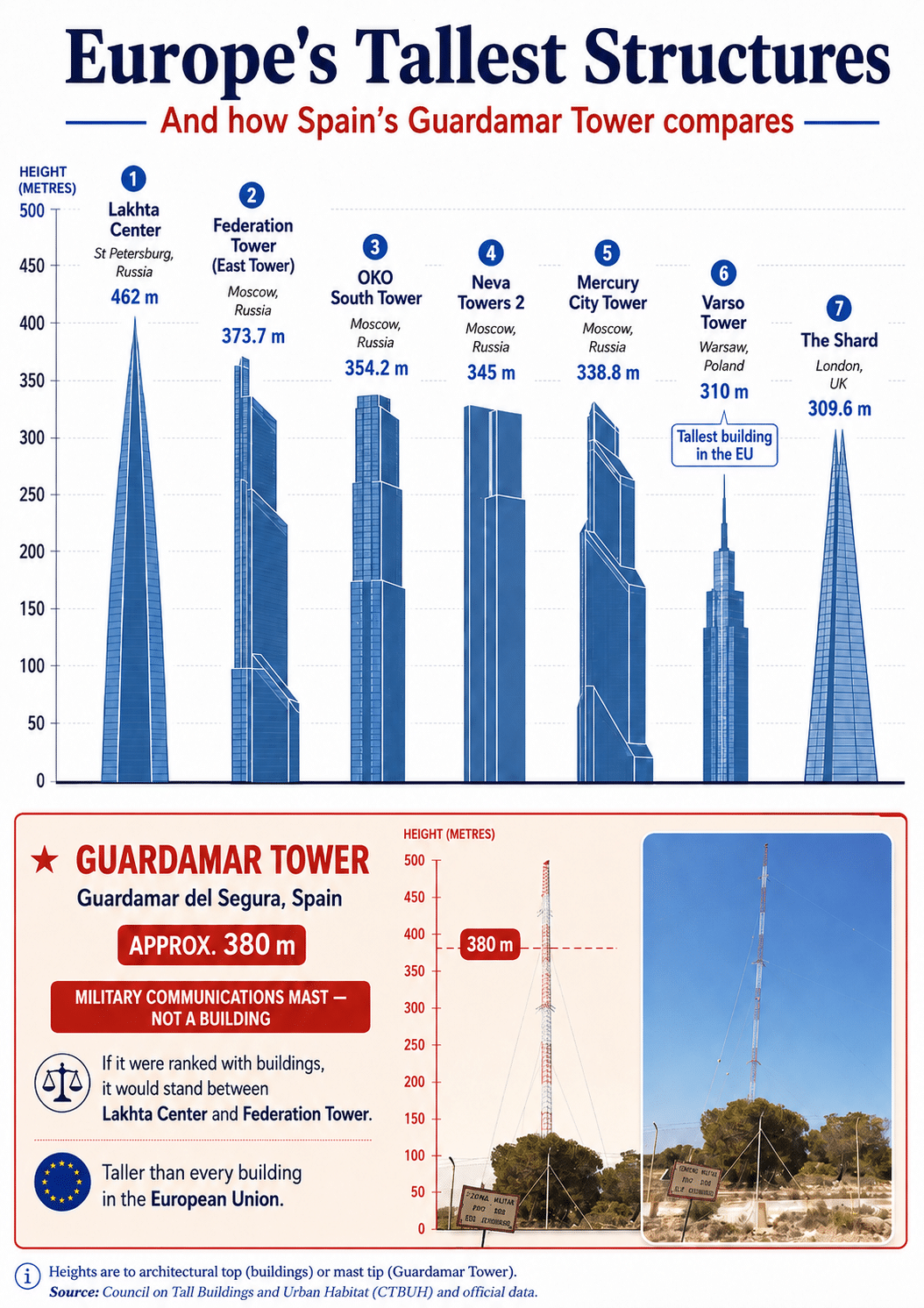
The Guardamar Tower is taller than many of Europe’s best-known landmarks, but it is not a skyscraper, monument or tourist attraction. It is a military antenna used to communicate with submarines.
The tallest structure in the European Union is not in Paris, Berlin, Madrid or Milan. It stands just outside Guardamar del Segura, in the province of Alicante, where many people have seen it on the horizon without ever knowing exactly what it is.
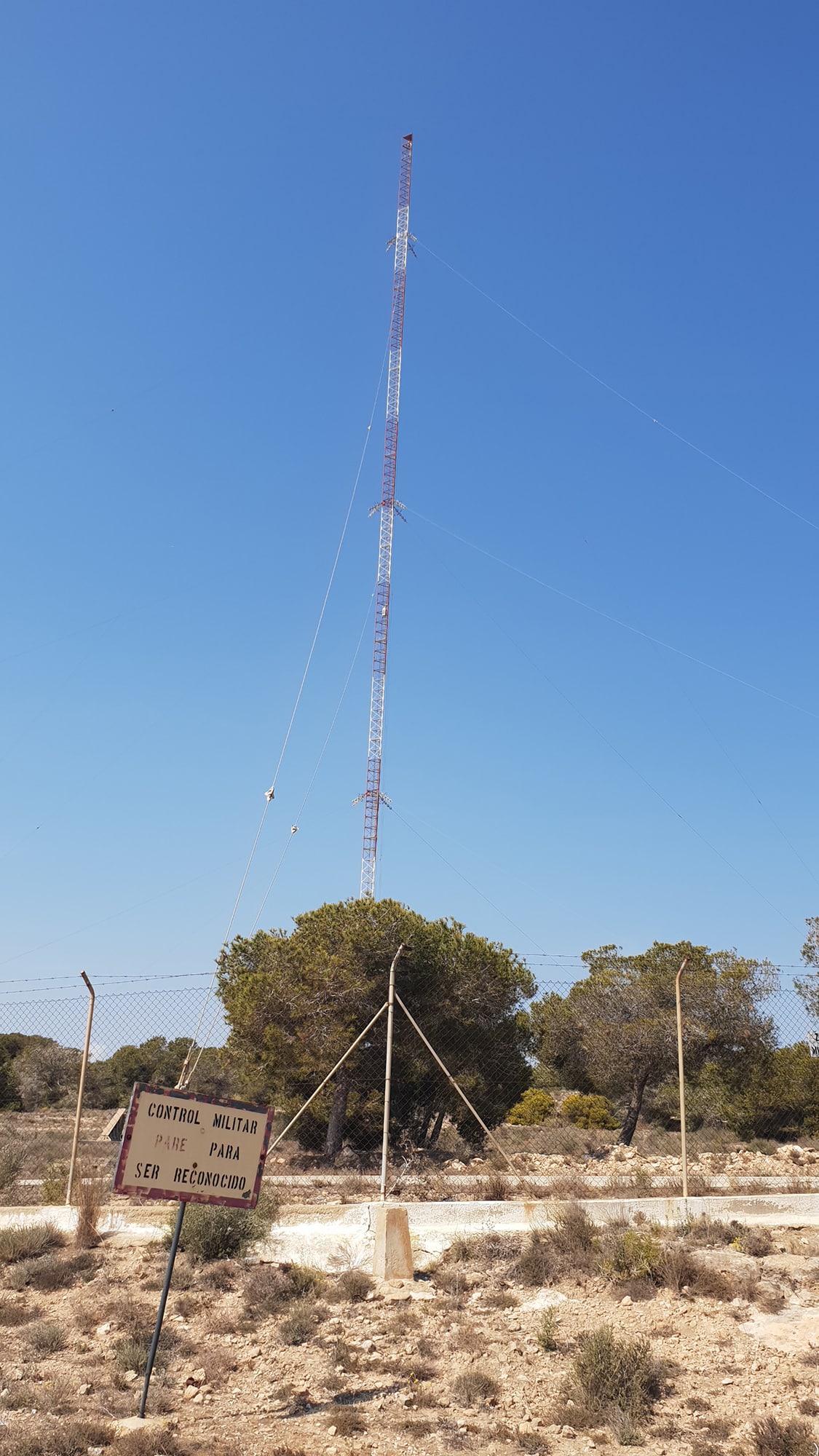
Known as the Guardamar Tower, or locally as the Tower of the Americans, the vast metal mast rises more than 370 metres above the landscape of the Vega Baja. Its tip stands around 475 metres above sea level, making it the tallest architectural structure in Spain and one of the most remarkable military installations in Europe.
Yet despite its scale, it has never become a tourist icon. It is not a viewpoint, a monument or a building open to the public. Instead, it forms part of a restricted military site whose purpose is far more discreet: naval communications, including the transmission of signals to submerged submarines.
A giant hidden in plain sight
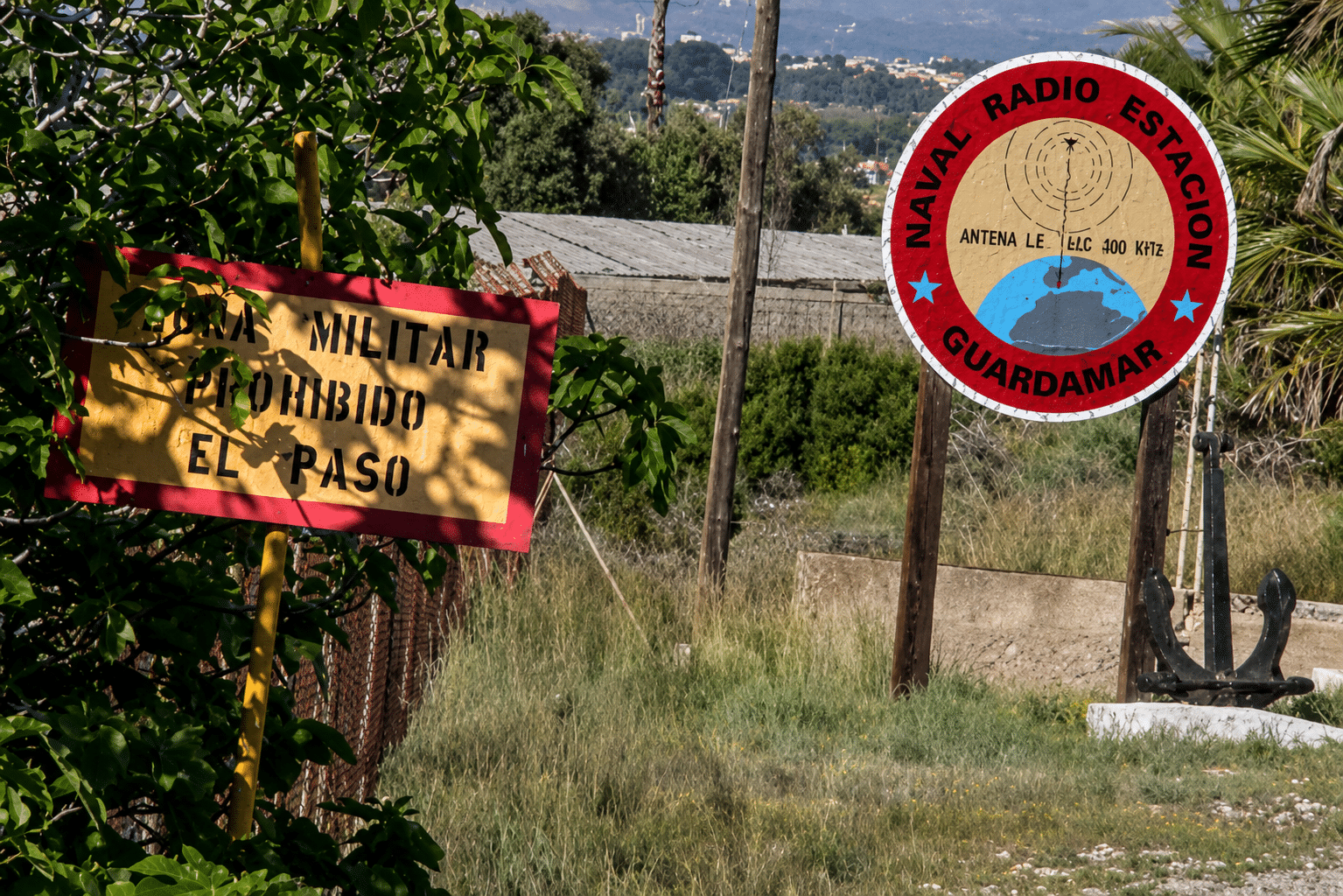
The tower stands just south of Guardamar del Segura, inland from the N-332, inside a guarded compound surrounded by signs warning that it is a prohibited military zone. For decades, very few people were allowed inside.
The mast itself, however, is impossible to miss. It dominates the skyline and can be seen from land, sea and air. For local residents, it has long been part of the landscape — familiar, imposing and yet still mysterious.
Unlike the Eiffel Tower, which rises to around 330 metres including its antennas and welcomes millions of visitors every year, the Guardamar Tower remains closed to the public. There is no ticket office, no observation deck and no tourist route. Its low profile is exactly what makes it so intriguing.
Why is it called the Tower of the Americans?
The nickname dates back to the Cold War. The antenna was built between 1963 and 1965 by the United States military, following the 1953 Spanish-American agreement known as the Pact of Madrid.
At the time, the United States was expanding its military presence on both sides of the Atlantic. Guardamar’s location, close to the Mediterranean and the Strait of Gibraltar, made it a strategic site for naval communications.
For years, the installation was operated by the US Navy. American personnel worked inside the base and lived in private accommodation in Guardamar, becoming part of local life. Some even married residents of the town.
In 1982, Spain and the United States signed a memorandum of understanding for joint use of the facility. In 1990, the site was handed over fully to the Spanish Navy. Today, the installation is known as Camp Santa Ana and is guarded by Spain’s Marine Infantry.
Why does the antenna need to be so tall?
The answer lies beneath the sea. Communicating with submerged submarines requires very low frequency radio signals, which can travel long distances and penetrate seawater to a limited depth.
To transmit those signals effectively, naval communication systems need enormous antennas. That is why the Guardamar Tower is not a conventional communications mast, but a vast metal structure supported by steel cables.
Its main role has long been to transmit data to naval units operating underwater, particularly submarines in the Mediterranean. Although the site is now under Spanish control, it remains part of a highly specialised defence communications network.
A rare glimpse behind the gates
For more than half a century, the base remained largely closed off from public view. That changed briefly in 2018, when Spain’s Ministry of Defence authorised a small number of guided visits for local residents.
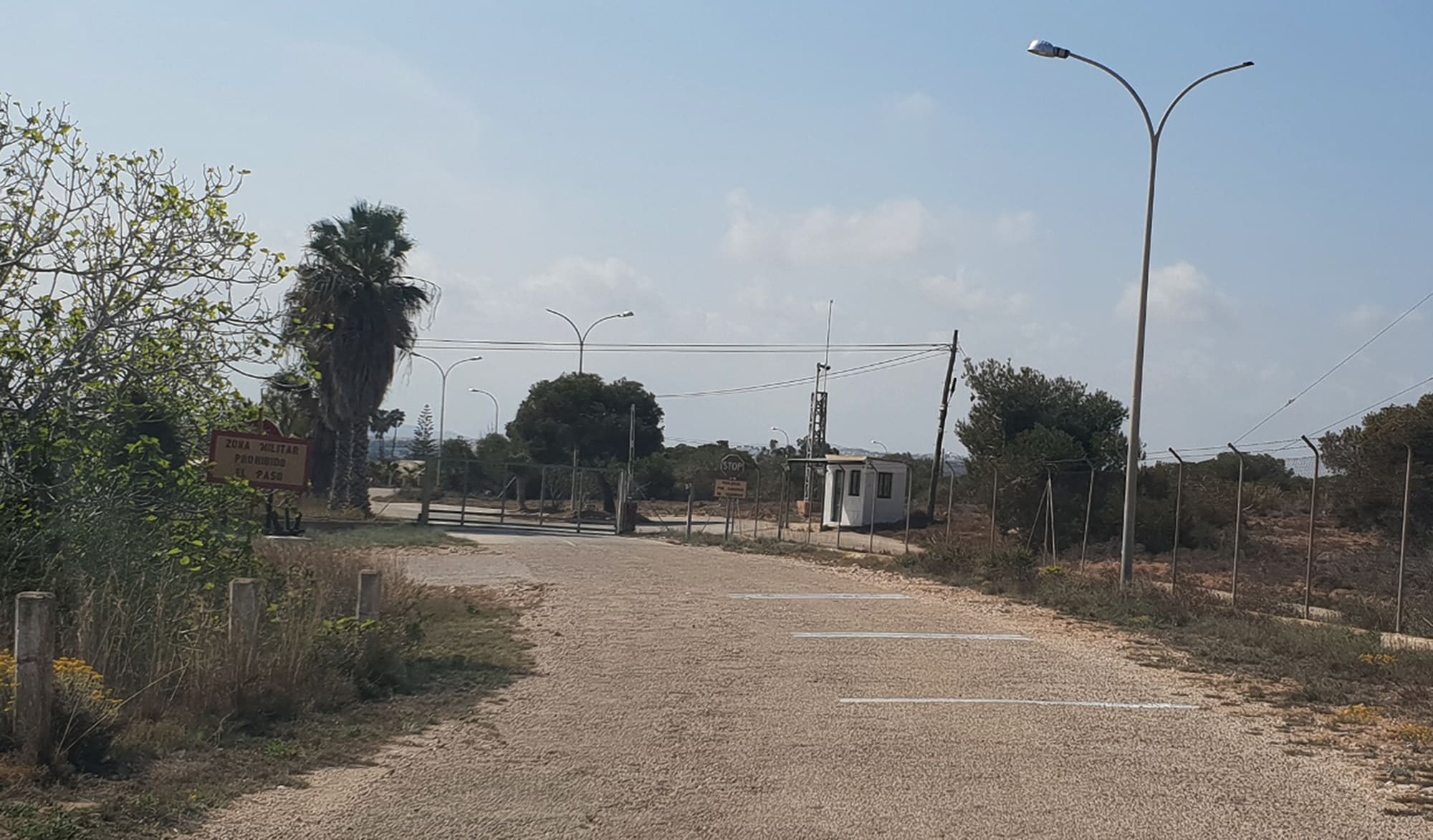
The visits generated huge interest in Guardamar, where many residents had lived alongside the antenna for decades without knowing what was inside the compound or how the facility operated.
Guardamar mayor José Luis Sáez said at the time that the tower had always been present in local life, but remained a “great unknown” for many people. The council later expressed interest in organising further visits, although access continues to depend on military authorisation.
Adding to the tower’s mystique is a local story that the mast was assembled with the help of Native American workers from Oklahoma, chosen for their exceptional agility and ability to work at extreme heights. Former personnel connected with the base have confirmed that specialist climbers were involved in the construction of the enormous structure.
Alicante’s discreet giant
The Valencian Community is famous for its beaches, castles, salt flats, palm groves and historic towns. But the Guardamar Tower belongs to a different chapter of the region’s story — one linked to defence, naval strategy and Cold War history.
It is taller than many of Europe’s most recognisable landmarks, yet it receives none of their attention. It is not promoted as a tourist attraction and remains largely absent from the routes followed by visitors to the Costa Blanca.
That contrast is what makes it so unusual. One of Europe’s tallest structures is not a glittering skyscraper or a celebrated monument, but a functional military antenna standing quietly above a coastal town in Alicante.
The next time it appears on the horizon, it may no longer look like just another mast. It is Guardamar’s discreet giant — a structure that turns this corner of the Costa Blanca into an unexpected answer to a European trivia question.