Alicante is emerging as one of the key coastal destinations in Spain’s growing debate over smoke-free beaches, as municipalities across the country tighten rules to protect public health, reduce cigarette litter, and improve the visitor experience on some of Europe’s busiest shorelines.
Spain’s wider beach crackdown is being framed around cleaner coastlines and better tourist management, with destinations including Barcelona, Alicante, the Balearic Islands, and Cantabria increasingly linked to smoke-free beach initiatives and local enforcement measures. The Travel and Tour World article’s indexed headline describes Spain’s expanding smoke-free beach rules as a growing issue for tourists facing potential fines.
In Alicante, the story is more nuanced than a simple blanket ban. The city promotes cleaner, healthier beaches and tells visitors that its beaches are “smoke-free beaches,” while also advising anyone who smokes to use a portable ashtray. Alicante’s tourism site highlights major beach areas such as Postiguet, San Juan, Tabarca, Albufereta, Cabo de la Huerta, Saladares-Urbanova, Almadraba, Agua Amarga, and San Gabriel as part of the city’s coastal appeal.
Rather than relying only on prohibition, Alicante has also focused on awareness. The city launched its “Playas sin colillas” campaign to warn beach users about cigarette-butt pollution, with environmental educators visiting busy beaches including El Postiguet, San Juan, Urbanova, Albufereta, and La Almadraba and distributing biodegradable ashtrays.
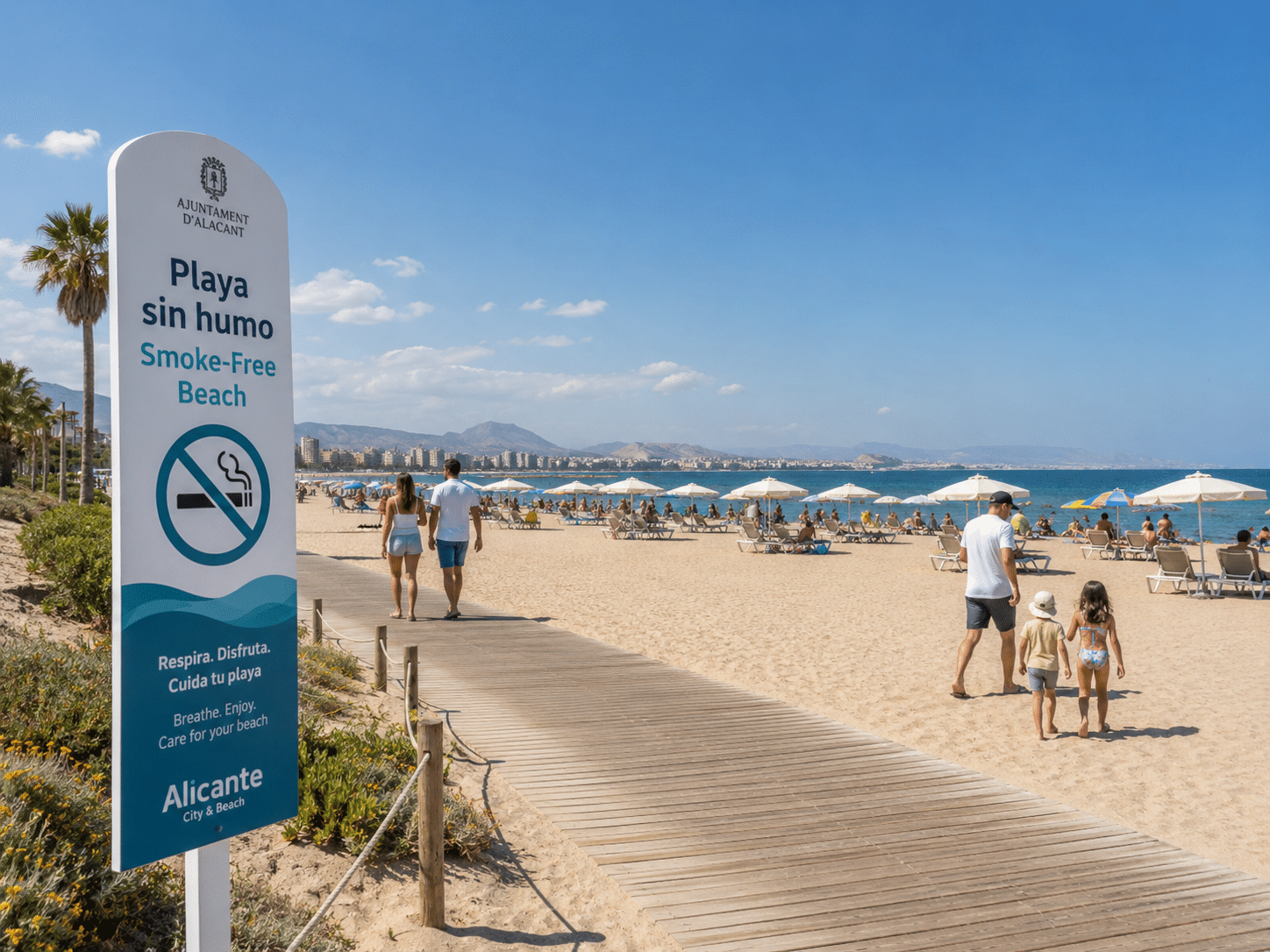
The key message for tourists is clear: even where smoking itself is not fully banned, cigarette waste can still lead to penalties. Alicante reportedly decided not to impose a full smoking ban on its beaches for summer 2025, but warned that dropping cigarette butts in public spaces, including beaches, can bring fines of up to €300 under local cleaning rules. Nearby Alicante-province municipalities including La Vila Joiosa, Altea, L’Alfàs del Pi, and Finestrat have gone further with total beach smoking bans and fines of up to €750.
Across Spain, beach rules vary sharply from one municipality to another. Some coastal areas impose fines for smoking or vaping in prohibited zones, while others focus on littering, signage, designated areas, or awareness campaigns. Visitors are therefore being urged to check local signs and municipal rules before lighting up on the sand.
For Alicante, the smoke-free beach debate is also a tourism branding issue. The city’s beaches are central to its identity, from the urban convenience of Postiguet to the long sandy stretch of San Juan and the protected marine setting of Tabarca. By pushing cleaner sand, less cigarette waste, and a healthier public-space message, Alicante is positioning itself as a Mediterranean destination where sustainability and visitor comfort are becoming part of the holiday experience.
Alicante is not just a side note in Spain’s smoke-free beach movement. It is a case study in how popular tourist cities are balancing visitor freedom, environmental protection, public health, and enforcement as Spain’s coastline moves toward cleaner and more regulated beach tourism.