
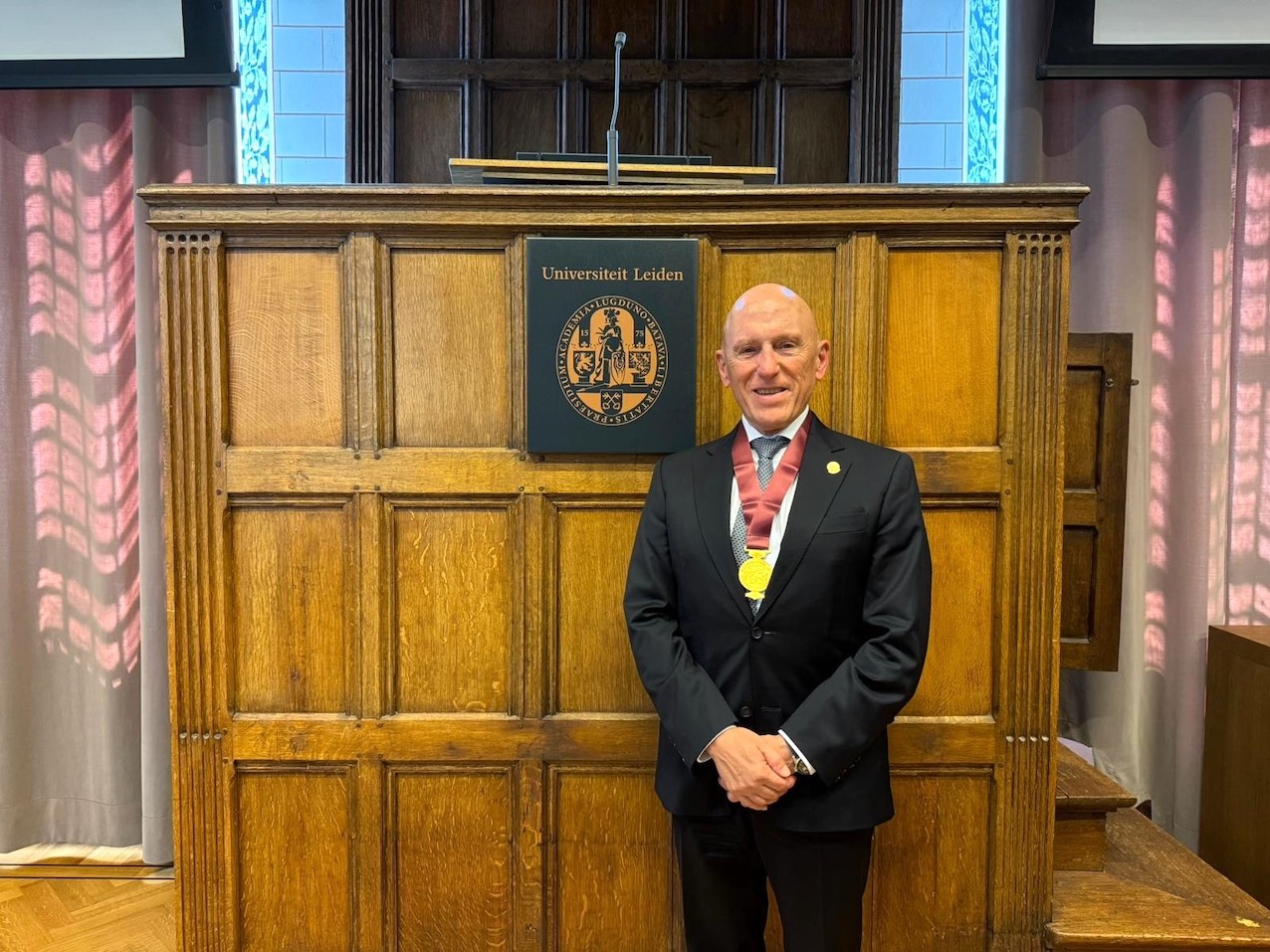
The professor and doctor was invited to the Dutch city of Leiden to talk about his pioneering technique that changes eye colour
The Academia Ophthalmologica Internationalis (AOI) celebrated its 50th anniversary in 2025 with a very special meeting to which Dr. Jorge Alió was invited. Thus, during three days in Leiden, the Netherlands, an event has taken place where the Professor of Ophthalmology and Honorary Researcher of the Miguel Hernández University (UMH) of Elche has offered the lecture ‘Changing eye colour – is it smart?’.
This lecture given at the ‘Global Ophthalmology’ session on the pioneering corneal surgical technique known as keratopigmentation by Prof. Jorge Alió provided an update on its practice, which has been studied for more than 16 years. It is a procedure in which biocompatible pigments are injected into the corneal stroma to modify the colour of the iris without altering its function, in order to improve the colour or appearance of the eye. It has traditionally been used successfully therapeutically to improve visual acuity and aesthetic appearance, without mutilation, in patients with ocular trauma, aniridia and congenital iris anomalies.
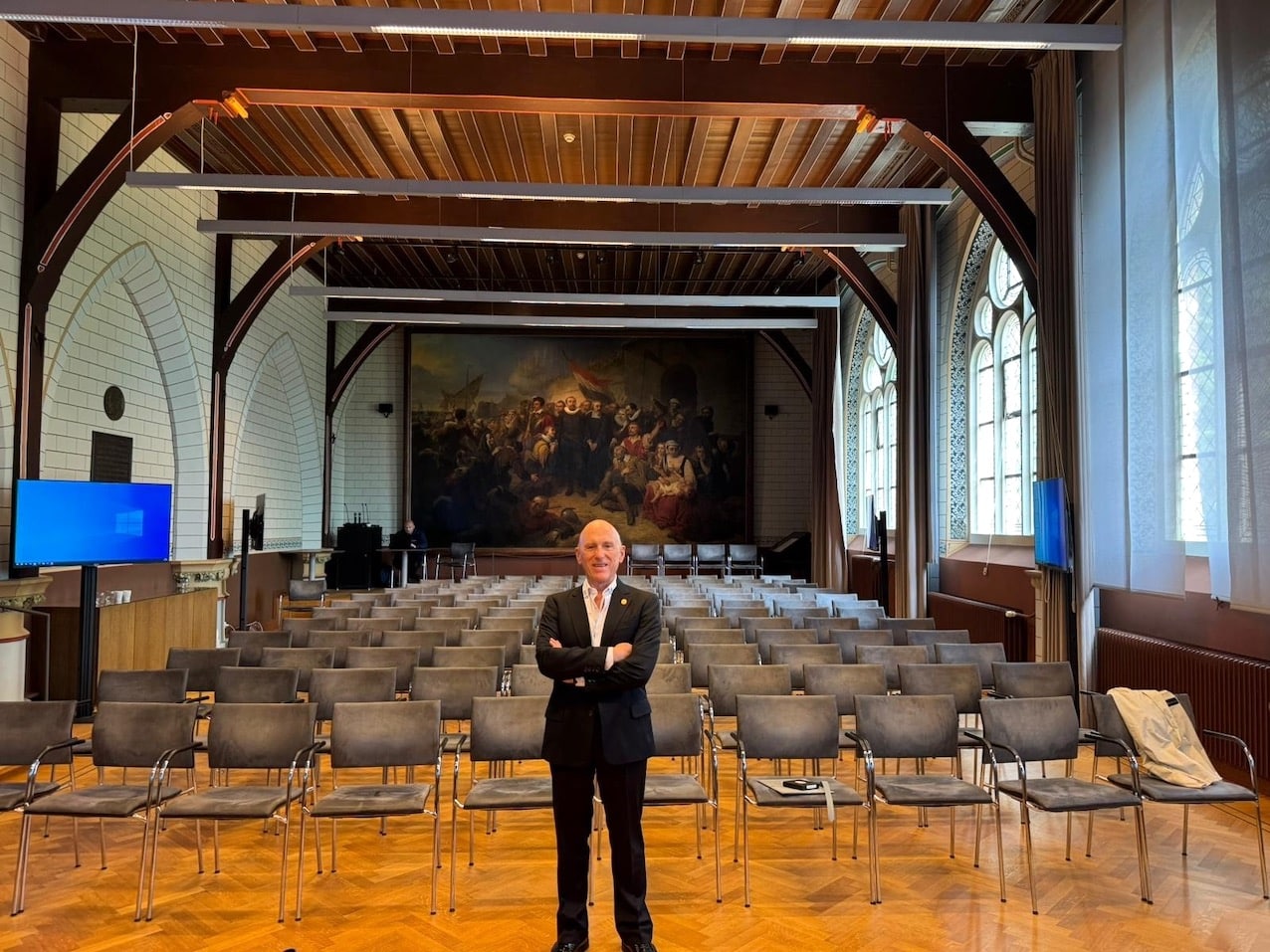
The commemoration of 50 years of the Academia Ophthalmologica Internationalis (AOI) took place at Leiden University, which will celebrate its 450th anniversary next year. This included a formal investiture of new provisional members, scientific and historical sessions, the AOI address and the Streiff Lecture. There were also social events in Leiden and a gala anniversary dinner at the Museum of Antiquities.
The 7th Most Influential and Inspirational Ophthalmologist in the World in Cataract and Refractive Surgery in “The Ophthalmologist Power List 2025”, the only Spanish doctor among the top 50, had the honour of participating in this great event of the AOI. An organisation that promotes high-level ophthalmology education, research and clinical services worldwide, in turn driving the development of human visual health.
In addition, the AOI recognises leading ophthalmologists as scholars with only 100 Chairs, each assigned to a Roman numeral from I to C, representing 33 countries around the world.


