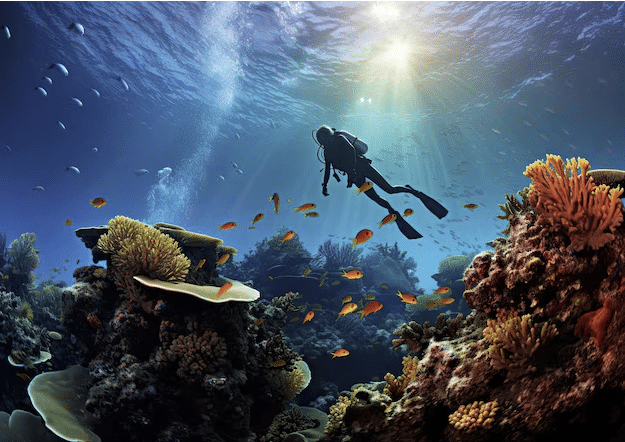
San Javier’s City Council is awaiting approval from the Coastal Authority for an ambitious underwater museum project. The plan aims to create artificial reefs to promote marine life and attract divers in a sustainable way.
The City Council has conducted an environmental impact study to ensure minimal ecological disruption.
It is project that the Council has been working on for some time and that generates great excitement for the governing team.
If it is approved by the Coastal Demarcation, a sustainable environment can be built around this future underwater museum.
“We want to highlight the entire environment, the oceanic posidonia… In addition, we have planned it in a sandy area that would not have a harmful impact on the environment,” the City Council adds.
They go on to clarify, however, that this would not mean that it could be visited by hundreds of divers at once. This is one of the points they have paid attention to in order to, as they point out, create “a sustainable environment.”
Interest in the project has resurfaced following the recent presentation of the documentary The Phoenician Shipwreck of Bajo de la Campana.
The film highlights the site’s historical significance, showcasing the largest underwater cargo ever recovered from the Mediterranean.
Discovered in the 1950s, the site contains multiple shipwrecks, including a 7th-century BC Phoenician vessel loaded with valuable artifacts now displayed at ARQUA, the National Museum of Underwater Archaeology in Cartagena.
With international recognition and past collaborations with global archaeology institutions, San Javier hopes to leverage the site as a major cultural and tourism attraction while preserving its rich underwater heritage.