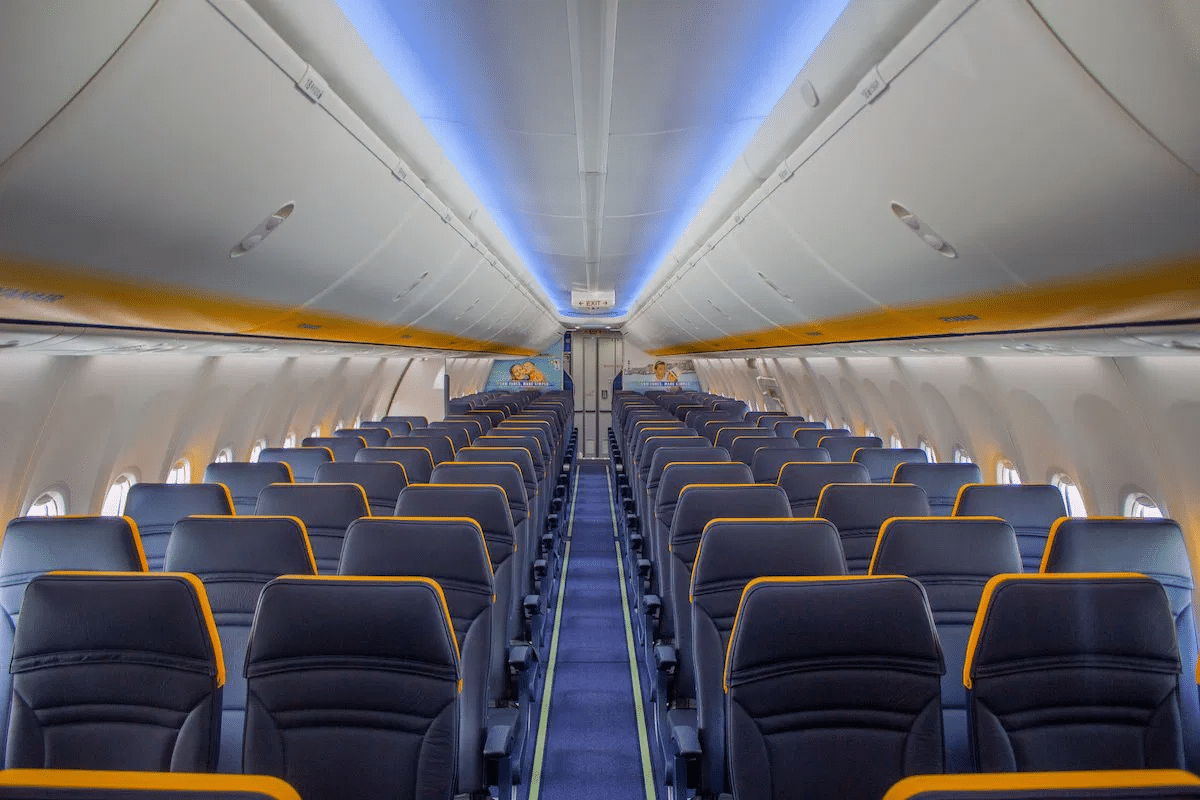
Ryanair and easyJet passengers are being advised to check which side of the aircraft they choose when booking, as some seats may offer slightly more legroom without the cost of an official extra-space upgrade.
Consumer group Which? says travellers should consider a simple rule: on certain aircraft, sitting on the right-hand side of the cabin can provide additional room.
The difference may be modest, but it could make a flight more comfortable for taller passengers, parents travelling with children and anyone with limited mobility or knee problems.
On most Ryanair Boeing 737 aircraft, Which? suggests selecting seats D, E or F in rows three to 15. These seats are on the right-hand side of the cabin and may offer more legroom than comparable seats elsewhere.
The advice is more specific for easyJet passengers. On the airline’s Airbus A321neo aircraft, seats D, E and F in rows three to 13 can reportedly provide around one additional inch of space compared with seats on the left-hand side in rows six to 17.
However, passengers should check carefully before making a reservation because the tip does not apply to every aircraft or seating configuration. Airlines can also change the plane scheduled to operate a service, sometimes at short notice.
Travellers can normally identify the aircraft type through the airline’s website or mobile application. It may be displayed above the seating plan during the booking or check-in process. Flight-search websites can also provide aircraft information, although this is not always guaranteed to be accurate.
Once the aircraft model has been identified, passengers can consult an online seating-plan service to compare individual rows and seats.
While the extra space itself may not carry an “extra-legroom” premium, selecting a particular seat is not necessarily free. Ryanair and easyJet generally charge passengers who want to choose where they sit, with the price varying according to the flight, seat location and demand.
Passengers who do not pay for seat selection are usually allocated a seat automatically, meaning there is no guarantee they will be placed in one of the roomier positions.
The right-hand rule will not transform a budget cabin into business class, but checking the aircraft and seating layout before booking could provide a little more comfort—and help passengers avoid paying the highest prices for front-row or emergency-exit seats.