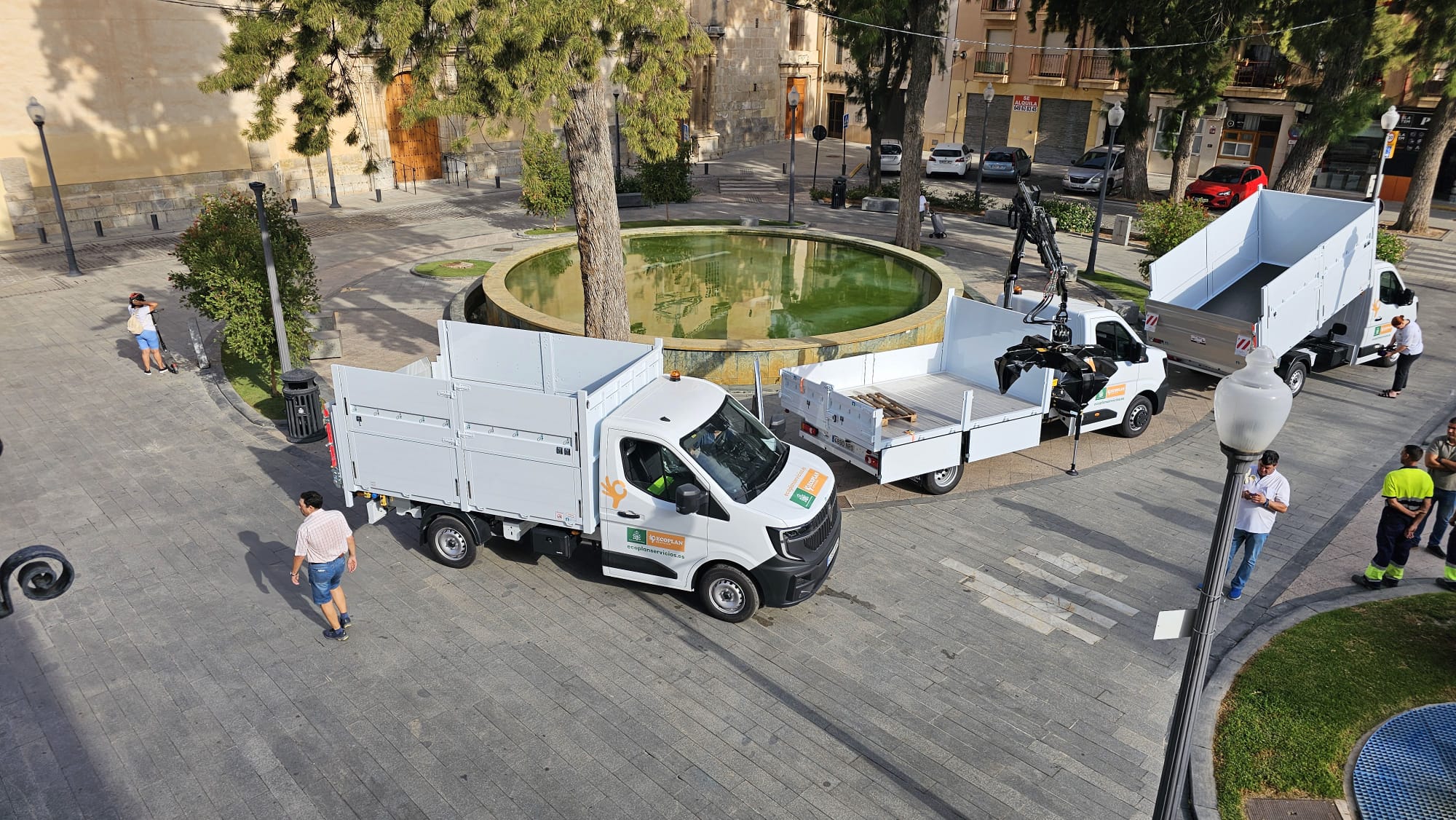
Orihuela City Council has added three new trucks to its municipal waste collection and street-cleaning fleet as part of a contract worth €193,540.
Mayor Pepe Vegara and councillor Rocío Ortuño presented the vehicles in Plaza del Carmen on Wednesday, describing their arrival as another step in the continuing modernisation of the service.
However, the investment comes amid persistent criticism of waste collection across Orihuela Costa and the municipality’s outlying districts. Residents continue to report overflowing communal bins, abandoned furniture and mounting piles of garden waste.
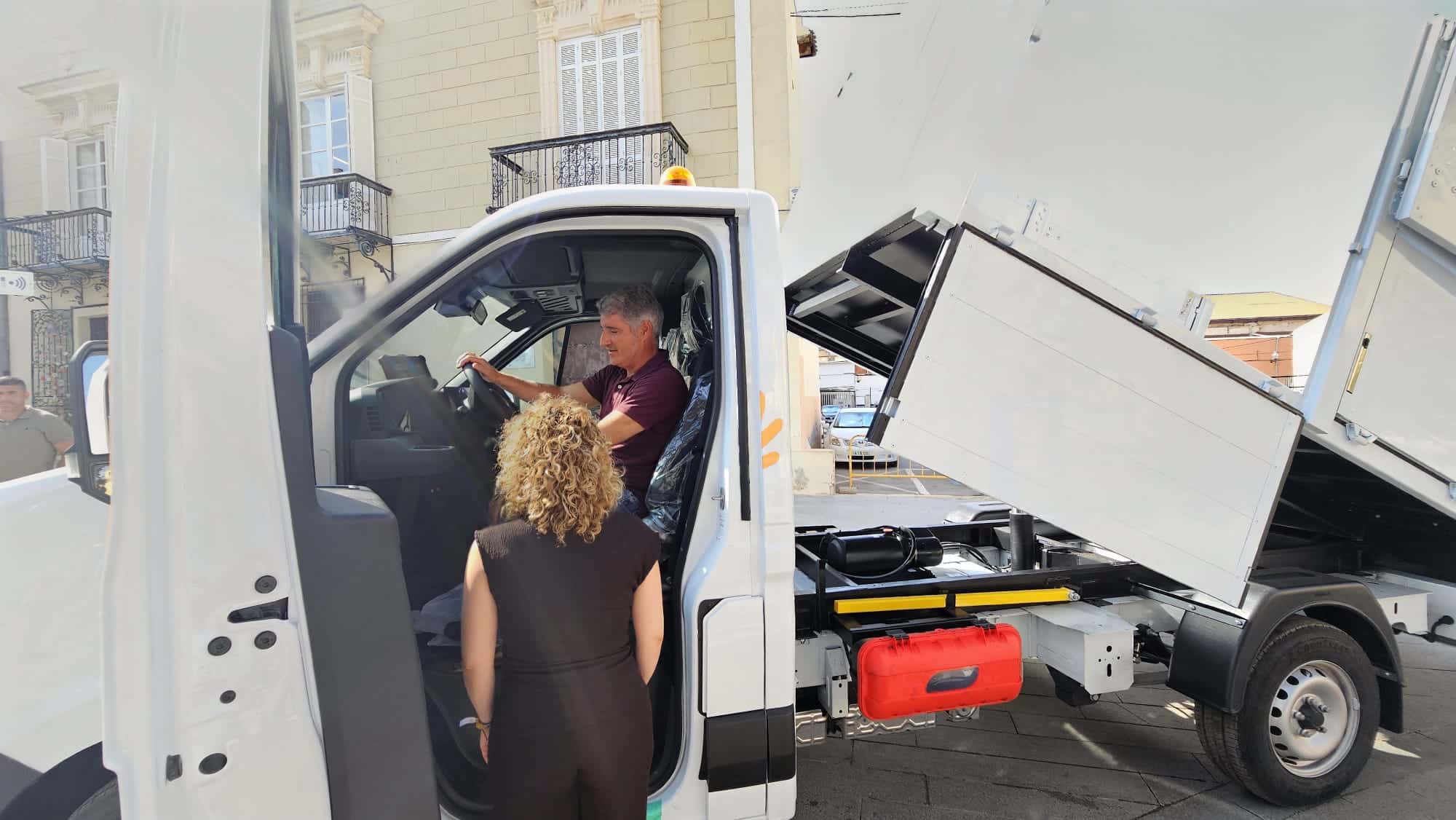
The new vehicles comprise two tipper trucks fitted with rear platforms and a third equipped with a grapple crane for lifting bulky material. All three are newly registered Renault Master models with 150-horsepower Euro VI diesel engines.
The crane vehicle includes three hydraulic extensions and extendable stabilisers. Standard safety and comfort equipment across the vehicles includes anti-lock brakes, stability control, emergency braking assistance, air conditioning and airbags for the driver and passenger.
The contract was awarded to Fruehauf Recambios SL for €193,540.71, including VAT, below the original tender price of €206,668. The successful bid also provides five-year warranties and GPS tracking for all three trucks.
They join six similar vehicles introduced several months ago, bringing the number added through this part of the fleet-renewal programme to nine.
Part of €6 million investment
The council says the latest additions form part of an investment exceeding €6 million to replace and modernise machinery used for waste collection and street cleaning.
The wider programme includes refuse collection vehicles, open-body trucks, road sweepers and other specialised equipment, with new machinery being introduced in stages.
Ortuño said the council was replacing ageing equipment and giving municipal employees better tools to perform their daily work. She argued that the investment would increase the service’s ability to operate across Orihuela’s extensive and geographically dispersed territory.
Vegara said the new vehicles demonstrated that the promised investment was now becoming visible on the streets. He described waste collection and cleaning as an essential service whose fleet had been in urgent need of renewal.
However, even the council acknowledges that the latest delivery represents only a partial improvement to a service that still requires considerably greater resources. Despite fleet investment during the past two years, results have frequently fallen short of residents’ expectations.
Familiar summer complaints
The new equipment has yet to produce a noticeable improvement in several parts of the municipality, where complaints have intensified alongside increases in waste collection charges.
Problems are particularly severe during the summer, when Orihuela’s population rises sharply and the service struggles to meet increased demand.
On Orihuela Costa, communal bin areas regularly overflow, sometimes remaining uncollected for several days. Many have also become unofficial dumping grounds for discarded furniture, building debris and pruning waste.
A shortage of vehicles and staff is considered a major factor, although the problem is worsened by residents and property owners undertaking renovations or garden work and then leaving waste beside public containers.
The coastal area has also faced renewed criticism over large accumulations of seaweed on its beaches. The council points to Valencian Government rules requiring deposits of Posidonia oceanica to remain on certain beaches because they help prevent sand loss and protect the coastal ecosystem.
However, residents argue that seaweed continues to occupy bathing areas even at locations where its removal is permitted, suggesting the council lacks the capacity to clear it promptly.
Conditions in Orihuela’s rural districts have generated similar frustration. Some areas rely on containers more than 20 years old, many of which are damaged, while scattered communities receive less frequent collections.
Future public company
Orihuela is unusual among large Spanish municipalities because waste collection remains under direct council control.
The service was brought back in-house during the early 2010s following years of alleged failures by the private contractor and a judicial investigation into suspected contract irregularities.
Since then, municipal operations have continued to suffer from shortages of equipment and personnel.
The PP–Vox administration hopes to address these weaknesses by establishing a publicly owned company. The proposed organisation would retain the public-service model while giving it greater operational resources and management flexibility.
For residents facing overflowing bins and repeated summer disruption, however, the effectiveness of the investment will ultimately be judged not by the number of vehicles presented outside City Hall, but by whether neighbourhood streets and communal waste areas become noticeably cleaner.