At the centre of Torrevieja’s transformation is what can only be described as the “Dolón Factor.” Under Mayor Eduardo Dolón’s leadership, the city has moved decisively beyond its traditional identity as a seasonal resort. Instead, it is being reshaped into a functioning “City of Services,” built on year-round economic activity and institutional presence.
This direction was powerfully reinforced at the B2B event on Friday evening, where a 90-minute showcase ahead of the expo delivered a stream of confident, positive, and forward-looking announcements. The tone was unmistakable: this is a city with a plan—and the momentum to deliver it.
The conference highlighted this shift clearly: a population which in just five years has increased by 27%, now exceeding 110,500. Crucially, this growth is no longer driven solely by transient tourism, but by a steadily expanding base of permanent residents and professionals. Key to this evolution is strategic investment. The introduction of a university campus and the iHub Torretech has created a “student effect,” injecting youth, skills, and continuity into the local economy, sustaining activity well beyond the traditional summer peak.
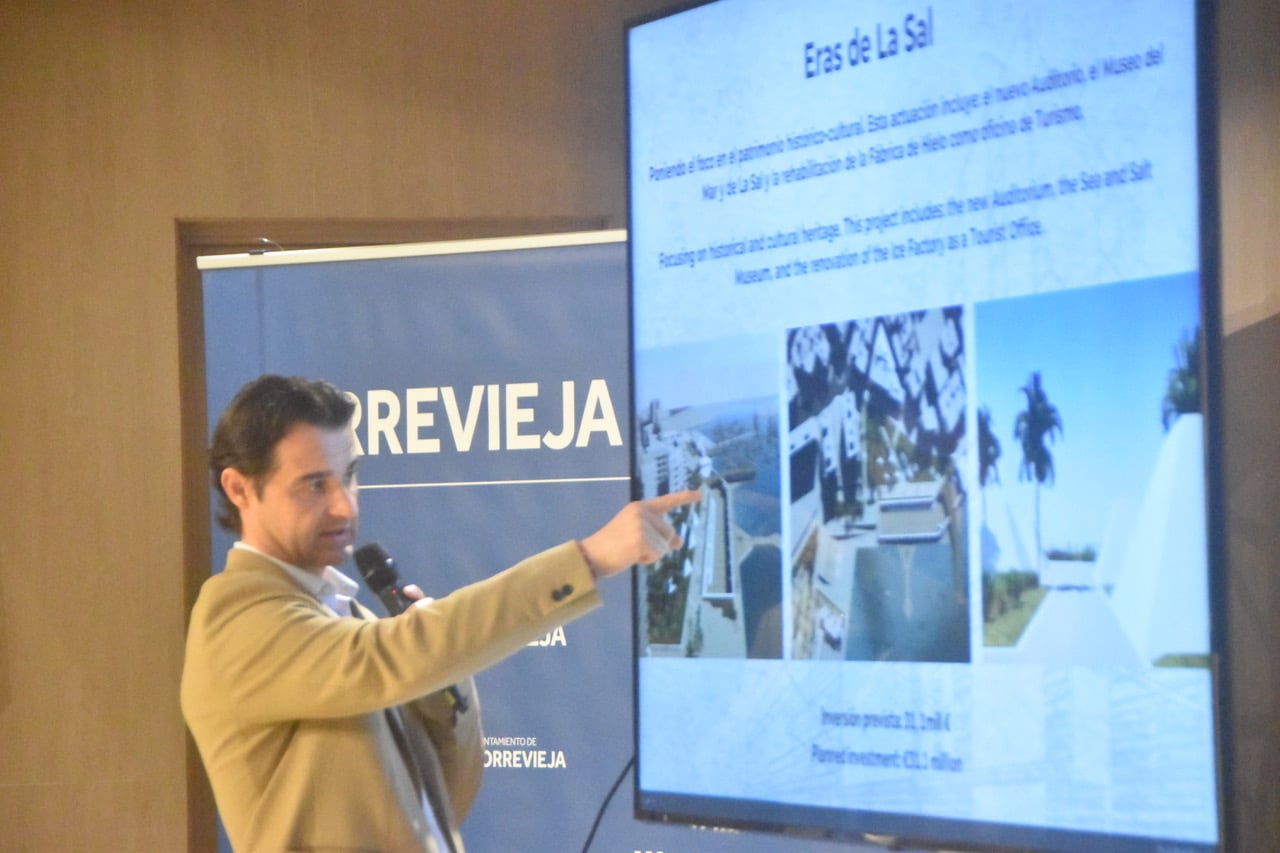
This transformation is further supported by major infrastructure projects, including a €50 million port redevelopment and the Civic Hub on Avenida de las Habaneras—developments that combine public service provision with commercial opportunity. These are not cosmetic upgrades, but structural investments designed to underpin long-term growth.
Crucially, Torrevieja is aligning itself with the “blue economy” and emerging technology sectors. By encouraging tech companies to locate within purpose-built innovation centres, the city is creating skilled employment, diversifying its economic base, and increasing municipal revenue. The result is a clear shift away from low-wage, seasonal dependency towards a more resilient, modern urban economy.
The Vegara and Mestre Factor
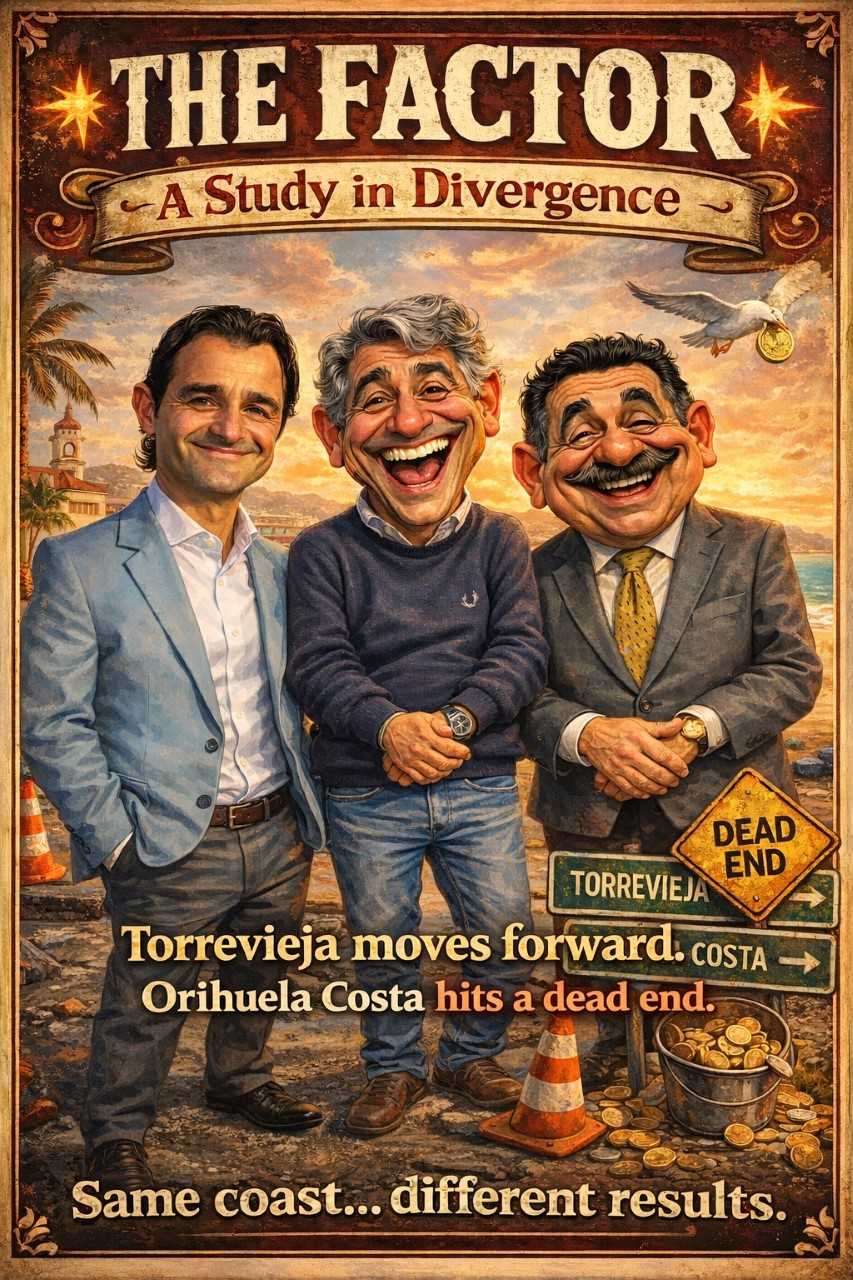
Across the municipal boundary, Orihuela Costa presents a strikingly different picture. Under the leadership of Pepe Vegara and coastal councillor Manuel Mestre, the area remains rich in private wealth yet constrained by a lack of coordinated public strategy. The question increasingly asked by residents and observers alike is simple: why can’t Orihuela Costa replicate even a fraction of Torrevieja’s momentum?
The answer lies not in resources, but in direction. While Torrevieja has pursued a clear, unified model centred on infrastructure, education, and innovation, Orihuela Costa continues to operate within a fragmented framework. Investment appears reactive rather than strategic, with long-standing issues—waste management, infrastructure gaps, and service provision—persisting despite repeated public concern.
Unlike Torrevieja, there has been no comparable push to attract institutional anchors such as universities, innovation hubs, or technology clusters. Nor has there been a visible effort to redefine the local economy beyond its heavy reliance on seasonal tourism and residential consumption. The result is a structural imbalance: a population that swells dramatically in summer, yet lacks the year-round economic engine needed to sustain growth and services.
This divergence is becoming more pronounced with each passing year. Where Torrevieja presents confidence, clarity, and forward planning, Orihuela Costa too often reflects hesitation and administrative inertia. For residents, the comparison is no longer abstract—it is lived experience.
The contrast, ultimately, is not about geography or potential. It is about leadership, vision, and the willingness to act.
Main image: J Carrion