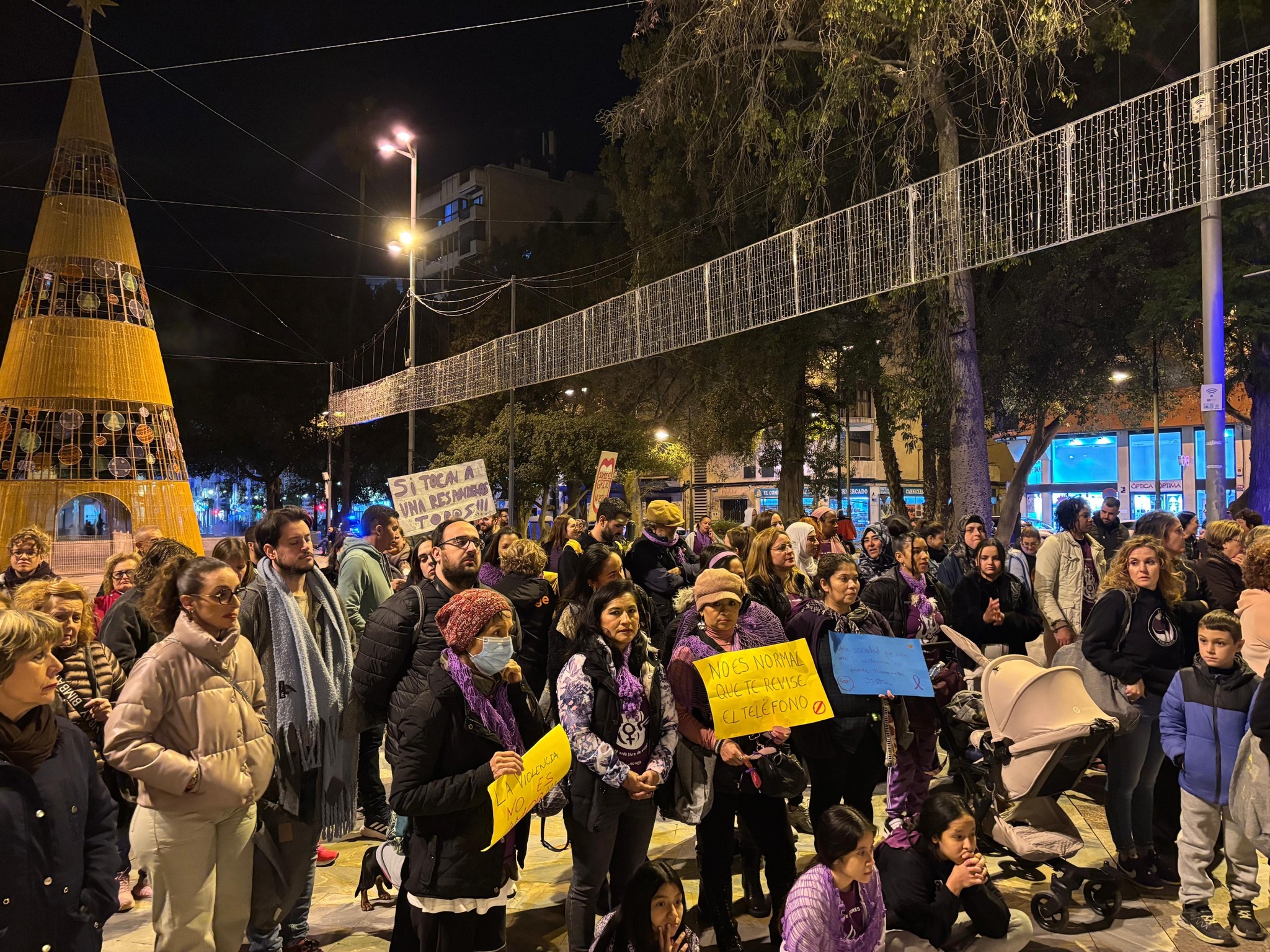
Orihuela calls for unity and marches against denialism in the fight against gender-based violence
The PP, in the absence of its governing partner (Vox), reaffirms that the municipality is committed and stresses that resources must not be spared and equality must be promoted from educational settings.
Orihuela once again marched on Tuesday to continue fighting and demand an end to gender-based violence and its unjust consequences on the International Day for the Elimination of Violence Against Women. The City Council—governed by the PP and Vox, although the latter party did not attend the march—emphasised that the town is “a municipality committed against gender-based violence,” calling for unity through the Councillor for Equality, Agustina Rodríguez (PP), who delivered a clear message: “Now more than ever, faced with denialist positions, we must loudly and forcefully express our rejection of gender-based violence and our firm, unanimous commitment to combating it.”
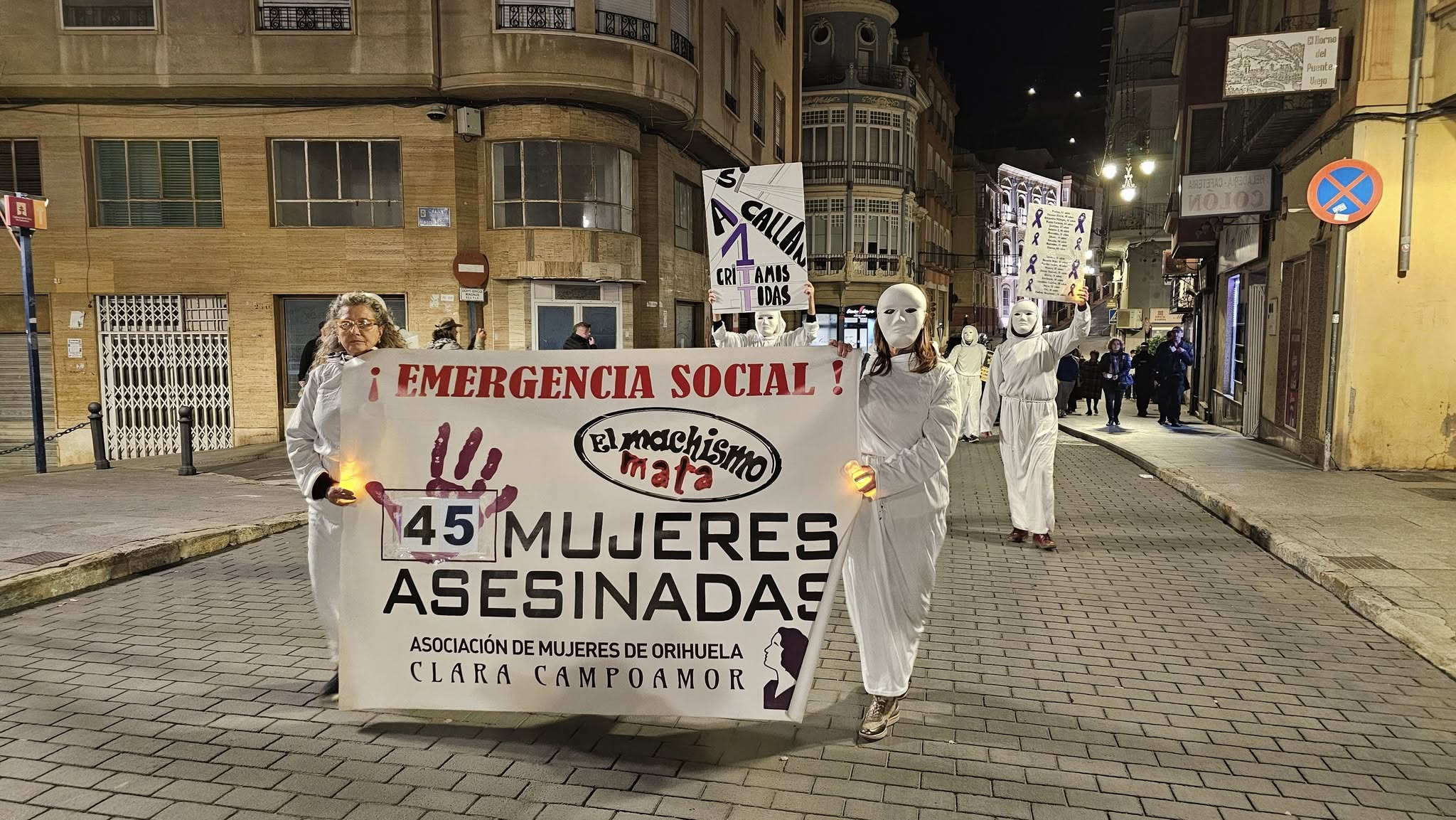
The march began at the City Hall and ended at the Glorieta, featuring an institutional banner carried by the mayor, Pepe Vegara, and members of the Municipal Corporation. Along the route, numerous social organisations, associations, and residents joined in to raise their voices against all forms of gender-based violence.
Rodríguez cited alarming statistics: 1,331 women have been murdered since 2003—36 between January and November this year—leaving 17 children orphaned. “These are not numbers, but broken families, anguish, pain, and hopelessness—a harsh reality we cannot resign ourselves to,” she stressed.
She highlighted the need to reject all forms of gender-based violence—physical, psychological, emotional, economic, and sexual—and underscored the role of local administrations in creating safe public spaces in schools, cultural centres, and leisure areas: “We must turn our city into barriers against the most cowardly violence of all: violence against women.”

Law and resources
Rodríguez also called for the revision and improvement of the pioneering law to address failures in protection systems, as noted by the State Prosecutor’s Office. She insisted that more resources are needed.
She added that sex and relationship education cannot be left to social media but must come from academic, family, and social education: “From a young age, boys and girls must be able to identify the unhealthy signs of so-called love, so they do not reproduce or tolerate them.”
Violence across generations
The Equality Board’s manifesto, read by Inma Sánchez of Vega Baja Acoge, warned of “a rise in conservatism reflected in the relationships of younger generations”: very young women experiencing sexist and misogynistic relationships that may constitute gender-based violence, reversing years of progress achieved through feminist struggle.
This regression is also affecting women over 65, who represent 13.45% of women murdered since 2003, yet file very few complaints. “The data reveal a hidden, invisible reality—women who have suffered gender-based violence for decades,” the manifesto said, noting persistent stereotypes: women’s role as caregivers, the stigma of relationship breakdown, and the obligation to remain silent about what happens at home.
A large part of these women’s youth took place during the Franco dictatorship, which tied women to the authority of fathers, and later husbands, the home, and children.
“Gender-based violence is fuelled by the indifference of some, the hypocrisy of others, and the indecent denialism of those who call victims liars,” the manifesto continued, demanding enforcement of laws that protect threatened women; preservation and strengthening of resources; accountability after each murder; and adapted procedures for women over 65 considering age, dependency, health, mobility, and technological barriers.
This violence affects all social, economic, geographic, and cultural groups, the associations stressed. “We have the obligation to continue fighting for equality and the freedom to live our lives as we choose.”
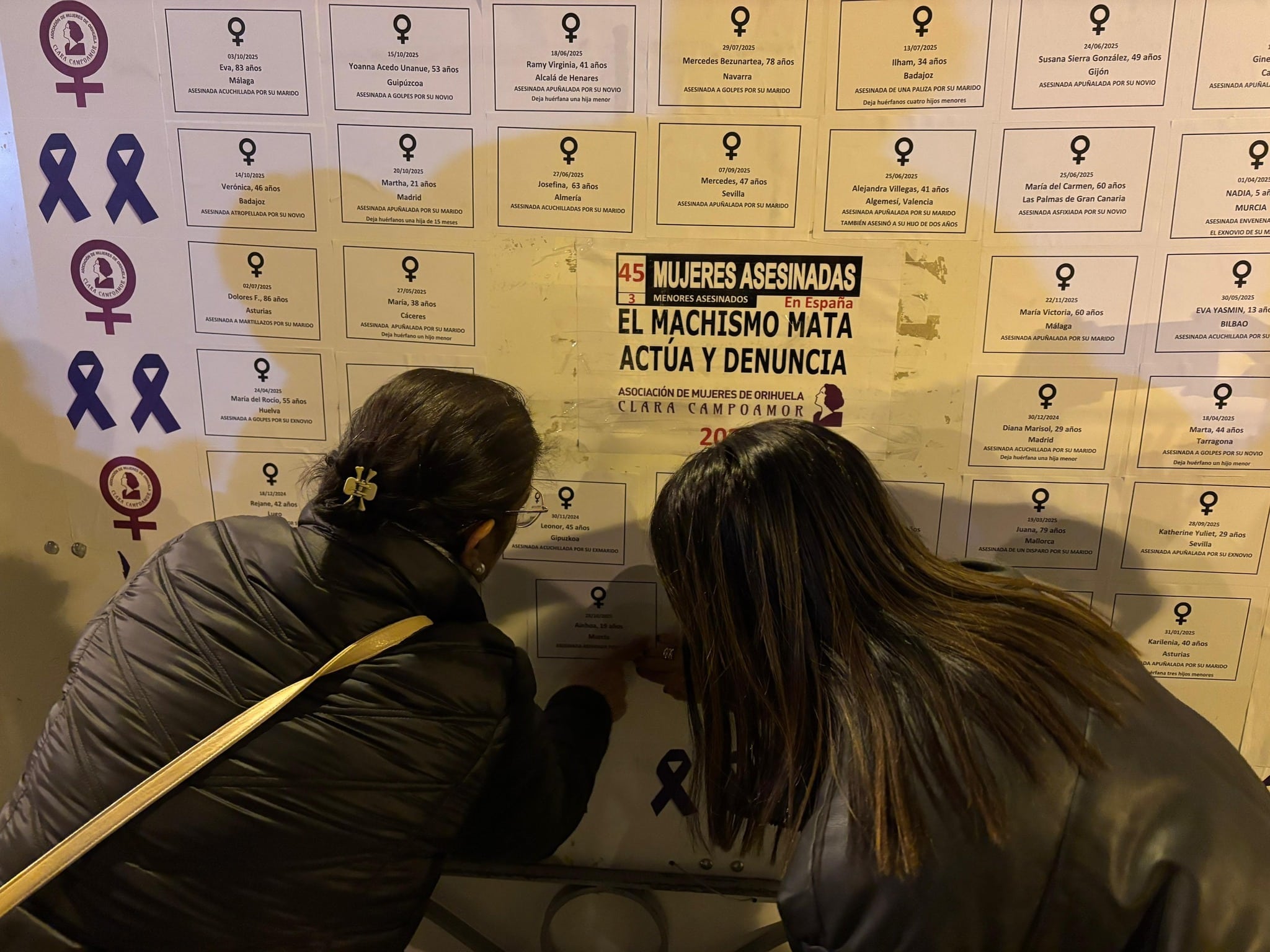
The day ended with the Orihuela Clara Campoamor Women’s Association reading the names of women murdered this year. All names were displayed on panels in the Glorieta as symbols of remembrance and collective dignity.