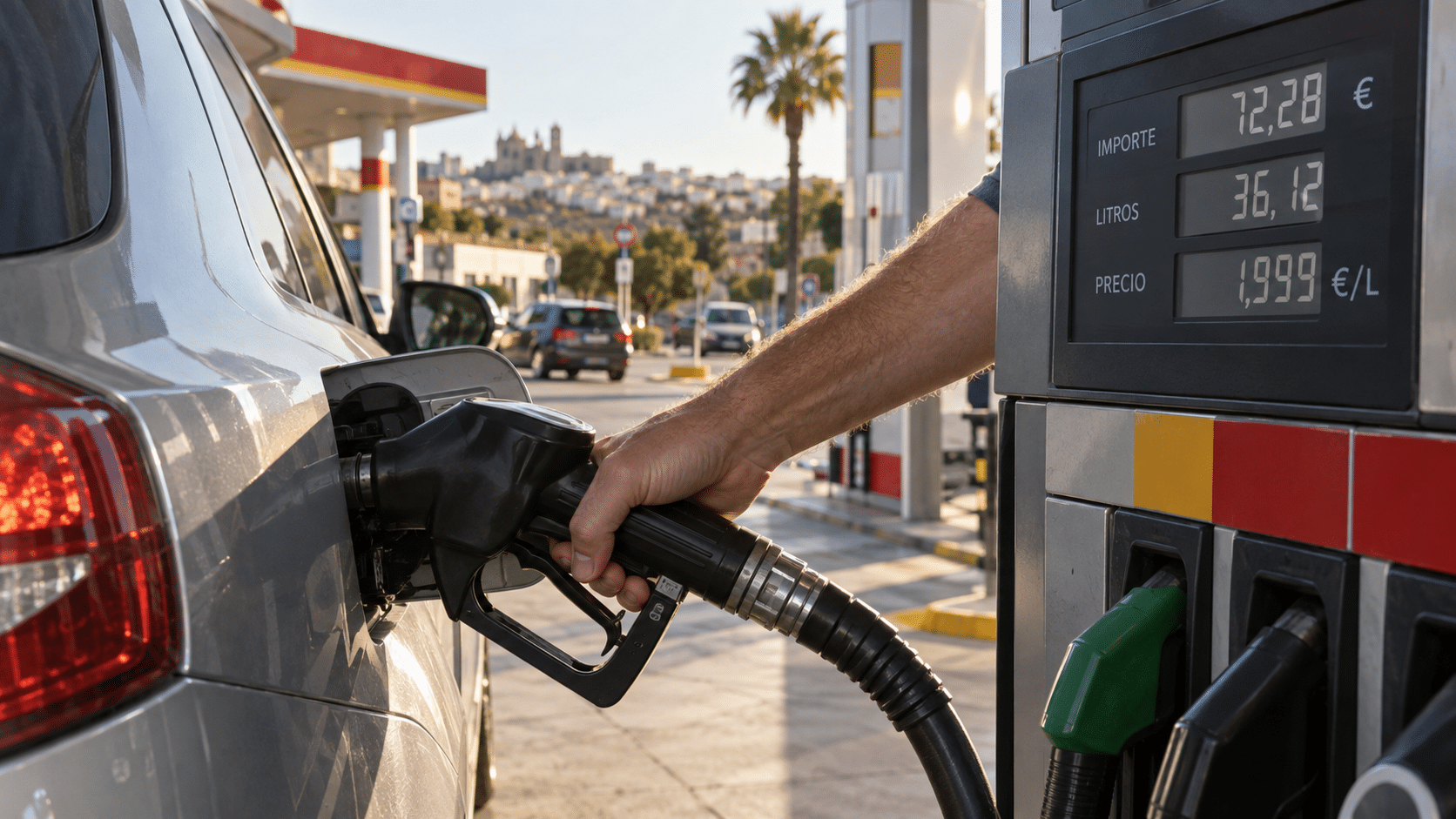
Spain’s annual inflation rate climbed to 4.3 per cent in August, its highest level since February 2023, as soaring fuel prices placed renewed pressure on household finances.
The latest figure, confirmed by Spain’s National Statistics Institute, represents an increase of 0.7 percentage points compared with July.
Transport costs were the main driver, rising by 9.5 per cent nationally—the sharpest annual increase since August 2022. The surge was largely attributed to higher petrol, diesel and vehicle lubricant prices.
The Region of Murcia recorded overall inflation of 4.3 per cent, matching the national average. However, transport prices in the region increased by 11.9 per cent compared with August last year, placing motorists under even greater pressure.
Andalucía recorded a slightly lower overall rate of 4 per cent, although transport costs still rose by 10 per cent.
Higher oil prices have intensified the squeeze, with crude climbing above $100 a barrel amid continuing instability in the Middle East. The Ministry of Economy said the latest increase also reflected comparisons with August 2025, when fuel prices were falling.
The figures come as the Spanish Government’s temporary fuel-support measures approach their scheduled expiry on September 30. The package currently provides a discount of 20 cents per litre on diesel and five cents on petrol.
Service station representatives have called for the assistance to be extended. Economy Minister Carlos Cuerpo has said the Government will continue supporting families facing higher prices, although no extension has yet been confirmed.
Underlying inflation, which excludes volatile energy and unprocessed food prices, eased slightly to 2.9 per cent. However, it remained well above the European Central Bank’s target of 2 per cent.
Food and non-alcoholic drink prices rose by 2.3 per cent across Spain. The increase was lower in Murcia, at 1.9 per cent, and Andalucía, at 1.4 per cent.
Economic analysts at Funcas have warned that inflation could remain elevated throughout the autumn. Its central forecast places the rate at 4.9 per cent in September, with inflation expected to remain above 4 per cent over the following months.
Funcas predicts an average rate of 3.6 per cent for 2026 and 2.9 per cent in 2027, although the outlook remains heavily dependent on energy prices and developments in the Middle East.
Every autonomous community recorded annual price increases in August. Cantabria had the highest inflation rate at 5.1 per cent, followed by Galicia at 4.8 per cent and Castilla y León at 4.7 per cent.
The Canary Islands recorded the lowest rate at 3.8 per cent, followed by La Rioja and Asturias at 3.9 per cent.
Despite the latest increase, the Government said cumulative inflation since February 2022 remained slightly lower in Spain than across the eurozone, at 19.3 per cent compared with 19.6 per cent.