A 32-year-old woman from Alicante remains in isolation at Sant Joan Hospital while health authorities await PCR test results that will confirm whether she has contracted hantavirus.
The sample taken from the patient was sent late Friday night by the Valencian Ministry of Health to Spain’s National Microbiology Centre. It was registered at the laboratory at 3am, and results are expected within 24 to 48 hours.
The woman is being treated as a suspected case after travelling on the same aircraft from which another passenger was evacuated and later died from hantavirus. She had also been a passenger on the MV Hondius cruise ship, which has been linked to the health alert.
She is currently in a negative-pressure isolation room at Sant Joan Hospital in Alicante. According to the Health Ministry, her symptoms are mild and mainly respiratory, including a cough.
What is hantavirus?
Hantavirus is a rare but potentially serious virus usually associated with contact with infected rodents or their droppings, urine, or saliva. Human infection can occur when contaminated particles are inhaled, although transmission between people is considered uncommon and depends on the specific strain involved.
Because some forms of hantavirus can lead to severe respiratory illness, health authorities follow strict isolation and monitoring procedures when a suspected case is identified.
What happens next?
Under the protocol established by Spain’s Ministry of Health, the patient’s first PCR result will determine the next steps.
If the test is negative, a second PCR will be carried out 24 hours later to confirm the result. Should that second test also come back negative, the woman will be treated as a close contact in quarantine and transferred to the Gómez Ulla Central Defence Hospital in Madrid.
If the PCR test is positive, she will instead be moved to the High-Level Isolation and Treatment Unit at La Fe Hospital in Valencia.
The woman became the first person in Spain to be hospitalised as a suspected case connected to this alert. She was contacted by the General Directorate of Public Health of the Valencian Ministry of Health after an alert was received through the European warning system, in coordination with Spain’s Ministry of Health.
Following that notification, she was transferred from her home to the Alicante hospital in an ambulance equipped for this type of health-risk situation.
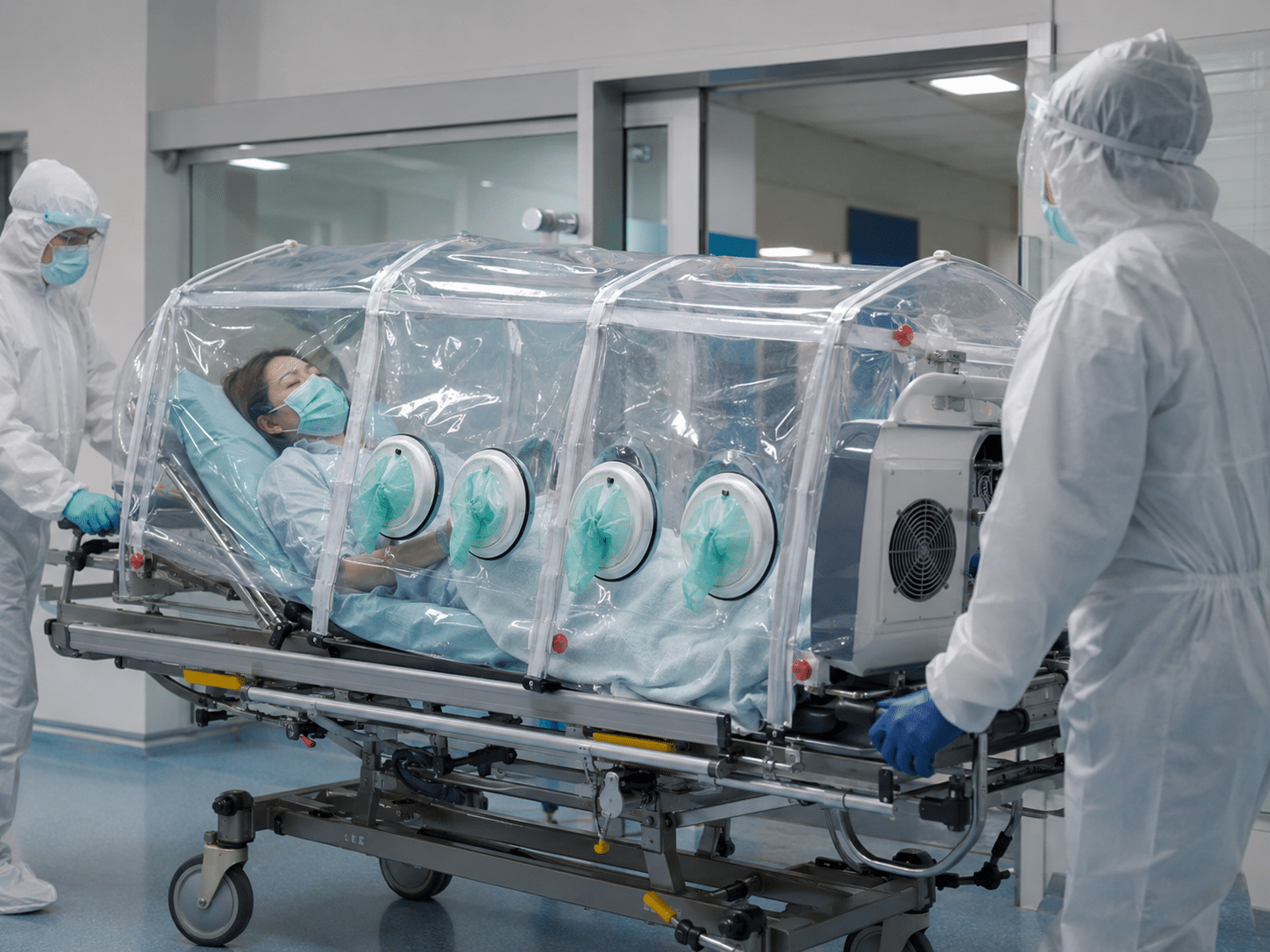
On arrival, she was moved to the isolation area inside a negative-pressure capsule and through a secure route designed to keep her separate from other patients and healthcare workers.
The Valencian Health Department said all necessary resources had been activated from the beginning to ensure epidemiological surveillance and protect both the public and medical staff. Further updates are expected once the PCR results are known.