Where Your Old Clothes REALLY Go
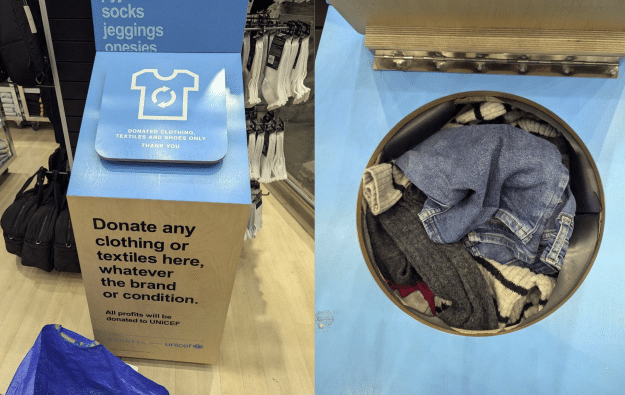
Ever wonder what actually happens to that old hoodie or pair of jeans you drop in a charity bin? Think it’s helping someone in need nearby? Think again. A new investigation by VOICE Ireland and the Dublin Hub of the Global Shapers has uncovered a hidden, messy, and often troubling journey for donated clothes in Ireland.
From Bank to Abroad
By secretly tracking 23 donated items, the team revealed a stark reality: 95% of clothes are exported from Ireland, and 60% leave the EU entirely. Over ten months, these items traveled through 12 countries—including Poland, Pakistan, the UAE, and Libya—showing just how complex and opaque the global second-hand clothing trade has become.
And the end results? Out of the tracked items:
- Only 26% were confirmed reused.
- 13% were dumped or incinerated.
- 56% ended up in “unknown” limbo—warehouses or places that made it impossible to track their fate.
Even clothes in perfect, reusable condition rarely got a second life. Of the 22 items that were wearable, only 6 were reused, and most of those had to be made from nearly 100% natural fibres. Quality, material, and design mattered more than whether the item was brand new.

A Troubling Example
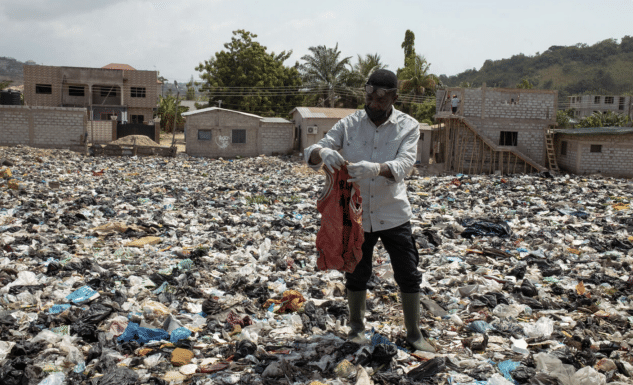
One damaged pair of jeans told a darker story. Though clearly not reusable, it was exported outside the EU to Togo, where it likely ended up dumped. This mirrors what receiving countries report: “reusable” shipments often include unusable clothes, leaving local communities to deal with mountains of waste.
Bright Spots in the Mess
Some schemes are doing it right:
- Oxfam Ireland and the M&S Shwopping initiative kept clothes local and genuinely reused.
- H&M and Looperstextile reused tracked items without exporting them outside the EU.
But others, like Primark, showed the dangers of opaque systems: most of their items were exported to Jordan, with no clear record of what happened next.
A System Without Accountability
VOICE found massive gaps in transparency: no legal requirement exists to report how much clothing is collected, sorted, exported, or reused. Traceability is nearly nonexistent, leaving Ireland blind to thousands of tonnes of clothing leaving the country every year.
Public trust is plummeting. A recent EPA survey revealed 73% of Irish people want assurance their donations aren’t ending up in “clothes mountains” abroad—but right now, that guarantee doesn’t exist.
The Bigger Picture
Fast fashion overproduction is at the root of the problem. The market is flooded with cheap, low-value clothing, overwhelming reuse systems and forcing huge amounts abroad. Responsibility must be shared: producers, retailers, consumers, and recycling operators all play a role. Transparency alone won’t fix the crisis—system-wide change is needed.
VOICE’s Call to Action
- Mandatory reporting for all collectors and exporters on volumes, sorting, exports, and final outcomes.
- Strong Extended Producer Responsibility schemes to cut waste, prioritize reuse, and ensure international accountability.
- Investment in local sorting, reuse, and recycling infrastructure, building on current best practices in Ireland.
Mark Sweeney from Oxfam Ireland warns:
“There is a lack of accountability on producers, on people, and on everyone in the chain.”
The message is clear: if we want a fair and functioning textile system, action must happen at every stage—from design and production to donation and disposal. Until then, your old clothes may be traveling farther—and ending up worse—than you ever imagined.
Explore the Clothing Tracker Map HERE
Read the final report: HERE