Located at the Mutxamel aerodrome in Alicante, European Flyers has established itself as one of Europe’s foremost pilot training academies. With additional facilities in Madrid, Toledo, and a new base in Seville following its merger with Aerotec, the academy trains future professionals in various aeronautical disciplines, including airplane, helicopter, and drone piloting.
Founded over 30 years ago by the Miñano family, the academy has grown significantly in reputation and capacity. Today, it serves more than 140 students and operates a fleet of over 45 aircraft, including both single- and twin-engine planes as well as helicopters. Flight simulators complement practical training, providing immersive learning experiences for handling emergency scenarios and honing cockpit skills.
The demand for skilled pilots is growing rapidly. According to estimates, around 600,000 new pilots will be required globally by 2042. In Spain alone, the annual need is about 1,200 pilots, but the country currently trains only 700 to 800 each year. As a result, students from European Flyers are often in high demand before they even complete their training. School director and founder Luis Miñano, himself a seasoned pilot, notes that airline companies frequently reach out in advance to secure upcoming graduates.
The academy’s comprehensive program spans approximately two years, consisting of 1,000 hours of theoretical instruction, 180 hours of flight training, and around 80 hours using simulators. The training not only prepares students for licensing exams but also offers them the option to pursue degree-level qualifications. The Alicante campus is one of the official venues for these examinations.
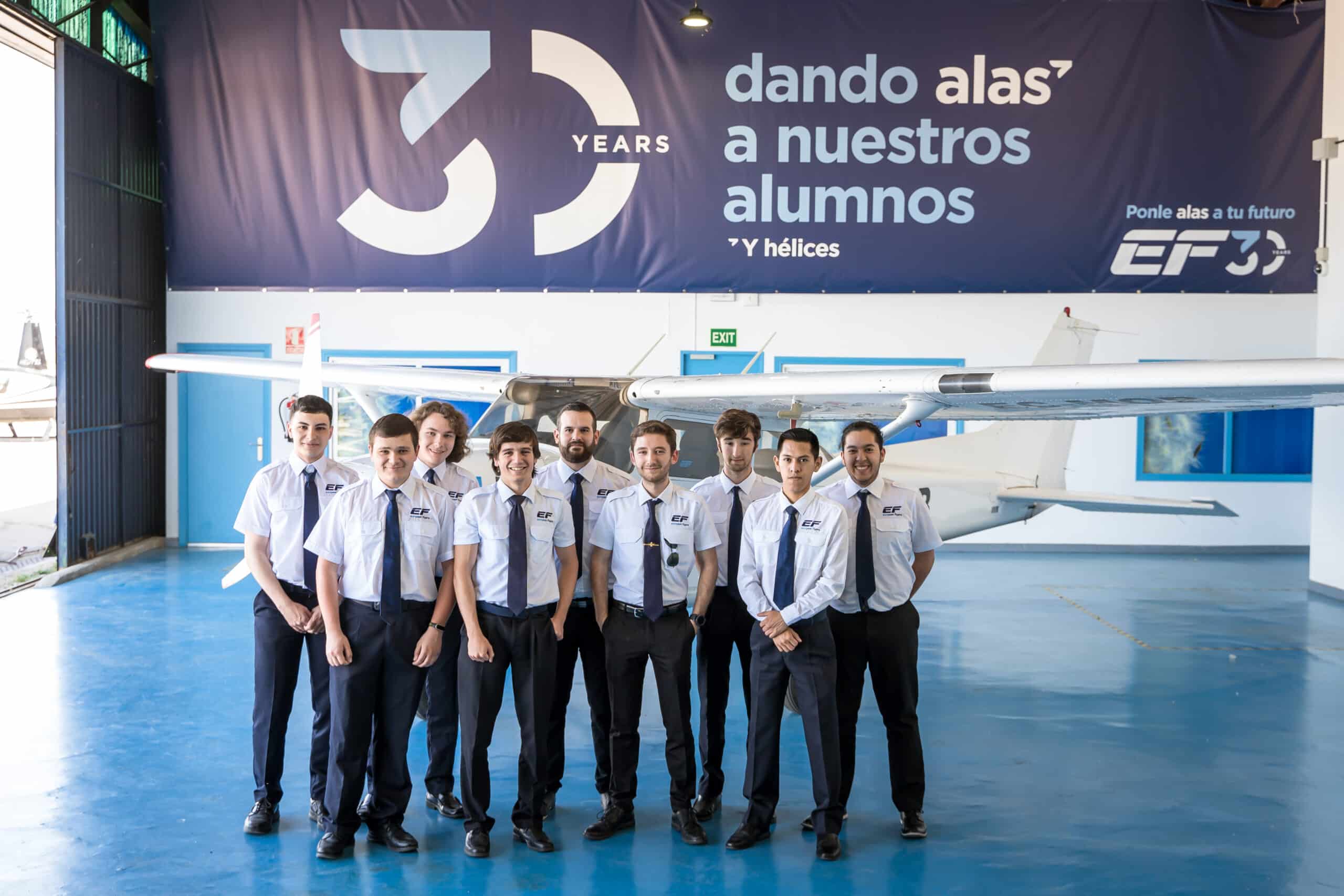
The school’s environment closely mirrors a professional aviation setting. Hangars styled in the spirit of “Top Gun” house flight simulators, training aircraft, and maintenance bays. Students wear uniforms and gradually earn shoulder ranks slides as they progress—from two stripes indicating a commercial pilot to four stripes reserved for Captain’s. A digital board lists scheduled flights with aircraft types and destinations, just like in a real airport.
Inside the hangars, trainees use dual-control planes equipped with identical flight displays—similar to cars used in driving schools—to ensure safe learning under instructor supervision. Outside, a variety of aircraft are prepped for daily sorties. Miñano explains that the school completes an average of 70 flight hours per day, totalling over 25,000 annually, thanks to a modern fleet designed for efficiency, low emissions, and high performance.
A special touch of heritage is found in a historic helicopter on display in the hangar, once flown by Miñano’s father. It’s a symbolic reminder of the school’s roots and legacy.
Certified as an Approved Training Organization (ATO) by AESA and holding ISO 9001 and ISO 14001 certifications for quality and environmental management, European Flyers stands as a benchmark in aviation education—combining cutting-edge technology, experienced leadership, and a deep respect for tradition.