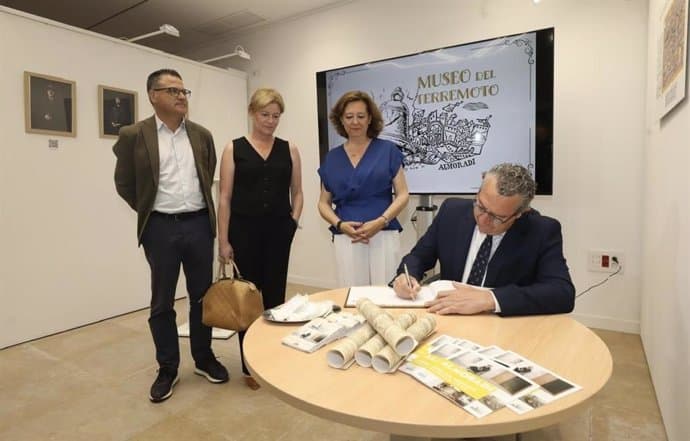
In the town of Almoradí, located in the Vega Baja region of southern Alicante, history and technology unite in the newly opened Earthquake Museum—a unique immersive experience that revives the devastating 1829 earthquake, which reshaped the region forever.
This powerful earthquake, measuring 6.6 on the Richter scale, struck on March 21, 1829, with its epicenter in Torrevieja. It resulted in nearly a thousand deaths, widespread destruction across towns like Almoradí, Guardamar, and Benejúzar, and left many injured, displaced, or orphaned. Though seismic activity is common in the area due to tectonic interactions between the Eurasian and African plates, this particular disaster remains deeply embedded in the region’s collective memory.
The new museum is located at la calle de La Reina, número 33, inside a century-old house that survived the post-quake reconstruction. The building has been restored to preserve its original layout and architectural features, enhancing the realism of the experience. The museum honors key historical figures such as engineer José Agustín de Larramendi and bishop Félix Herrero, who led the massive reconstruction effort that gave rise to a new, safer Almoradí.

Opening to the public on June 6, the museum uses audiovisuals, interactive displays, and even sensory effects like movement and smell to recreate the dramatic moment when the earthquake struck—precisely at 6:15 p.m. Visitors begin their journey at the Plaza de la Constitución, where they can use their smartphones to scan QR codes and watch six short videos portraying real stories of survival and rebuilding. One of these videos, located at the museum entrance, features the story of a widow who received the very home now housing the museum.
Once inside, guests follow a 40-minute guided route (bookable only online via Almoradí’s tourism website), in small groups of up to six people, ensuring an intimate and impactful experience.
More than a historical exhibit, the Earthquake Museum aims to be an educational tool, raising awareness of natural disaster risks, particularly earthquakes and floods—events that have historically shaped the region’s identity and infrastructure.
One of the museum’s most significant themes is the reconstruction of Almoradí, which became a model of early social housing in Spain. Larramendi’s reconstruction plan prioritized homes for widows and the poor, followed by families with limited means, and finally the wealthy, who were given only land parcels. His urban design introduced octagonal street grids, low-rise buildings, and reinforced walls—all reflecting anti-seismic architectural strategies to minimize human losses in future quakes.
The museum has received financial backing from the Almoradí City Council and the Alicante Provincial Council, which invested over €260,000 in purchasing and restoring the building. At its recent unveiling, officials highlighted the museum as a symbol of collective resilience and a tribute to the historical legacy of those who rebuilt the region from the rubble.
This is the first museum of its kind in Spain—offering not only a powerful look at the past but also a meaningful reflection on community strength, memory, and preparedness.