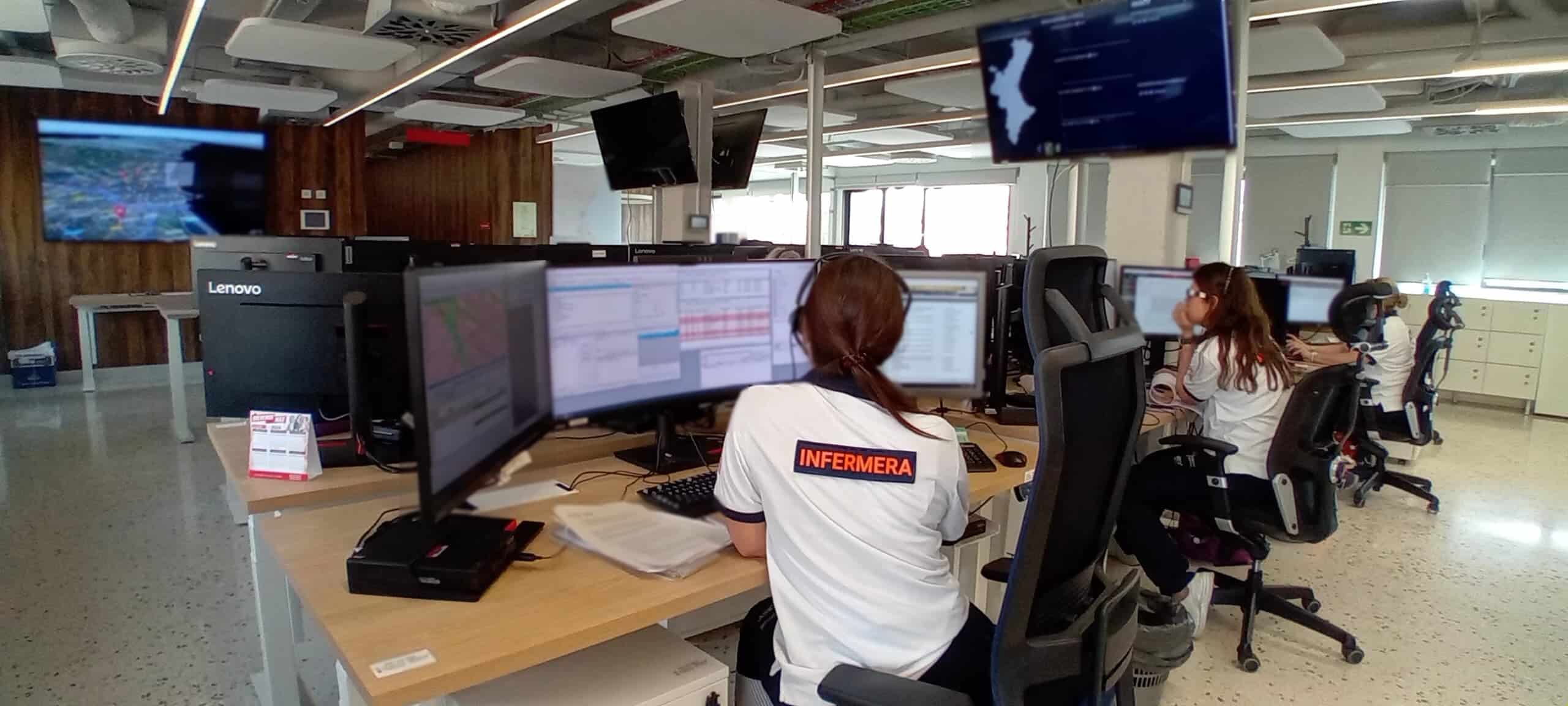
More than 5,000 healthcare professionals and 22 ambulances will be deployed across the Valencian Community as part of a major emergency operation for Wednesday’s solar eclipse.
The regional government’s healthcare plan includes doctors, nurses, porters and emergency medical technicians. Opening hours will also be extended at 15 health centres close to official viewing locations, while hospital emergency departments and ophthalmology services will receive additional staff.
The reinforced eye units will be prepared to treat injuries caused by people viewing the eclipse without suitable protection.
Emergency medical resources will almost double for the event, with 13 additional units entering service and operating hours extended for nine others. The extra deployment includes nine non-emergency transport vehicles, two Basic Life Support ambulances and two specialist support and coordination units capable of reaching difficult emergency locations.
Health departments have also been instructed to reduce non-urgent activity where necessary and bring forward hospital discharges to midday. Scheduled operations are currently expected to continue.
The measures are partly intended to address the anticipated increase in traffic. Spain’s Directorate General of Traffic estimates that between 400,000 and 1.5 million journeys could be made nationwide by people travelling to watch the eclipse, with the Valencian Community expected to be among the most popular destinations.
Experience in other countries has shown that road accidents can increase by around 30% in the hours following an eclipse.
Regional Health Minister Marciano Gómez warned that large crowds could make it more difficult for emergency services to reach casualties near observation points.
“The consequences of an emergency close to viewing areas can be made worse by crowding, which may obstruct access,” he said.
Medical resources will therefore be positioned according to accessibility, distance from healthcare centres and anticipated evacuation times.
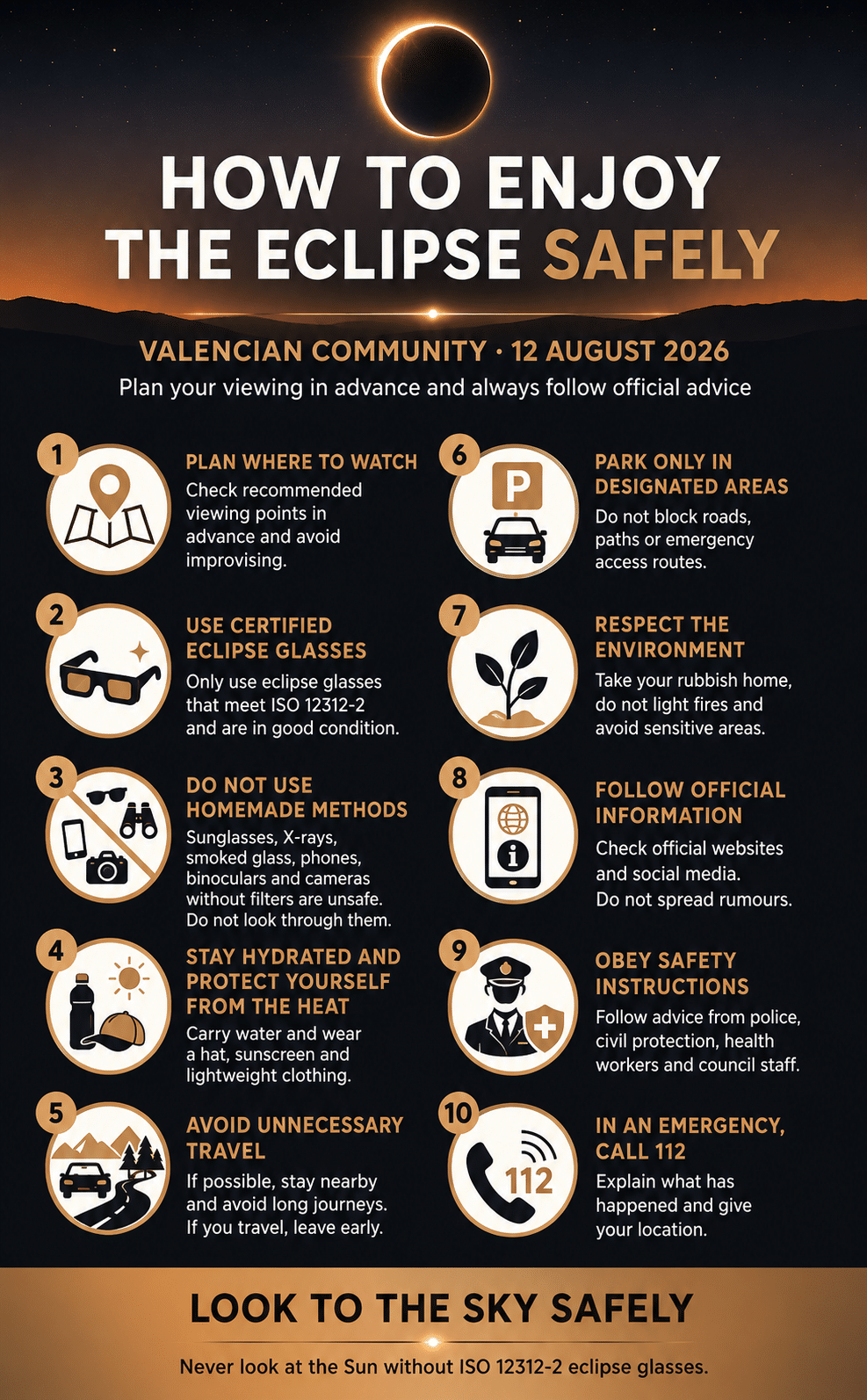
Eye injuries remain one of the authorities’ greatest concerns. Looking directly at the Sun can cause serious and irreversible retinal damage, which is often painless and may not become immediately apparent.
Officials are urging spectators to use only certified eclipse glasses meeting the ISO 12312-2 standard. Glasses should be undamaged and free from scratches or creases. Cameras, binoculars and telescopes must also be fitted with appropriate certified solar filters.
Ordinary sunglasses, X-rays, smoked glass, CDs and other homemade viewing methods do not provide safe protection.
Authorities are also warning about prolonged exposure to the summer heat. Spectators should carry water, apply sunscreen, wear a hat and seek shade whenever possible. Extra care should be taken with children, older people and anyone with a chronic medical condition.