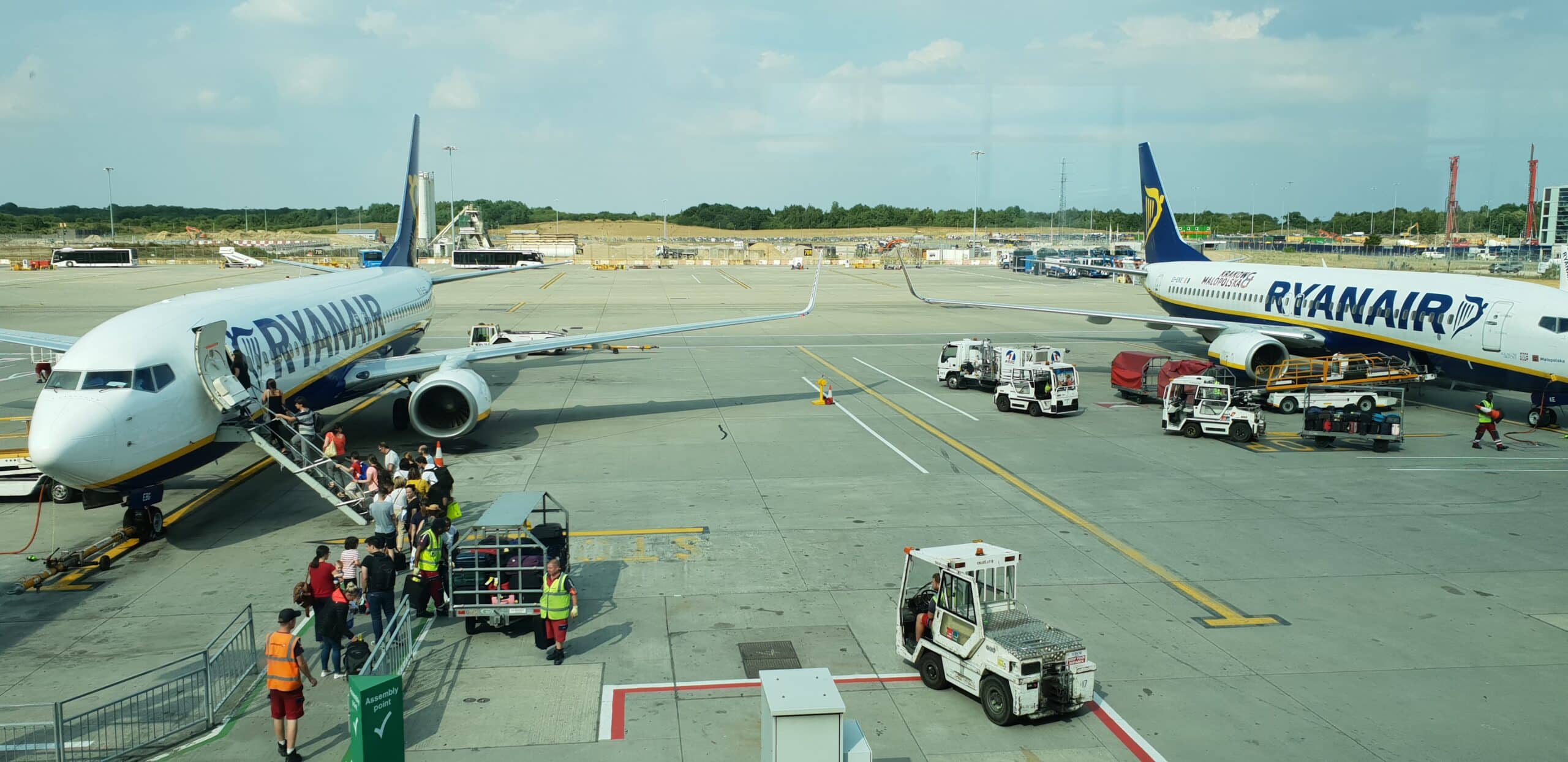
A passenger says Ryanair initially blamed technical difficulties for a flight arriving more than three hours late, before later citing adverse weather when rejecting her compensation claim.
A Ryanair passenger has questioned the airline’s refusal to pay compensation after the stated reason for her flight delay appeared to change from a technical problem to adverse weather.
The passenger was travelling from Barcelona to London Stansted when she received a notification saying the flight had been delayed by two hours because of “technical difficulties” affecting the aircraft.
The flight eventually arrived in London three hours and 20 minutes behind schedule, placing it beyond the three-hour threshold at which passengers may qualify for compensation under UK passenger-rights legislation.
However, when the passenger later attempted to make a claim through Ryanair’s website, she was told that she was not eligible.
The airline’s claim system stated that the flight had been delayed because of adverse weather affecting the aircraft during earlier flights, describing the circumstances as outside Ryanair’s control.
The passenger said she was confused by the explanation because the earlier notification had referred to a technical issue rather than weather. She had not taken a screenshot of the original message and was uncertain whether she could prove what she had initially been told.
Ryanair has since said that both factors affected the flight.
A spokesperson said adverse weather at London Stansted prevented the inbound aircraft scheduled to operate the service from departing Barcelona on time. The aircraft was then delayed again before take-off because of a minor technical issue.
Passenger may still have an arguable claim
Passenger-rights specialists say the case may depend on how much of the overall delay was caused by each factor.
Under UK261 rules, airlines do not normally have to pay compensation when a delay is caused by extraordinary circumstances outside their control, provided they can show that the disruption could not have been avoided even after taking all reasonable measures.
Severe weather that makes flying unsafe can qualify as an extraordinary circumstance. Routine technical defects, however, are generally considered part of an airline’s normal operations and do not usually exempt it from paying compensation.
Allana Wilckens, a passenger-rights legal specialist at Flightright UK, said the passenger appeared to have an arguable claim for €250, approximately £217, because the flight arrived more than three hours late.
She said the airline would need to demonstrate that extraordinary circumstances were responsible for the compensable delay.
The presence of more than one cause is important. Weather may have delayed the aircraft during an earlier stage of its journey, while a subsequent technical or operational problem may have added further time.
In such cases, the airline should explain how much of the delay was attributable to each event rather than assigning the entire disruption to weather, Wilckens said.
If the technical fault caused enough of the final delay to push the flight beyond the three-hour threshold, the passenger may still be entitled to compensation.
Missing screenshot may not prevent claim
The absence of a screenshot of the original notification does not necessarily mean the claim must fail.
Airlines are expected to retain operational records, technical reports and copies or logs of notifications sent to passengers through their apps and booking systems.
The burden is generally on the airline to establish that an extraordinary-circumstances defence applies.
If Ryanair cannot provide sufficient evidence showing that adverse weather was the decisive cause of the qualifying delay, passenger-rights experts say compensation may still be payable.
Tim Riley, managing director of travel insurer True Traveller and chairman of the UK Travel Industry Association, said passengers who dispute an airline’s explanation can challenge the decision through an approved Alternative Dispute Resolution service.
They should retain booking confirmations, boarding passes, delay notices, emails, app notifications, photographs of airport information screens and receipts for any expenses incurred.
Passengers may also request a detailed explanation from the airline, including the precise cause of the delay and a breakdown of the disruption timeline.
Travel insurance may not cover a three-hour delay
Although airline compensation may be available after an arrival delay of three hours or more, travel-insurance policies often apply different conditions.
Many UK policies do not pay delay benefits until a passenger has been delayed for considerably longer, commonly 12 hours or more.
Airline compensation and travel-insurance payments are separate. A passenger may qualify under UK261 even when the disruption is too short to trigger a payout from an insurer.
Flight-delay rights explained
In 2024, around 145 million passengers departed from UK airports, with approximately one in three experiencing a delay or cancellation.
Under UK261, passengers may be entitled to care and assistance while waiting for a delayed flight. Depending on the length of the disruption, this can include food, refreshments, communication facilities and hotel accommodation when an overnight stay becomes necessary.
Compensation may be due when passengers reach their final destination more than three hours late, provided the delay was within the airline’s control.
The amount depends on the distance of the flight and the length of the delay, with compensation potentially reaching £520 on qualifying long-distance services.
Passengers delayed for more than five hours may choose not to travel and request a refund for the unused flight.
Airlines are not normally required to pay compensation when disruption is caused by extraordinary circumstances. These may include:
- Weather conditions incompatible with safe flight operations
- Strikes involving airport workers, air traffic control, border staff or other third parties
- Terrorism, sabotage or serious security threats
- Political or civil unrest
- Hidden manufacturing defects requiring aircraft to be grounded
Ordinary technical faults are generally not regarded as extraordinary because maintaining aircraft is considered part of an airline’s normal business activity.
Passengers whose claims are rejected should ask the airline for a written explanation and supporting evidence. Where the response remains disputed, they may take the case to an approved dispute-resolution body or pursue the claim through the courts.