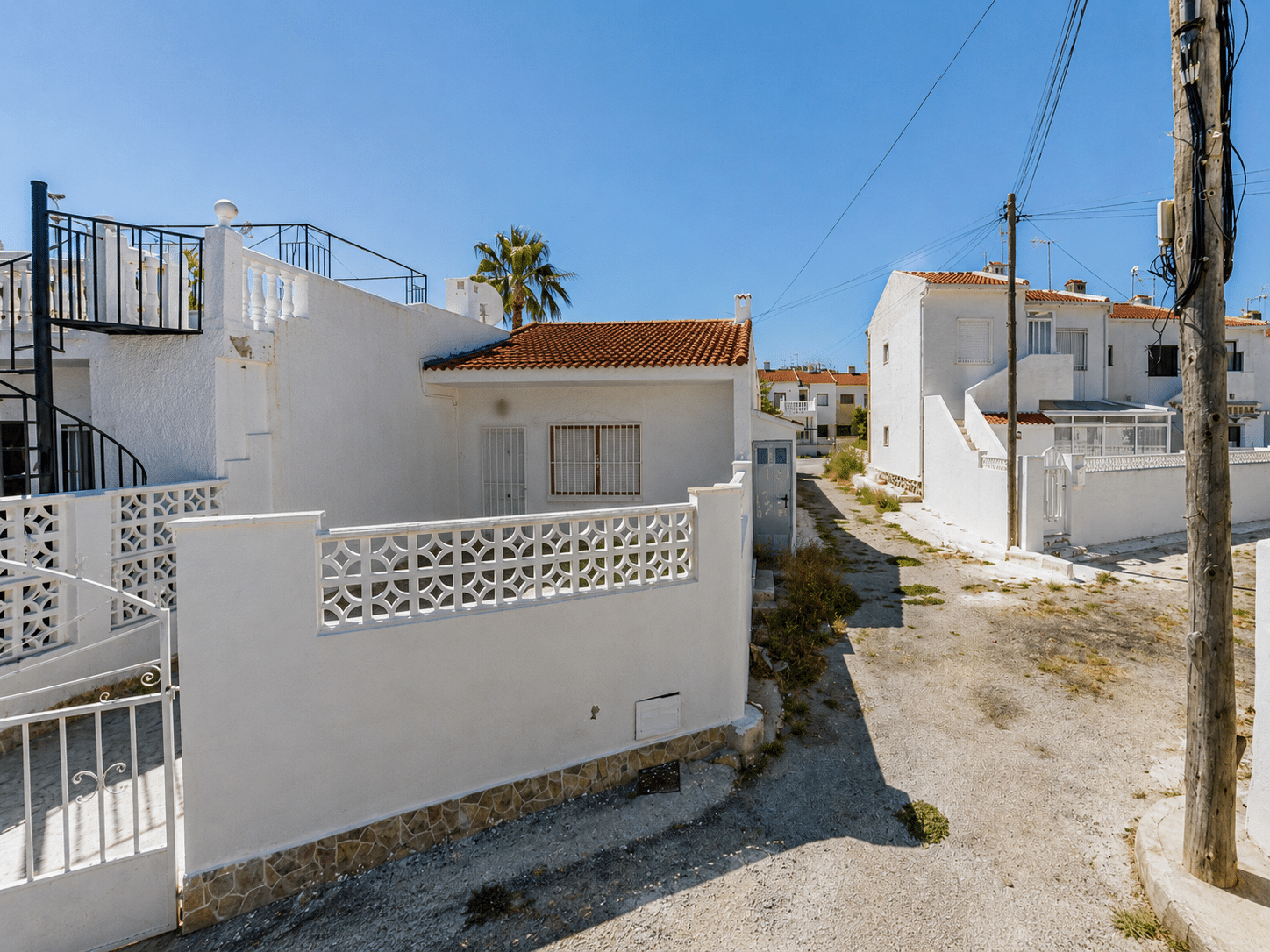
Residents in one of Torrevieja’s oldest urbanisations say they are still living with dirt roads, failing services and years of broken promises while the council focuses on multi-million-euro projects elsewhere.
Seven years after Torrevieja mayor Eduardo Dolón promised urgent action to transform La Torreta III, the long-neglected urbanisation remains largely untouched.
The residential area, built in the 1980s beside Torrevieja’s salt lagoon, was once placed at the centre of a major political pledge. Before returning to office in 2019, Dolón promised an almost immediate re-urbanisation of Las Torretas — a sprawling neighbourhood of thousands of small terraced homes, many of them still surrounded by crumbling streets, poor infrastructure and inadequate municipal services.
But today, residents say the reality is painfully clear: after years of announcements, the most visible improvement is a single new perimeter pavement.
That pavement now stands out, not because it completes a wider regeneration plan, but because it looks new against an otherwise shabby and neglected urban landscape.
A forgotten corner of Torrevieja
La Torreta III sits beside the abandoned municipal mud spa building known locally as La Caracola, a structure that has itself become a symbol of institutional neglect.
The building, part of the council’s own heritage, once benefited from more than €1 million in tourism excellence funding. Yet it now lies abandoned and damaged, with the most recent of many suspected arson attacks recorded in April. The council has not publicly clarified the full extent of the damage or the current condition of the infrastructure.
For residents, it is another reminder of how the area has been left behind.
While Torrevieja has pushed ahead with major investment projects in the town centre, La Torreta III has remained on the margins as council infrastructure priorities have largely been focused away from this ageing urbanisation.
€9.6 million project — but not for the streets first
In January, the council announced approval of a project for the urbanisation works in Las Torretas. The total plan is worth more than €9.6 million.
But even that announcement has frustrated residents.
Instead of beginning with the basic re-urbanisation of the residential streets, lighting, pavements and services, the first phase is expected to focus on creating a 35,000-square-metre green area.
That plot sits beside another 40,000-square-metre developable site where a private developer has presented plans for co-living accommodation with shared communal areas.
The mayor says residents themselves asked for the project to begin with the green zone rather than with the repair of roads, lighting and basic services around the estate. He also maintains that the interior land of the residential area is private.
However, for many living in La Torreta III, the key problem remains unchanged: the public image of the urbanisation continues to be one of deterioration, patchy maintenance and years of delay.
Still no proper streets in parts of Torrevieja
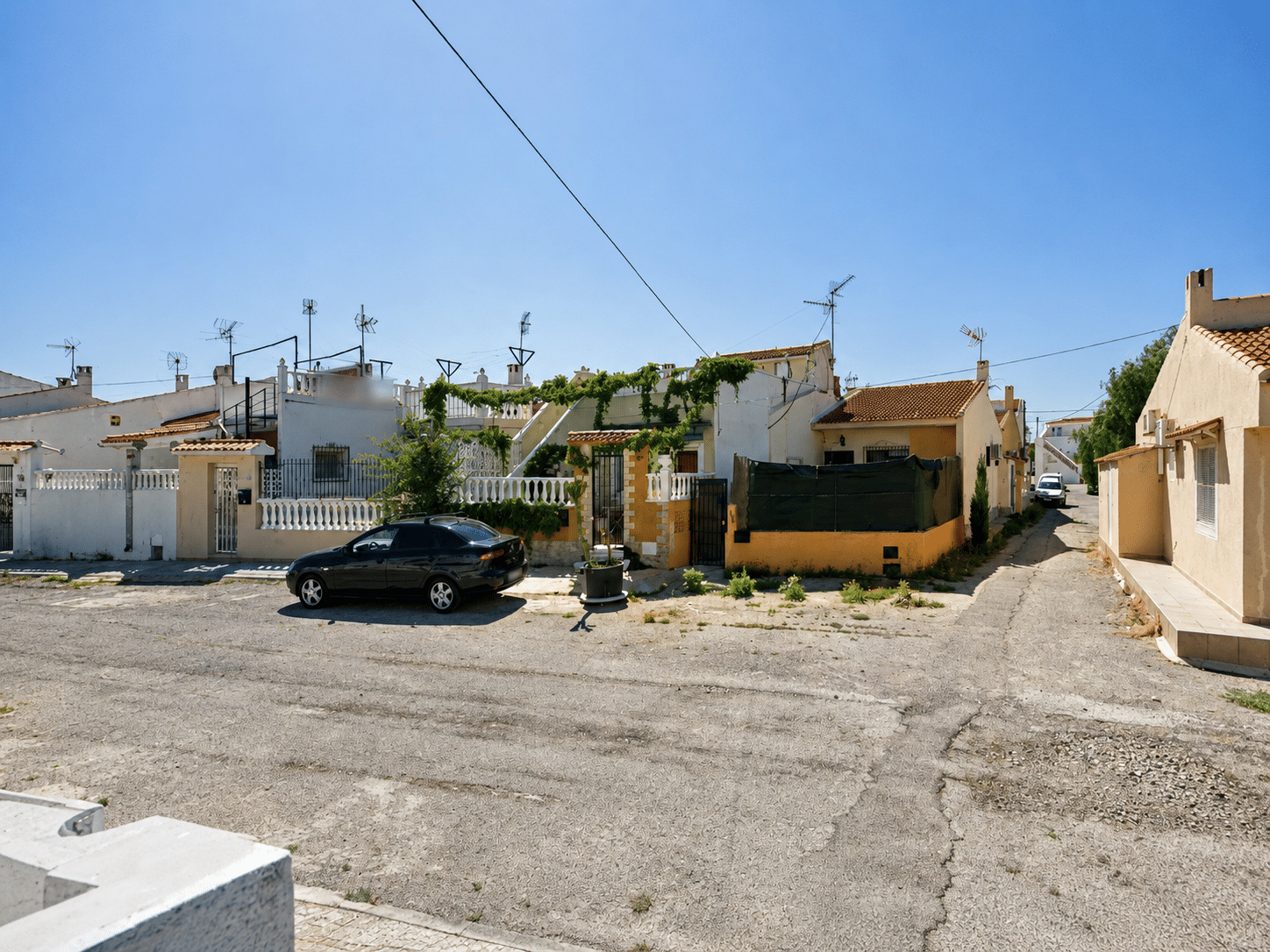
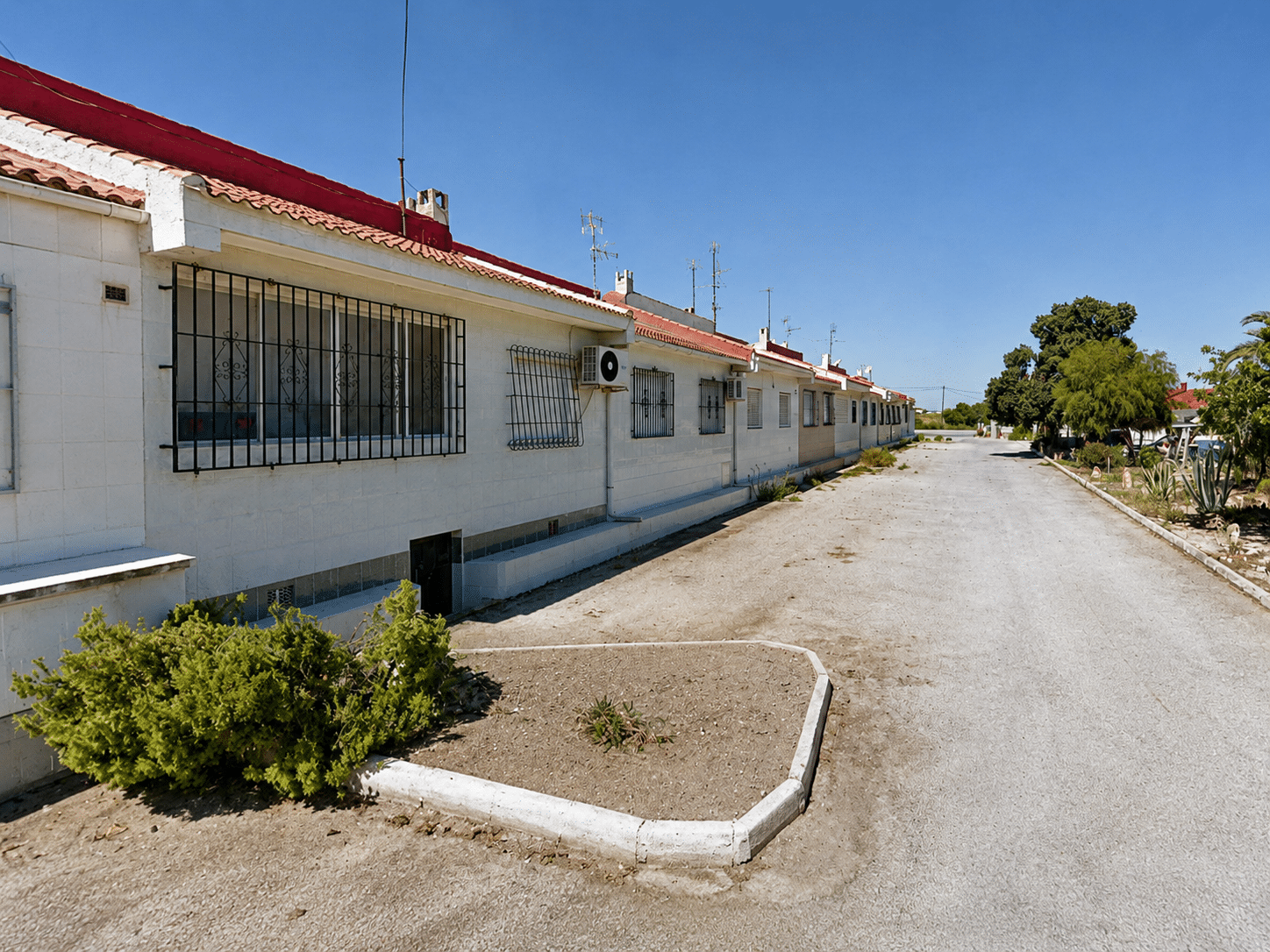
La Torreta III, together with neighbouring La Torreta II, is among the oldest urbanisations in the municipality. Yet these areas still contain some of the only streets in Torrevieja that remain unpaved.
In the best cases, residents have a layer of compacted gravel. In the worst cases, they are still dealing with dirt tracks.
The lack of proper tarmac is only part of the problem. Residents also point to the absence of essential municipal services, including regular cleaning, maintenance and care of parks and gardens.
Basic repairs to the water supply and sewage network can become a nightmare. The pipes were designed without individual connections to the street and instead run beneath the terraced homes. When a fault occurs, it can affect neighbouring properties, while the water company Agamed is often unable to intervene directly.
Residents left to maintain what the council has not
In the absence of a properly organised owners’ community, many residents continue to maintain parts of the area individually.
The result is what locals describe as a kind of organised chaos. Some residents do what they can to keep shared spaces tidy, while weeds, illegal extensions and deteriorating public areas continue to spread.
There are also daily examples of neighbourly solidarity. Many residents look after their own small patch of what functions as public space, even though the wider area remains without the level of municipal care seen elsewhere in the city.
The rise of tourist apartments has also reached La Torreta III. A small number of the tiny terraced houses have been renovated, with bright white façades, security cameras and a fresh appearance. But these isolated improvements only make the wider neglect more visible.
A park before basic services
According to the engineering documentation prepared by Vielca, the project includes three main areas of intervention.
The first involves the planned green zone. The second would cover the renovation of around 50% of the current roads in the urbanisation, including basic infrastructure across approximately 40,000 square metres. This would include pavement repairs, road resurfacing and the renewal of drinking water, sewage, electricity and public lighting services.
But this second stage is expected only in the medium term, after the park is built.
For residents who have waited years for action, that sequencing has raised obvious questions: why is a new park being prioritised before roads, lighting, water, sewage and basic urban dignity?
From election promise to endless delay
The re-urbanisation of Las Torretas was one of Dolón’s flagship promises while in opposition to the left-wing coalition government that ran Torrevieja between 2015 and 2019.
Seven years later, the transformation promised to residents has not arrived.
The council has spent €500,000 on drafting the project, but the works still require authorisation from other administrations. Because the planned park borders coastal public domain, approval is needed from Spain’s Ministry for Ecological Transition. The Generalitat, which manages the natural park, must also give its approval.
Meanwhile, the urbanisation remains stuck between paperwork, private land arguments and phased plans that have yet to deliver the basic improvements residents say they need most.
Council now points to owners’ communities
The local government had previously suggested it could intervene in some of the shared private spaces, which in practice are freely accessible. It has now shifted its position.
The council is instead urging residents to create formal owners’ communities, as happened in other developments such as Torrealmendros and La Torreta I.
But for La Torreta III, where decades of urban neglect have left streets unfinished, services patchy and public areas poorly maintained, that message is unlikely to calm frustration.
After seven years of promises, the residents of La Torreta III are still waiting for more rather than a single pavement.