The Chamber of Commerce says Orihuela City Council must carry out a rigorous economic impact study before introducing a Low Emission Zone, warning that poorly designed restrictions could further weaken the historic centre and harm local businesses.
The Orihuela Chamber of Commerce has submitted a series of proposals and recommendations to Orihuela City Council ahead of the drafting of the municipality’s Low Emission Zone project, known in Spain as a Zona de Bajas Emisiones or ZBE.
The preliminary consultation process, opened by the council to allow public participation, closed last Tuesday. Following input from businesses, retailers, self-employed workers and other affected sectors, the Chamber has warned that the proposed scheme must not be approved without a detailed assessment of its economic consequences.
Chamber president Mario Martínez said any project drafted by the council must include a rigorous economic analysis of the sectors likely to be affected. He stressed that this is not merely advisable, but a requirement under Spain’s Market Unity Guarantee Law.
According to the Chamber, the introduction of a Low Emission Zone could have serious consequences for Orihuela’s commercial activity if it is not adapted to the reality of the municipality.
Historic centre already under pressure
Martínez said Orihuela’s historic centre is home to traditional commerce that already needs urgent support to halt its decline. Adding vehicle restrictions without proper planning, he warned, could make the situation worse by reducing access for customers, suppliers and delivery operators.
“We have a historic centre with traditional businesses that require urgent measures to stop their decline,” Martínez said. He added that Orihuela’s scattered geography must also be taken into account, with long distances between the city centre, outlying districts and the coast.
The Chamber also points to the lack of adequate public transport across the municipality. This, it says, has created a strong dependence on private vehicles for residents, workers, businesses and customers.
For that reason, the Chamber argues that any Low Emission Zone must recognise Orihuela’s specific circumstances rather than applying a standard urban model that may work in more compact cities with stronger transport networks.
Risk to deliveries and local business
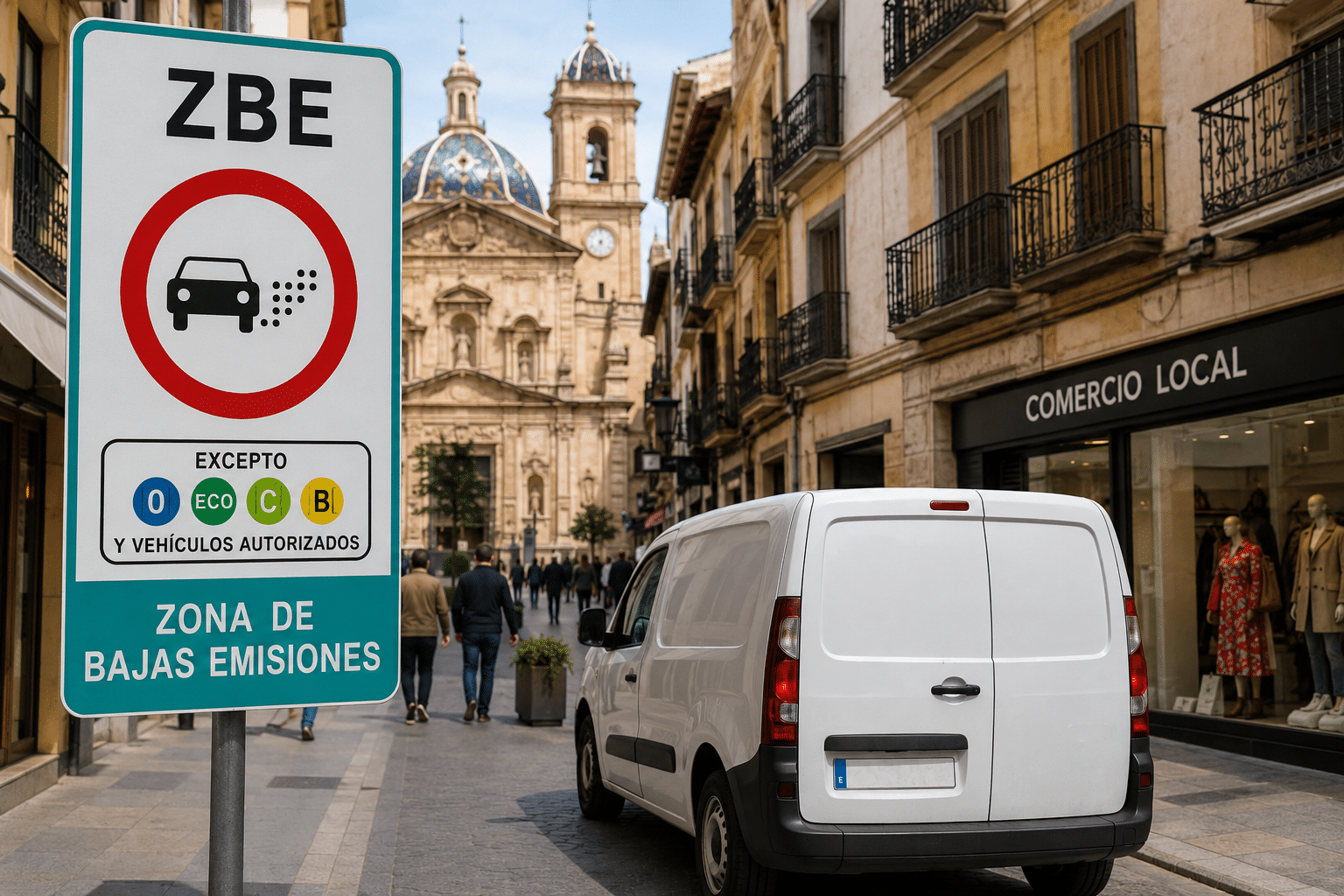
One of the Chamber’s main concerns is the potential impact on logistics and distribution, which it describes as essential for local trade.
Retailers, hospitality businesses, service providers and small companies depend on regular access for deliveries, maintenance vehicles and customers. Restrictions on vehicle access, if introduced too quickly or too broadly, could increase costs, disrupt supply chains and make town-centre businesses less competitive.
The Chamber has therefore called for transitional periods and exemptions for sectors that rely on motor vehicles. These include goods delivery, retail trade, care and assistance services, and maintenance vehicles.
It also says the council must provide realistic alternatives before restrictions are imposed. These should include better public transport links between the city centre, the outlying districts and the coast, park-and-ride facilities, more electric vehicle charging infrastructure, and incentives to help businesses renew their fleets.
Without these measures, the Chamber warns, the LEZ could become another burden on businesses already facing difficult trading conditions.
Concern over the proposed perimeter
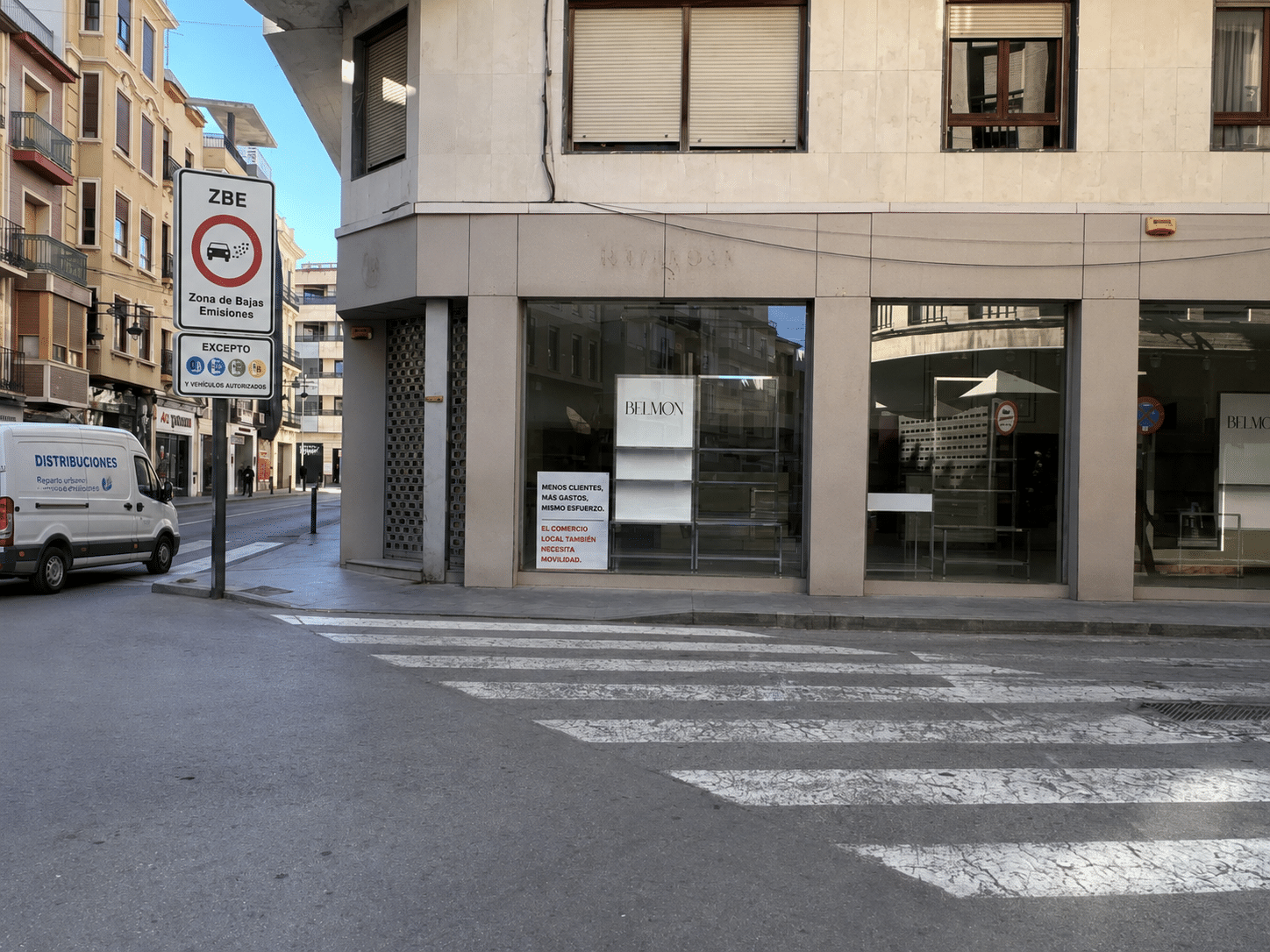
The Chamber has placed particular emphasis on the possible perimeter of the Low Emission Zone in the historic centre, which is identified as the main area in Orihuela’s Sustainable Urban Mobility Plan.
Martínez warned that restrictions in this area could accelerate the loss of economic activity if they are not accompanied by proper infrastructure and carefully designed regulations.
“The introduction of restrictions could worsen the loss of economic activity, make access more difficult for customers and suppliers, and negatively affect the competitiveness of the urban centre if it is not properly equipped with infrastructure and regulatory measures,” he said.
The Chamber believes the project must study in detail how the boundaries of the LEZ would affect shops, restaurants, service businesses and other operators in the city centre.
Call for clear and proportionate rules
The Chamber is also urging Orihuela City Council to ensure that the rules governing the Low Emission Zone are fully aligned from the outset with regional and national regulations.
It warns against excessive or unjustified restrictions and says businesses need legal certainty, consistency and time to adapt.
The Chamber recalled that the Spanish Chamber of Commerce has already warned on several occasions about the risks of different municipalities applying inconsistent regulatory criteria. Such differences, it says, can create legal uncertainty and additional costs for both companies and residents.
For Orihuela’s business community, the message is clear: environmental objectives must be balanced with the survival of local trade.
The Chamber says it is not opposing cleaner mobility, but insists that any Low Emission Zone must be realistic, proportionate and adapted to Orihuela’s unique geography, weak public transport links and fragile town-centre economy.