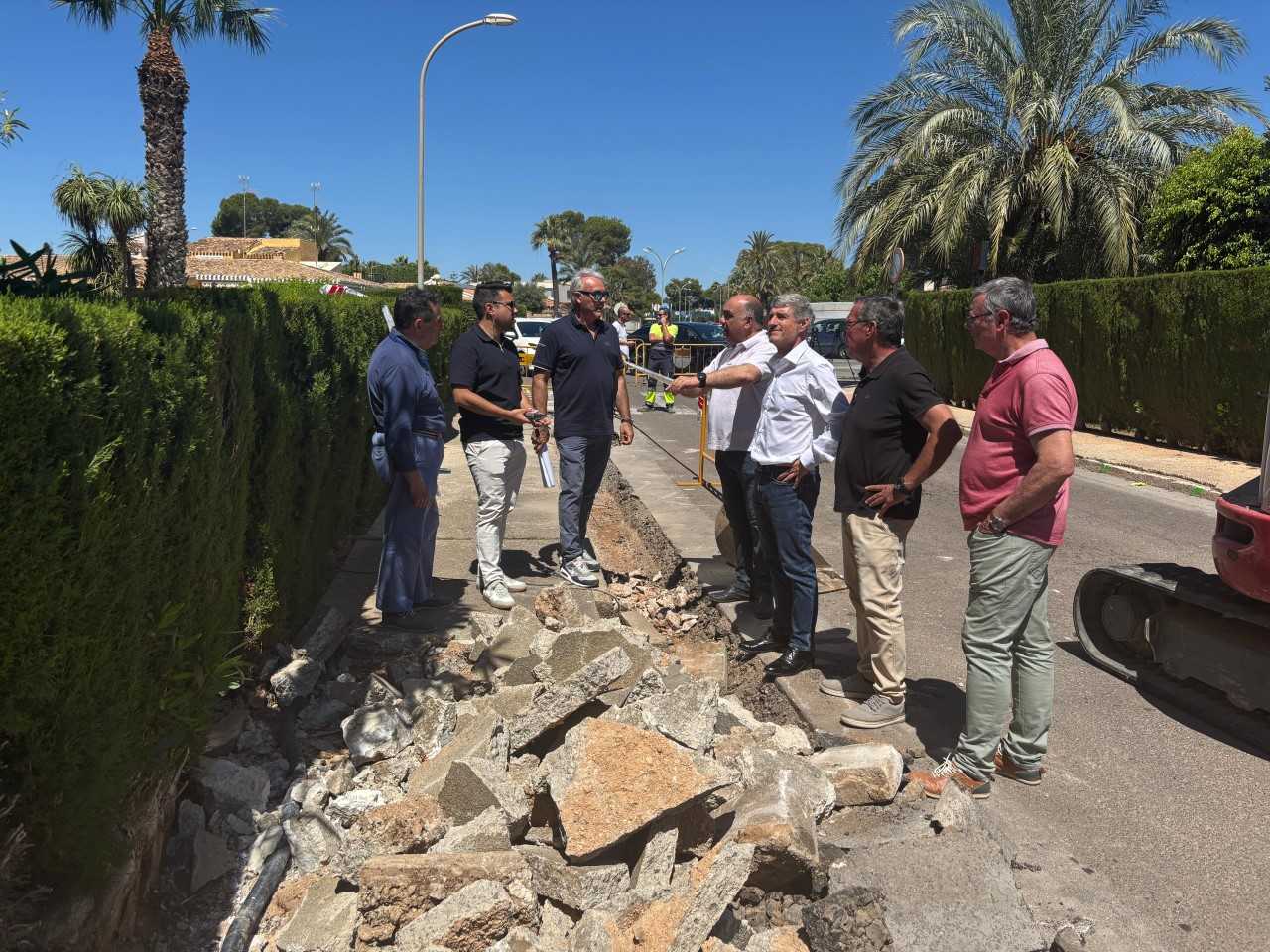
Work has begun on the comprehensive redevelopment of Miguel de Cervantes Avenue in Dehesa de Campoamor, Orihuela Costa, with the project expected to continue in phases until April 2027.
The scheme represents an investment of more than €1.2 million and includes the renewal of the drinking water network, road resurfacing, pavement improvements, new kerbs, better accessibility, upgraded lighting and measures to improve traffic flow and pedestrian safety.
The first phase will focus on the replacement of the drinking water supply network, which is being renewed due to its age and previous service issues. Around 1,217 linear metres of pipework will be replaced using ductile iron pipes, along with new service connections, valves and sectorisation elements to improve efficiency and reduce breakdowns.
This water network phase has a budget of approximately €260,000 and is expected to take around three months. Work will pause at the end of June to avoid disruption during the peak summer season and will resume in September. This phase is scheduled to be completed by the end of October 2026.
The second phase will involve the full redevelopment of the road itself, with around €1 million allocated to resurfacing, pavement and kerb renewal, accessibility improvements, new street lighting, illuminated pedestrian safety signage and changes designed to improve traffic circulation.

One of the main elements of the project will be the remodelling of the roundabout at the junction with Calle Saavedra Fajardo, which will be realigned to improve road safety and traffic flow.
The road improvement works are expected to begin after the completion of the water network phase, with a planned duration of around six months. On that basis, the resurfacing and paving works are expected to start in November 2026 and be completed by April 2027.
Miguel de Cervantes Avenue is one of the main roads in Campoamor and a key access route into Orihuela Costa from the south. The project is intended to modernise the avenue, improve safety for pedestrians and drivers, and upgrade essential infrastructure in one of the area’s older residential zones.