The remains of Antonio Ortega, a former president of Real Madrid during the Spanish Civil War, are set to be exhumed from a mass grave in Alicante alongside more than fifty other victims of Francoist repression. Despite his role leading the club between 1937 and 1938—when it was known as Madrid Football Club after dropping the royal title granted by Alfonso XIII—Ortega is still not officially recognised on the club’s website.
Ortega, born in Burgos in 1888, held several prominent positions during the war. He served as a senior security official under the government of Juan Negrín, joined the Communist Party in 1937, and rose to the rank of colonel in the Republican Army. He also acted as civil governor of Gipuzkoa and led Basque anti-fascist militia units.
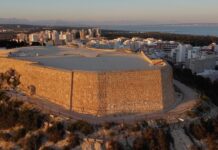
Following the Nationalist victory in 1939, Ortega fled to Alicante hoping to escape abroad but was captured by Francoist forces. After being held in concentration camps at Los Almendros and Albatera, he was transferred to Santa Bárbara Castle. There, after a summary trial, he was executed by garrote, a form of strangulation, on 15 July 1939 at the age of 51. His body was buried in a mass grave in Alicante’s municipal cemetery alongside 52 other men executed in similar circumstances.
Efforts to recover the remains date back to 2022, when the regional Valencian government began work on the grave. The project became more complex and costly after additional bodies were discovered buried above the original victims, likely from later decades. Despite increased funding, the initial contractor withdrew from the project in 2025.

Now, the town council of Aspe has secured new funding to proceed with the exhumation, expected to begin as early as August. The Spanish government will finance the recovery work, while DNA identification will be supported by the Basque Government’s Institute of Memory and Human Rights.
Local officials have also called on Real Madrid to formally acknowledge Ortega’s presidency. As Aspe’s mayor has stated, beyond returning the remains to his family, there is a broader goal of restoring dignity, historical memory, and justice to victims who suffered repression.
The mass grave—known as Grave IX—contains the remains of 52 people executed between May and August 1939 following the collapse of the Republic. Its exhumation is being carried out in collaboration with several municipalities in the Alicante province, marking another step in Spain’s ongoing efforts to address the legacy of the Civil War and dictatorship.