Orihuela’s Family Observatory has proposed the creation of family and maternity parking spaces in the municipality to improve mobility and safety for pregnant women, families with babies and carers of young children.
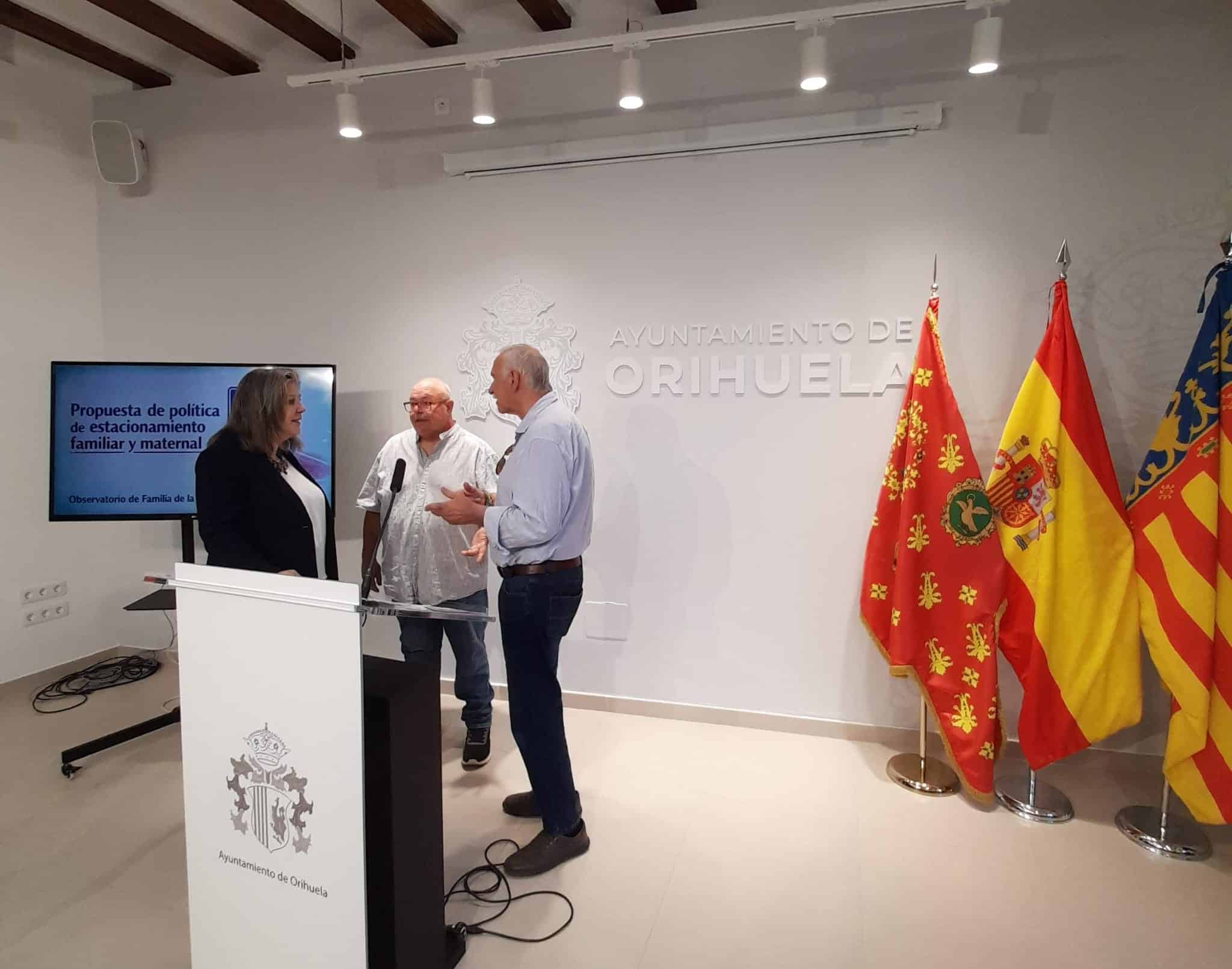
The proposal was presented by Councillor for Family M.ª del Carmen Portugal under the title “Family and Maternity Parking Policy Proposal”. It aims to adapt urban spaces to the needs of families in different areas of the city.
The initiative includes the creation of reserved parking spaces for large families, single-parent families and foster families with children under the age of three, as well as for pregnant women, particularly during the final trimester of pregnancy.
The proposal also includes temporary permits, specific signage and parking spaces strategically located near schools, health centres, the hospital, pharmacies and other essential services.
During the press conference, Portugal said the measure seeks to adapt the city to the real needs of families.
“This proposal sends a clear message: Orihuela recognises the importance of motherhood, childhood and families, and wants to adapt urban space to their real needs,” she said.
The initiative has been developed by the Orihuela Family Observatory with the collaboration of associations including ASAFAN, RedMadre Alicante, Zarpar, FAMOCOVA and Fundación Madrina.
According to the document, the aim is to provide a concrete response to mobility difficulties linked to advanced pregnancy, early childhood care and the transport of young children, while ensuring that the measure does not affect spaces reserved for people with disabilities.
The report initially proposes creating ten spaces near schools in Orihuela, including Andrés Manjón, Jesús María, El Carmen and Santo Domingo schools, as well as the Professional Conservatory of Music.
It also proposes the introduction of “Kiss & Go” zones to make it easier for pupils at infant and primary schools to be dropped off and picked up quickly.
Ángel Terrés, a member of Zarpar’s board of directors, highlighted the importance of including foster families in the measure.
“We contributed to this initiative by ensuring that foster families were included in this group, because foster families and educating families regularly care for children,” he said. “It is necessary to make their work easier so that they do not have to provide documentation every time they take in a new child, and so they can be permanently covered by this measure.”
ASAFAN coordinator Benito Zuazu also underlined the social value of the proposal for the municipality.
“With this measure, we want to show that raising children in families is not a privilege, but an investment in social cohesion, wellbeing and the future of Orihuela,” he said.
The proposal also includes an annual monitoring system to assess the number of permits issued, the effective use of the parking spaces and the level of satisfaction among families using them.
The Family Observatory believes the policy will allow Orihuela to strengthen its position as a benchmark city for family policies within the European Network of Family Friendly Municipalities, while moving towards a more humane, accessible urban model committed to motherhood, childhood and families.
The Family and Maternity Parking Policy Proposal will now be submitted to the relevant municipal departments and other institutions.