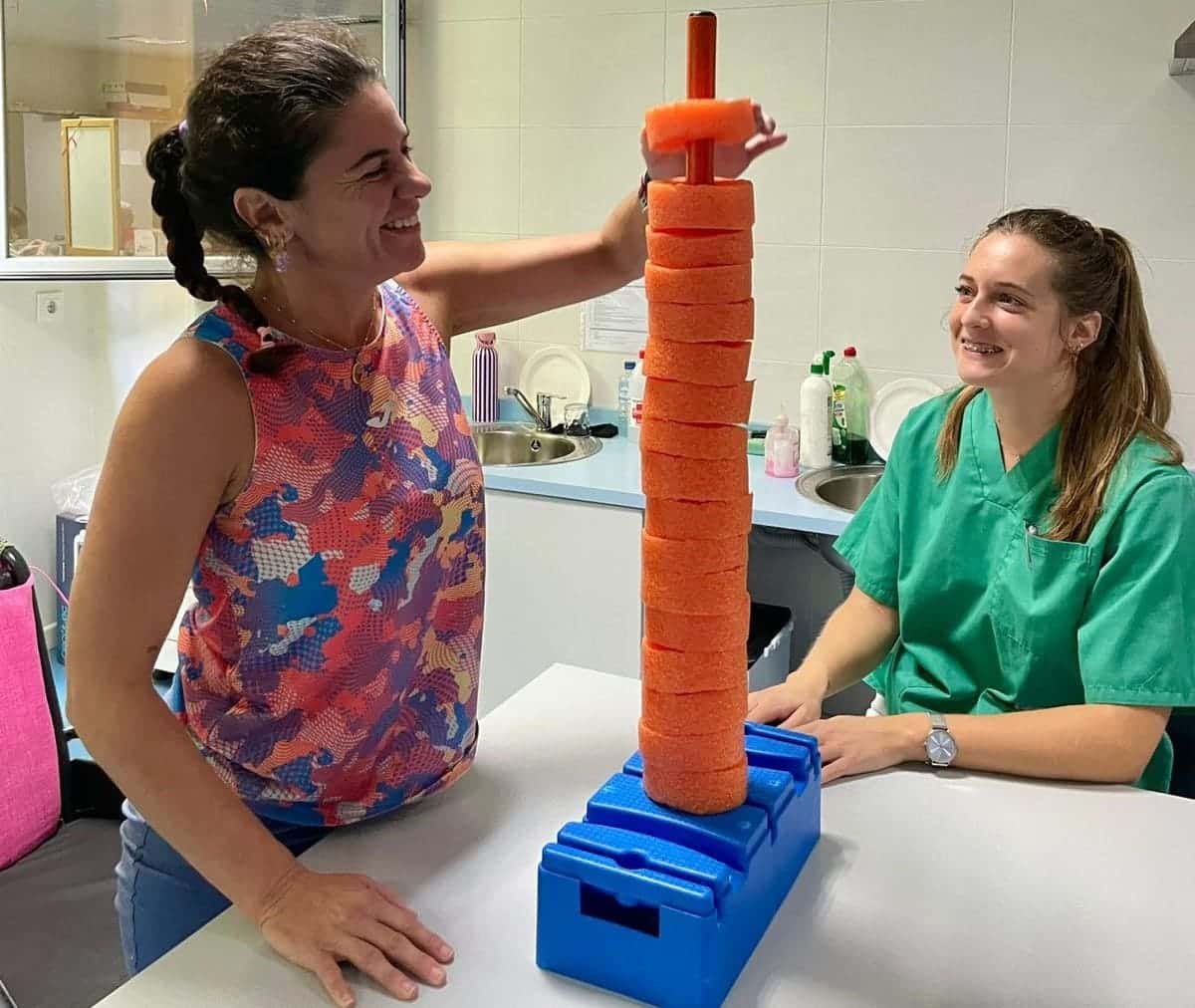
At 47, Antonia Monjo — affectionately known as Toñi — faced one of the greatest challenges of her life when she suffered an ischemic stroke on July 1. The event left her hospitalized in the ICU and profoundly changed her day-to-day existence.
After stabilization, she was transferred to the Casaverde Extremadura Hospital in Mérida, a center specializing in neurological rehabilitation. There, she began a demanding, science-based recovery process aimed at helping her reclaim her independence.
When Toñi arrived, she could neither walk nor communicate effectively and required a nasogastric feeding tube. Her left side was severely weakened, and she had lost trunk control, forcing her to rely on a wheelchair. Her Barthel Index — which measures functional independence — ranged between 20 and 30, indicating a high level of dependence.
The multidisciplinary team at Casaverde Extremadura designed an individualized, evidence-based neurorehabilitation program combining advanced technology, therapeutic coordination, and strong patient motivation.
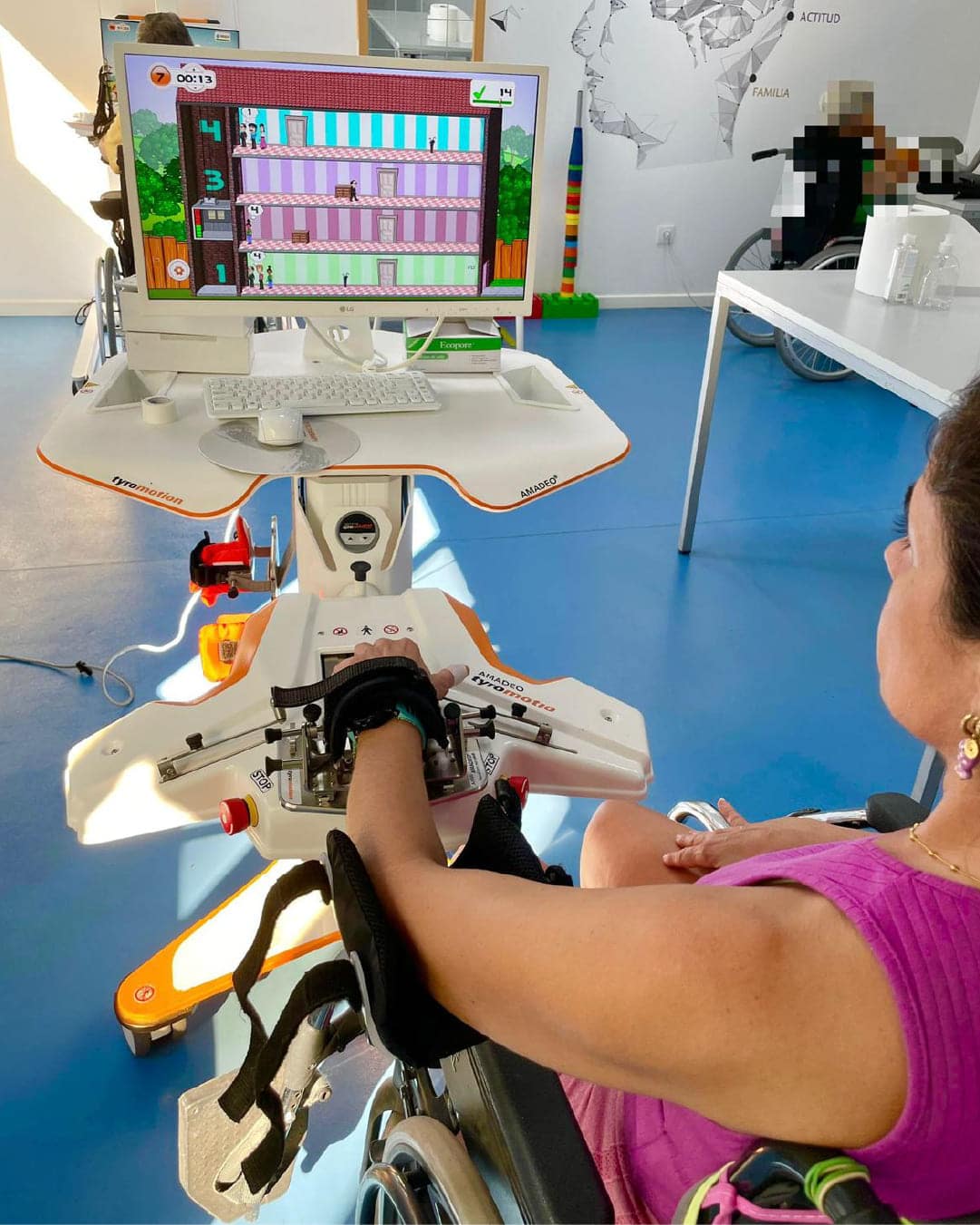
Occupational Therapy: Relearning Everyday Life
In Occupational Therapy, the focus was on regaining independence in Activities of Daily Living (ADLs). Using Tyromotion robotic devices (Amadeo, Diego, and Pablo), along with precision and fine-motor exercises, Toñi gradually improved the movement, strength, and coordination of her left arm.
Her therapists were amazed by her determination and perseverance. One of her proudest milestones was being able to shower unaided — a symbol of regained dignity. Today, she can also dress herself, tie her shoes, and complete daily tasks independently, greatly boosting her self-confidence.
Physiotherapy: Taking Back Her Steps
At the start, Toñi couldn’t even sit upright. Within a week, she regained trunk control, leading to standing and taking her first steps. Through advanced robotics like the Lexo system, therapeutic circuits, and pool therapy, she transitioned from a wheelchair to walking with a cane.
Her physiotherapist, Santiago Canónico, highlights how varied, outdoor exercises help her adapt to real-world barriers such as slopes, stairs, and uneven ground.
Speech Therapy: Finding Her Voice Again
Toñi initially struggled to produce basic sounds, severely limiting communication. Focused therapy targeting articulation, orofacial coordination, and vocal projection helped her progress to a moderate level of dysarthria.
She now speaks intelligibly, with improved breath control, vocal strength, and endurance, regaining a functional means of communication and oral feeding.
The Casaverde Extremadura team celebrates Toñi’s remarkable progress, achieved through science, teamwork, and resilience — a story that exemplifies hope, determination, and the transformative power of comprehensive neurorehabilitation.