A growing number of restaurants are rejecting requests from social media influencers seeking free meals, drinks and experiences in exchange for online publicity.
Signs declaring that content creators are unwelcome have recently attracted attention online, reflecting a wider debate already developing across Spain and other countries.
Restaurant owners say they are becoming overwhelmed by collaboration requests that provide no guaranteed return. In many cases, influencers offer to publish a review, video or series of social media stories in return for complimentary food and drink.
The central question for businesses is whether the resulting exposure attracts enough paying customers to justify the cost and disruption.
Free Meals or Professional Marketing?
The backlash does not necessarily represent a rejection of all content creators. Many restaurant owners distinguish between properly organised marketing campaigns and unsolicited requests for complimentary meals.
One recent example involved a traditional restaurant in La Laguna, Tenerife, which publicly stated that it would not provide food in return for posts or favourable opinions.
However, the business said it remained open to working with creators through transparent advertising campaigns, with the terms, objectives and compensation agreed in advance.
For some smaller restaurants, an endorsement from a creator with a substantial and engaged following can provide valuable exposure. A successful Instagram video, TikTok post or YouTube review can introduce a business to thousands of potential customers.
Other restaurateurs argue that follower numbers alone provide little indication of commercial value. A creator may have a large audience that lives in another country, falls outside the restaurant’s target market or rarely acts on recommendations.
Some accounts may also have inflated follower figures or poor engagement, making it difficult for businesses to measure whether a complimentary meal generates any meaningful return.
Disruption Inside Restaurants
The controversy extends beyond the cost of providing free food.
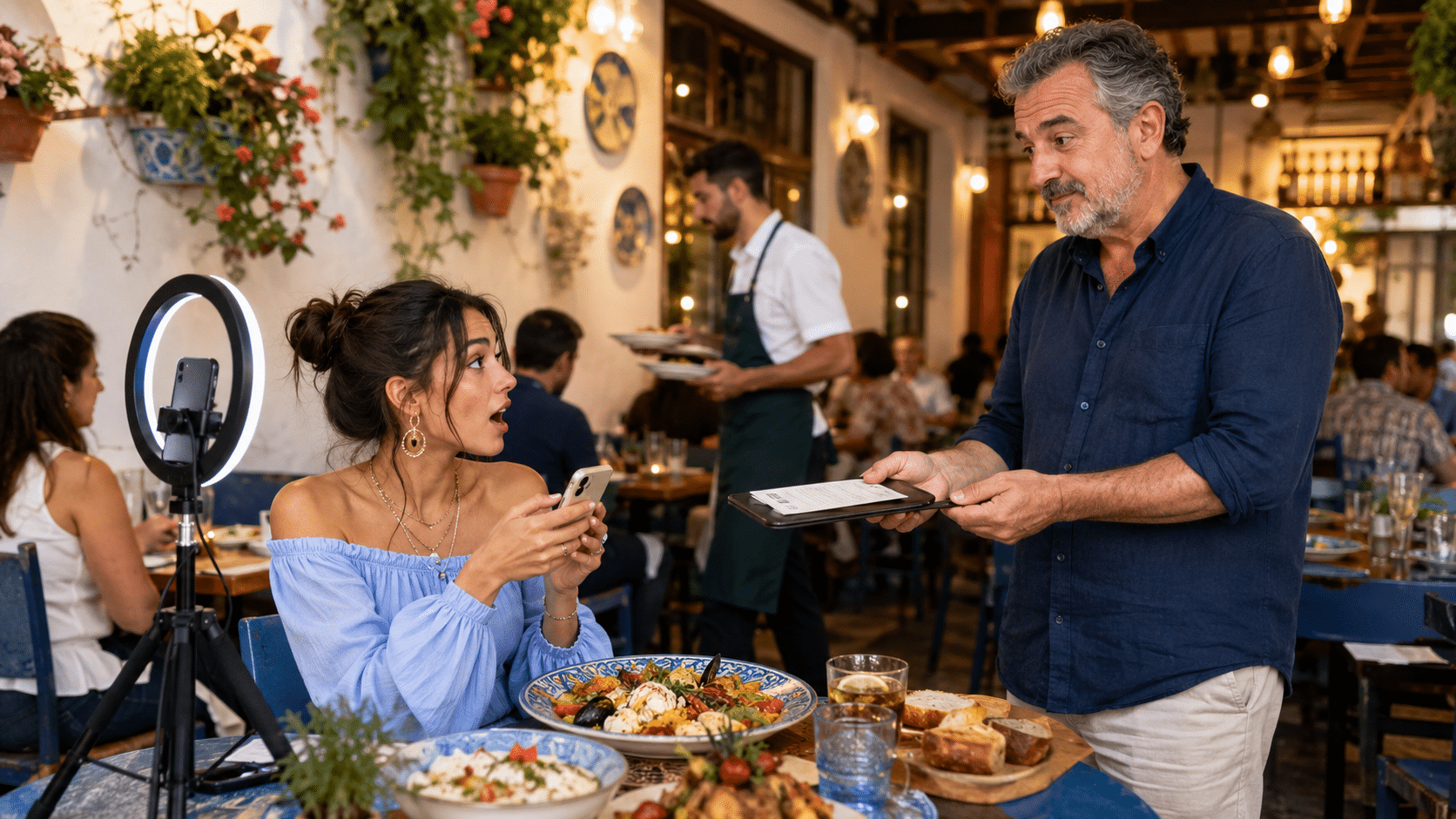
Creating professional-looking social media material can involve lights, tripods, microphones and repeated filming. Influencers may spend extended periods arranging dishes or recording several versions of the same scene.
Restaurant owners complain that this can slow table turnover, obstruct staff and disturb customers who do not wish to appear in someone else’s content.
Problems arise when the dining room is treated as a film set and the experience of paying customers becomes secondary to capturing the perfect image.
As a result, some establishments are introducing rules controlling filming, photography and the use of equipment inside their premises.
Content creators argue that their work requires time, technical skill and an understanding of online audiences. They also point to examples in which a single recommendation has dramatically increased bookings or transformed a relatively unknown restaurant into a popular destination.
Can Restaurants Ban Influencers?
The legal position is more complicated than a sign simply declaring “No Influencers”.
Spanish restaurants have a right of admission, but legal specialists say this cannot normally be used to exclude someone solely because they are an influencer.
What businesses can regulate is conduct inside the establishment. This may include filming without permission, using equipment that obstructs staff, disturbing other customers or interfering with normal service.
Any restrictions should be objective, proportionate, communicated in advance and applied consistently. They must not be arbitrary or discriminatory.
The distinction is important: restaurants can restrict disruptive behaviour or unauthorised commercial filming, but generally cannot refuse an ordinary paying customer merely because they create content online.
Calls for Clearer Agreements
The dispute suggests that the informal “free meal for a post” arrangement is losing its appeal.
Restaurants increasingly want influencer promotions to be treated like any other marketing campaign, with agreed deliverables, publication dates, audience information and methods for measuring results.
Businesses may also expect creators to disclose that a meal or experience was provided free of charge. This allows the public to distinguish between a spontaneous recommendation and paid or sponsored advertising.
The changing approach does not necessarily signal the end of collaborations between restaurants and influencers. Instead, it may mark the professionalisation of a relationship that has often operated without clear rules.
Influencers capable of demonstrating genuine value are still likely to find willing partners. Those relying solely on follower numbers and promises of “exposure”, however, may increasingly be asked to pay their own bill.