Town Hall says fixed speed cameras and more officers on the streets are behind the sharp rise in penalties for speeding and illegal parking.
Torrevieja City Council collected almost 69 per cent more in traffic fines than it had budgeted for in 2025, pulling in more than €1.4 million as enforcement on the town’s roads stepped up sharply.
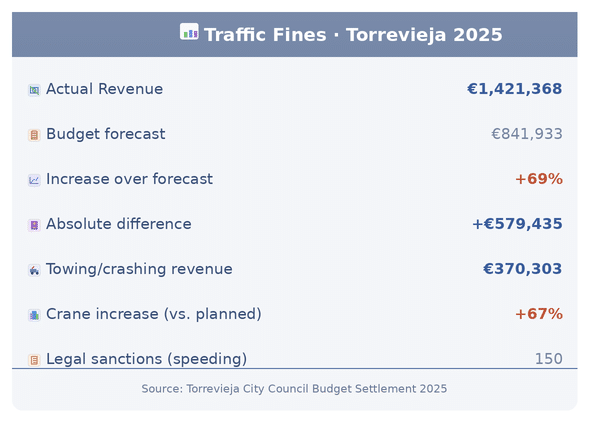
According to the 2025 budget settlement, the council had forecast revenue of €841,933 from traffic penalties. In the end, it collected €1,421,368 — a huge increase that has made traffic fines one of the standout figures in the accounts due to be presented to the municipal corporation.
The surge is largely down to two measures introduced by the council’s Traffic Department over the past two years: the installation of four fixed speed cameras on Avenida Cortes Valencianas, Avenida Desiderio Rodríguez, Avenida Gregorio Marañón and Avenida Alfredo Nobel, along with a mobile radar unit, and a much stronger police presence on the streets.
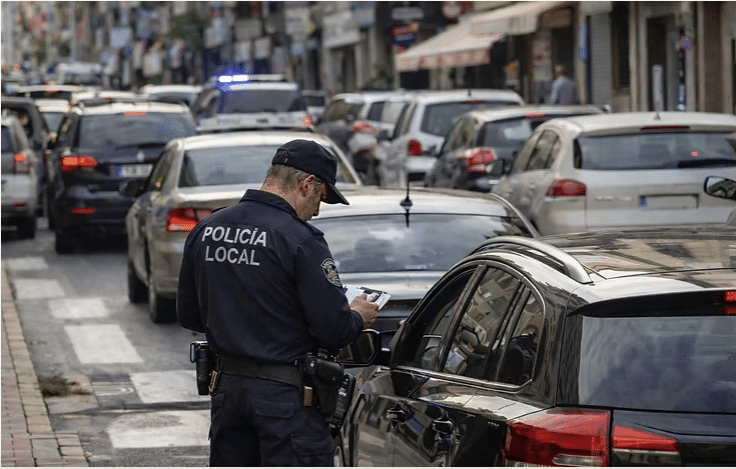
The number of officers has risen from around 135 in recent years to nearly 180, allowing more patrols to focus on traffic enforcement, especially illegal parking and speeding.
The tougher approach has also meant more business for the company running the tow truck and vehicle pound service. The council had expected towing-related income to reach €222,285.70, but the company actually took in €370,303 — around 67 per cent more than forecast, a difference of almost €148,000 reflected in the wider municipal accounts.
Even so, Torrevieja remains one of the cheapest municipalities in the Valencian Community for vehicle removal charges, with towing fees below €60.
Town Hall insists the speed cameras are not just about raising money. Their main role, officials say, is to warn drivers and cut speeds on some of the town’s busiest urban avenues, where there have been serious accidents in the past, including fatal collisions involving pedestrians.
Fines for speeding can reach €600 and may also carry driving licence penalties. The cameras have also triggered a large number of administrative appeals.
Traffic Councillor Federico Alarcón defended the system, saying the fixed cameras are clearly signposted and have had a real impact on driver behaviour.
“They have substantially reduced average speed because they are fixed, they are always there,” he said. “They are not police officers who can issue tickets temporarily.”
Alarcón added that since the cameras began operating two years ago, 150 drivers have been reported for travelling at three times the speed limit, an offence that can amount to a crime against road safety.
He said the council now wants to go even further, with trials already under way to create a specialist traffic control unit made up of 21 officers with the power to issue fines. The aim is for the new unit to be operating before the start of the next school year, although it could be ready as early as this summer. The contract for the fleet of vehicles for the new officers has already been awarded.
The council is also moving ahead with the long-awaited return of regulated parking, the ORA or Blue Zone system, which has not been in place in Torrevieja since the 1990s.
The scheme will affect more than 3,500 spaces across a large part of the town centre and roads around the beaches of El Cura, Los Locos, La Mata and Los Náufragos. Although it had originally been expected to be up and running by last December, delays caused by multiple changes to the contract terms pushed the timetable back.
Alarcón insists the system will still be introduced during 2026, regardless of any “electoral calculations”, and says residents will not be penalised for parking in their own areas.
Residents, he said, will be able to prove their address with an annual card costing €30. They will not have to pay to park in their designated zone, and that amount can also be used in other paid parking areas.
He dismissed criticism from the PSOE, insisting that “no resident will pay to park in their own area”, though residents will still have to pay if they park in other zones, such as beach areas.
In Torrevieja, the message from Town Hall is increasingly clear: slow down, park properly — or pay the price.