Pilar de la Horadada celebrated Tree Day in Pinar de Campoverde at an event jointly organised by the Municipal Department of the Environment of the Pilar de la Horadada Town Council and the Sierra Escalona Protected Landscape.
The event was attended by the Mayor of Pilar de la Horadada, José María Pérez Sánchez, along with the Councillor for the Environment, Pedro Miguel Moya Albaladejo, as well as staff from the Environmental Department and the Sierra Escalona Protected Landscape, including technicians and the forestry brigade.
In their welcoming speeches, both the Mayor and the Councillor reminded participants of the importance of caring for the environment and encouraged them to submit any proposals aimed at improving the local natural surroundings. Both officials also emphasised that “Planting a tree is not just digging a hole and covering it with soil; planting a tree is an act of love for the land, a commitment to the future, and a silent alliance with the unseen life around us.”
The project was created with the aim of regenerating a municipal area and transforming it into a true oasis of life—a space restored to nature where insects, amphibians, birds, and mammals can find a new home and a suitable habitat in which to thrive.
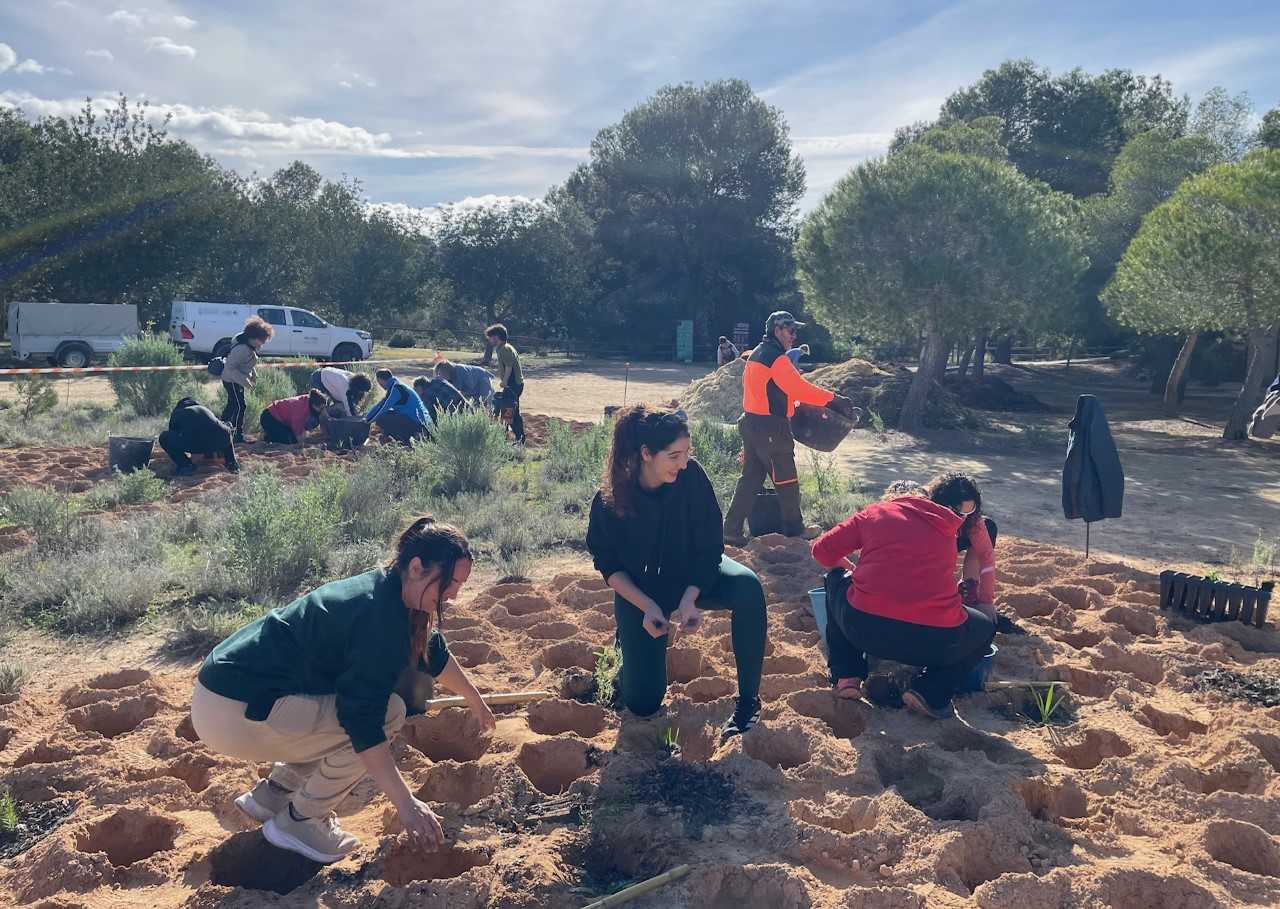
During the day, participants learned the secrets that help trees flourish. Root balls were inoculated with forest microorganisms—an invisible ally that strengthens roots; a deep irrigation system was demonstrated to ensure water reaches the roots directly; plants were planted at high density using layered vegetation, mulching was applied to protect the soil from the sun, and participants learned about the species that attract pollinators and birds, bringing life back to the garden.
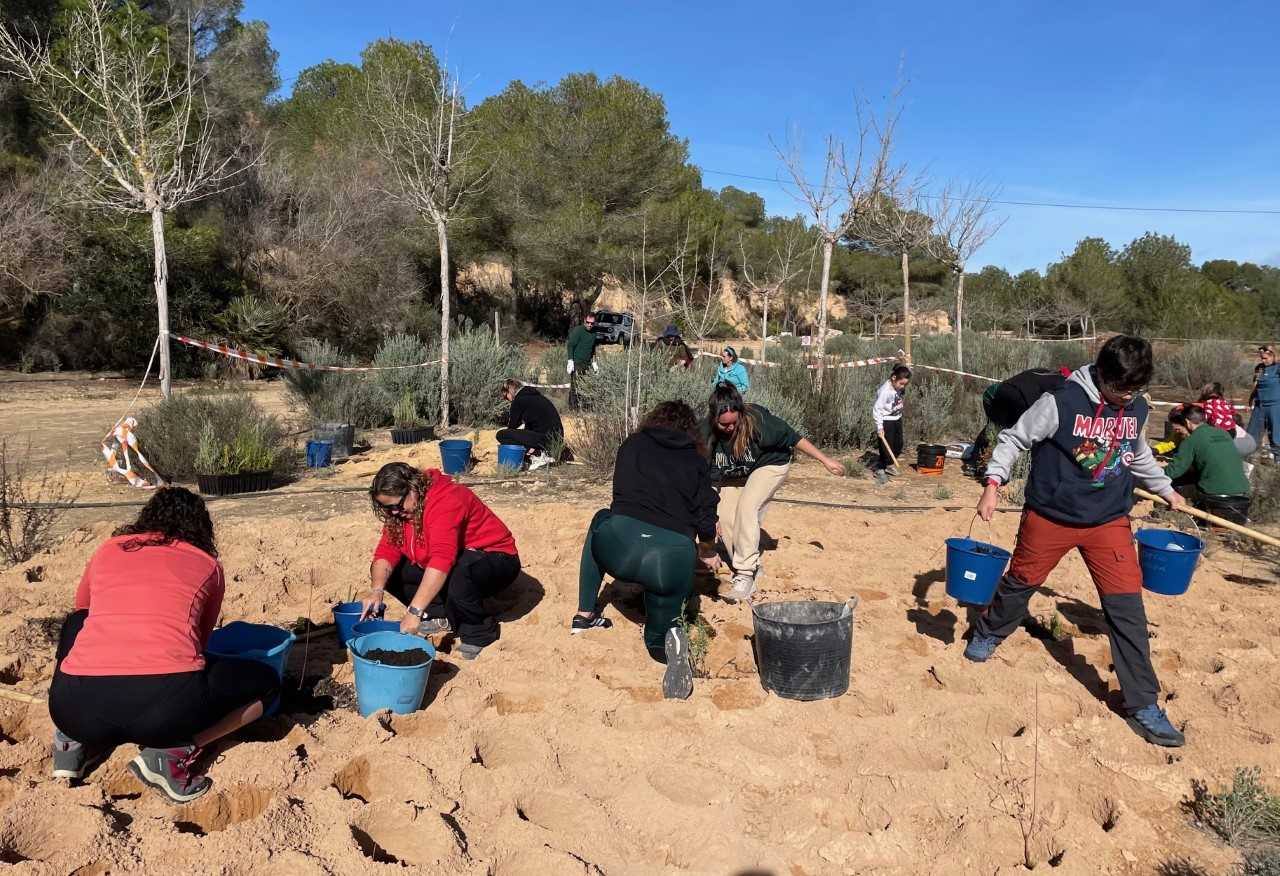
This was no ordinary planting activity. It was an opportunity to learn by doing, to connect with nature together, and to help both children and adults understand that every small action matters and that the future is cultivated today—starting from the ground up, beneath the soil.
Following an explanatory talk by environmental educators from Sierra Escalona on the planting techniques used, dozens of native shrub species typical of local forests were planted. These included rosemary (Salvia rosmarinus), mastic trees (Pistacia lentiscus), kermes oak (Quercus coccifera), tamarisk (Tamarix gallica), and thyme (Thymus vulgaris). The activity was carried out alongside staff from the Municipal Department of the Environment and the forestry brigade of the Protected Landscape, who guided and supported the youngest participants.