Mum says Spanish officials ignored Brexit protections and treated her seven-year-old son like a first-time applicant
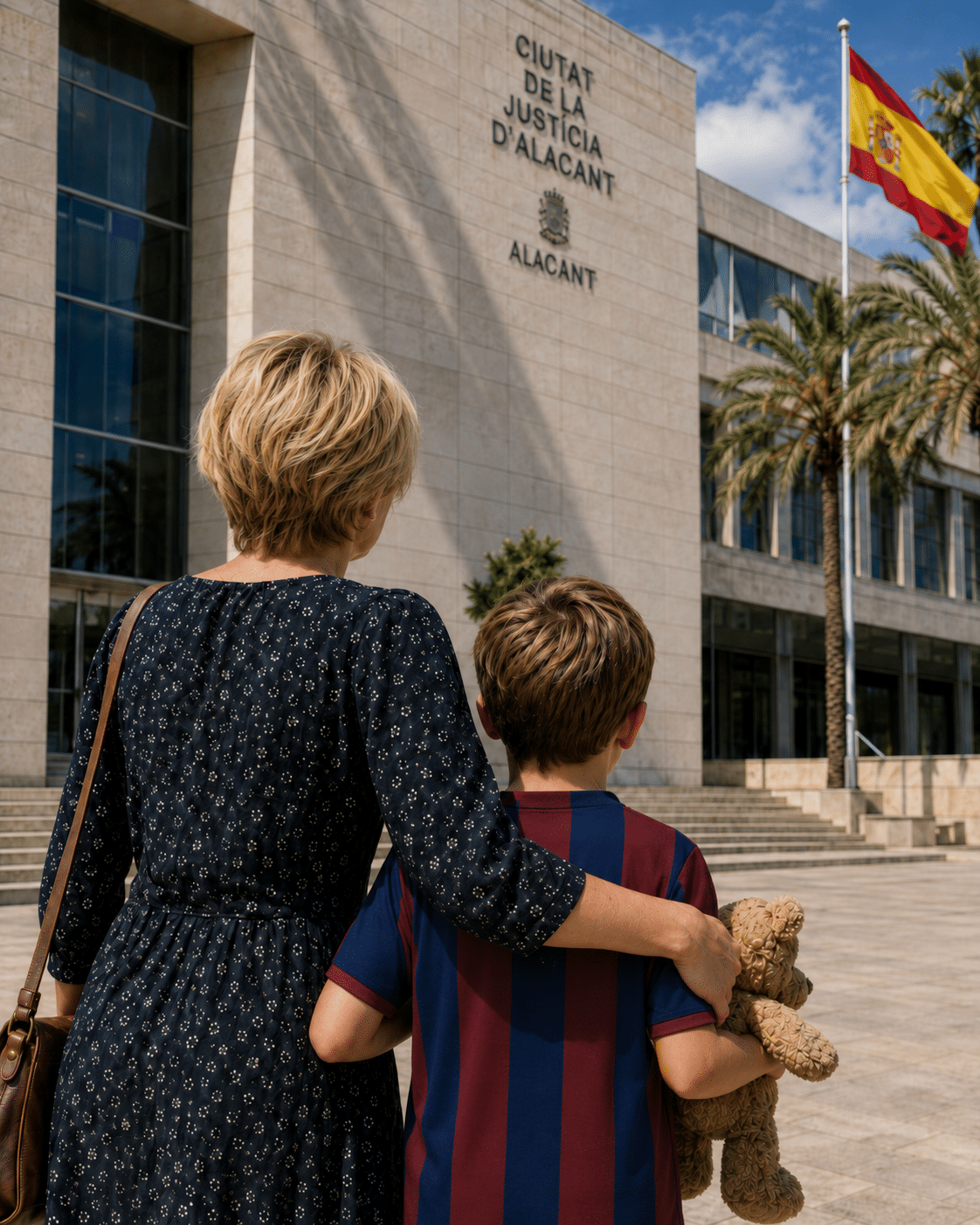
A British schoolboy born and raised in Spain is at the centre of a powerful legal battle after Spanish immigration officials refused to grant him residency in the only country he has ever called home.
The seven-year-old, who lives with his mother in l’Alfàs del Pi, Alicante, was born in Spain, goes to school in Spain and has built his entire young life there.
But despite that, his residency application was rejected by the Alicante Immigration Office after officials ruled that his mother had not proved sufficient financial means.
Now his mother is taking the case to court, arguing that the decision is not only deeply unfair but legally flawed.
The case will be heard before the Administrative Court in Alicante on June 16.
A Child Caught in a Brexit Legal Storm
The boy’s mother, a British citizen identified as JAMB, has lived legally in Spain since 2019. She holds a Foreigner Identity Card, known as a TIE, issued under the Brexit Withdrawal Agreement between the United Kingdom and the European Union.
That agreement was designed to protect the rights of British citizens and their families who had already established their lives in EU countries before Brexit took full effect.
But the family says those protections were ignored.
Instead, the Alicante Immigration Office treated the child as though he were an ordinary first-time applicant under general EU residency rules — rules that include financial requirements the family’s lawyer says should not have been applied to him.
For the mother, the decision has turned an already difficult situation into a frightening fight for legal recognition.
Her son is not a visitor. He is not newly arrived. He was born in Spain, raised in Spain, educated in Spain and lives his daily life in a Spanish community.
Yet, on paper, his right to remain has been denied.
‘The Wrong Rules Have Been Used’
The family is represented by lawyer Álvaro Vico, who argues that the administration has applied the wrong legal framework to a minor whose status should derive directly from his mother’s protection under the Withdrawal Agreement.
“This is not just about a residence card,” said Vico. “What is being decided is whether the administration can ignore a right recognised by the Withdrawal Agreement between the European Union and the United Kingdom by applying requirements that, in our view, do not apply in this case.”
According to the family’s legal team, the boy should not be treated as a standard applicant trying to obtain residency for the first time.
Instead, they argue, his legal position flows from his mother’s status as a beneficiary of the Brexit deal.
“When we are dealing with a minor whose legal status derives from a mother already protected by the agreement, administrative decisions must be especially rigorous and respectful of European Union law,” Vico added.
Born in Spain. Schooled in Spain. Denied Residency
The child was born in Spain and attends school in Alicante province. He has friends, routines, teachers, medical care and family life in the country where he has grown up.
He also requires specific educational support and medical monitoring after being diagnosed with Autism Spectrum Disorder.
His mother says she has submitted documentation showing the family’s stability, the child’s schooling, his integration into local life and the resources available to care for him.
But the application was still refused.
An administrative appeal was later dismissed, leaving the family with one remaining route: the courts.
‘There’s Nothing More I Can Do Alone’
Behind the legal arguments is the story of a mother who says she has spent years trying to secure the help, information and support her son needs.
She insists she is not asking for privilege, only for the authorities to recognise the reality of her child’s life and the rights she believes protect him.
“I’m not asking for special treatment for my son or for myself,” she said. “I just want our rights to be respected and for the authorities to listen to our situation.
“For years I’ve tried to get the help, information and support my son needs. I’ve done everything I could as a mother, but there comes a point when one person alone can’t do any more.”
A complaint has also been filed with the Síndic de Greuges, the Valencian Ombudsman, over what the family says has been a lack of adequate response from the educational administration, despite medical and educational reports confirming the boy’s specific support needs.
A Mother’s Fight for Her Son’s Future
For JAMB, the case is about far more than paperwork.
It is about whether a vulnerable child born and raised in Spain can be left in legal uncertainty because officials applied financial criteria the family says do not belong in his case.
It is about whether Brexit protections have real force for the children of British residents already protected under the Withdrawal Agreement.
And it is about whether a young boy with special educational needs should face the threat of being treated as an outsider in the country where he was born.
The family’s lawyer argues that the refusal was based on an automatic and restrictive application of economic requirements, without properly considering the child’s individual circumstances or the protection afforded by the Brexit Withdrawal Agreement.
Court Showdown in Alicante
The case will now be examined by the Administrative Court in Alicante on June 16.
At stake is whether the British minor will be formally recognised as having the right to remain in Spain — the country where he was born, where he goes to school and where his mother says his future belongs.
For one mother and her seven-year-old son, the hearing is not just a legal date in the diary.
It is a fight for stability, recognition and the right to stay in the only home the child has ever known.