The Los Montesinos Residents’ Association has called on the town council to act urgently after the latest storm once again flooded key access roads into the municipality, causing traffic disruption and raising fresh safety concerns.
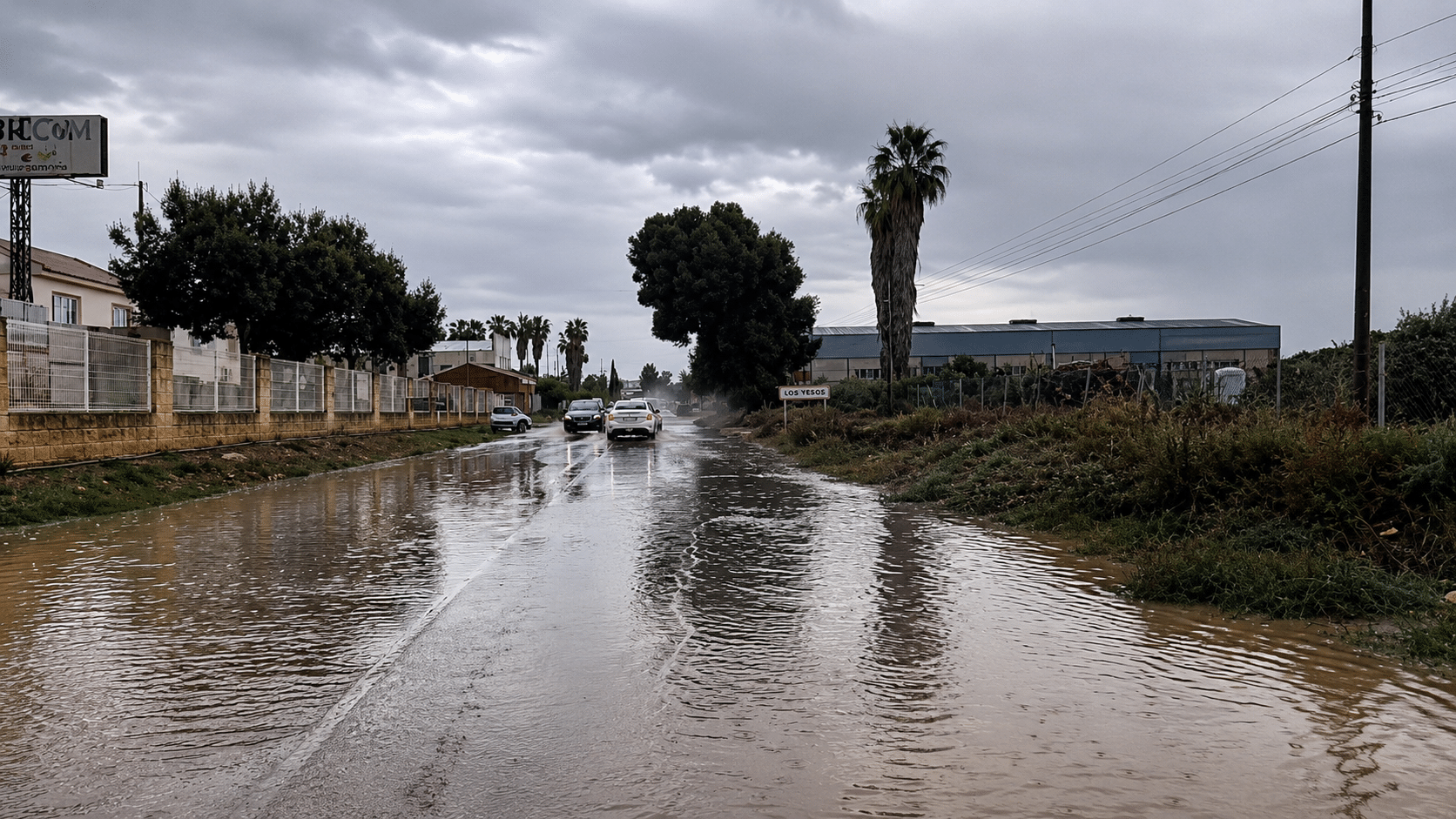
Residents say the problem has been going on for decades and returns every time moderate or heavy rain falls. Last week’s storm, which brought around 25 litres per square metre, again left sections of the CV-945 and CV-940 under water.
The association says the worst-affected points include the CV-945 by the Levante industrial estate, on the main route towards Torrevieja and Rojales, and the road serving Los Pérez near the Tabisam area.
Francisco Paredes, a spokesperson for the residents’ group, said the entrance and exit to the town centre on the CV-945 becomes flooded at the Levante industrial estate whenever rainwater runs down from higher ground.
The estate, approved and developed by Los Montesinos Town Council, covers 261,000 square metres and is home to around 50 businesses. Residents argue that the drainage infrastructure was poorly designed from the outset.
According to the association, the installation of a central reservation without adequate drainage blocked the natural flow of water. Later modifications, including cuts in the median to allow water through, have failed to solve the underlying problem.
The group, chaired by María del Mar Paredes, says a proper technical study is needed to examine whether water should be channelled beneath the road through a collector system.
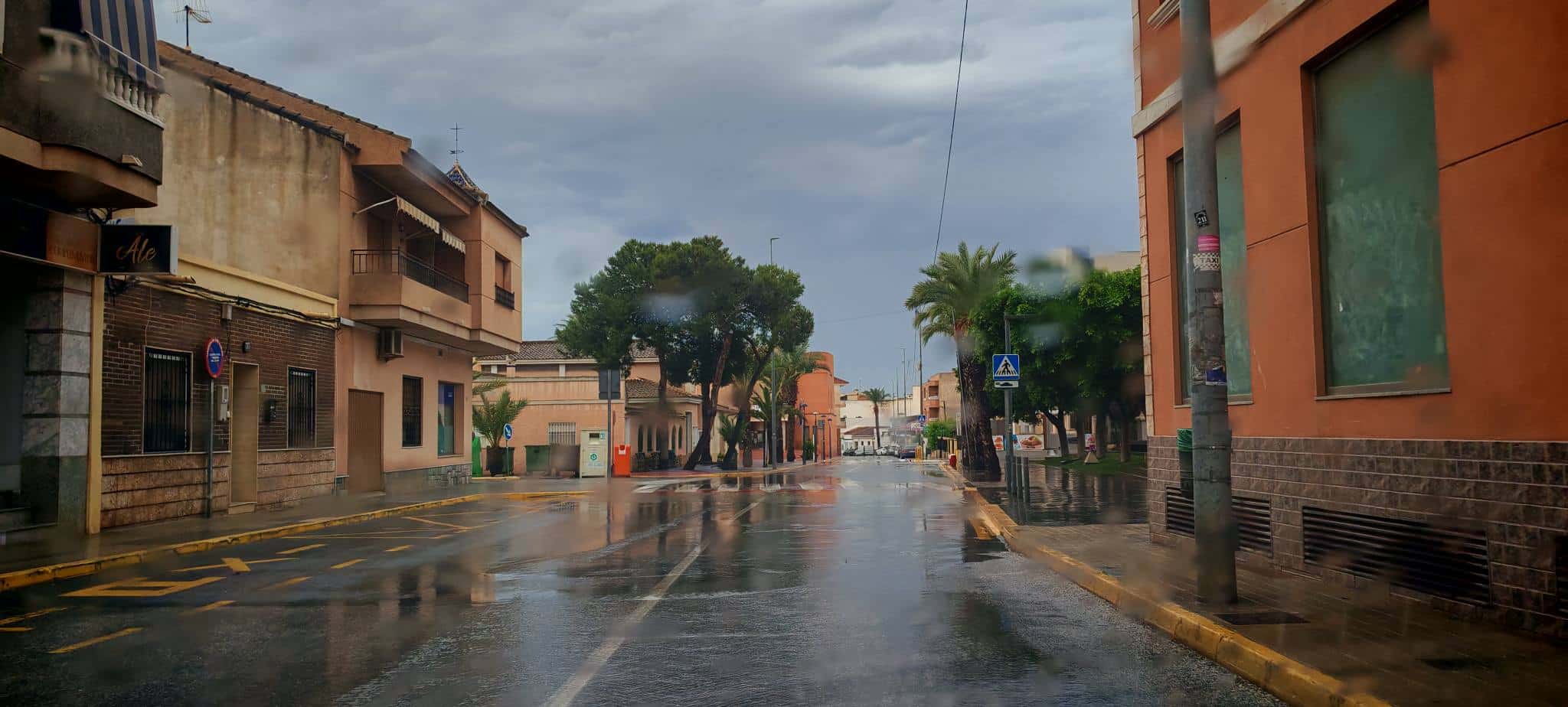
The same flooding problem also affects the Los Pérez area on the CV-940, near Tabisam, on the route from San Miguel de Salinas towards Los Montesinos. There, runoff from nearby agricultural land spills directly onto the road without any proper drainage, forcing road closures and, at times, allowing water to enter nearby homes.
Residents also point to problems inside the town centre, where speed bumps act as barriers during rainstorms because they lack integrated drainage. This makes pedestrian movement difficult and worsens localised flooding.
Another blackspot is the CV-940 near the motorway, close to the boundary with San Miguel de Salinas, where the road often has to be closed due to water accumulating in the ravines that flow towards Torrevieja lagoon.
The local government, led by mayor José Manuel Sánchez Butrón of the PSOE, argues that the two affected roads fall under the responsibility of the Generalitat Valenciana. But residents say that is not enough.
Paredes accused the council of using the issue of responsibility as “an excuse,” saying the town hall should be pressing the regional government more forcefully to deliver a solution. He said the flooding has been happening for many years and there is no evidence that effective action has been taken.
The association also criticised what it sees as a lack of urgency compared with other local causes. Residents supported the council’s protest against the loss of a vocational training module due to low enrolment, but they are now calling for “the same determination” over infrastructure and public service problems.
The group has also raised the situation of around 40 homes in Los Pérez that still have no connection to the main sewerage network and rely instead on septic tanks.
Many of the affected residents are pensioners and face costs of more than €700 each time their tanks are emptied — a process some families must repeat up to three times a year.
The association has collected signatures from affected residents and is pushing for a permanent solution. A technician who lives in the area has drawn up a draft proposal for the necessary works, split into two phases.
The first would involve around three kilometres of sewer branches and household connections, which would fall under municipal responsibility. The second would connect the area to a treatment plant or sanitation system, a matter for the Generalitat.
Los Montesinos, despite having more than 5,000 residents, does not have its own wastewater treatment plant. Its sewage is pumped through a collector to Torrevieja’s treatment plant, more than seven kilometres away.
Paredes said the regional administration previously suggested individual mini-treatment plants as a temporary fix, with grants of between €500 and €1,000 per household. But residents say this is nowhere near enough, as the cheapest systems cost more than €6,000.
The association continues to pursue complaints through the Síndic de Greuges and hopes the technical documentation already prepared will speed up action.
Until then, residents say Los Pérez remains trapped in an unfair situation, facing repeated flooding and unequal access to basic sanitation services.