Each household in the Vega Baja is generating almost half a tonne of unsorted rubbish every year, according to the Vega Baja Sostenible Consortium, which says the lack of separation at source is due to municipalities failing to meet their legal responsibilities.
The consortium, which manages waste treatment for 27 municipalities in the comarca, has responded to criticism from neighbourhood and environmental groups who accused the public body of making little progress on waste separation. The consortium insists that while it is responsible for treating waste once it arrives at the Dolores transfer plant, the separate collection of household waste is the sole responsibility of local councils.
The Vega Baja is expected to generate around 209,000 tonnes of waste this year. In 2025, only around 500 tonnes of organic waste were separately collected, in addition to glass, cardboard and light packaging. By contrast, 199,000 tonnes arrived at treatment plants mixed together.
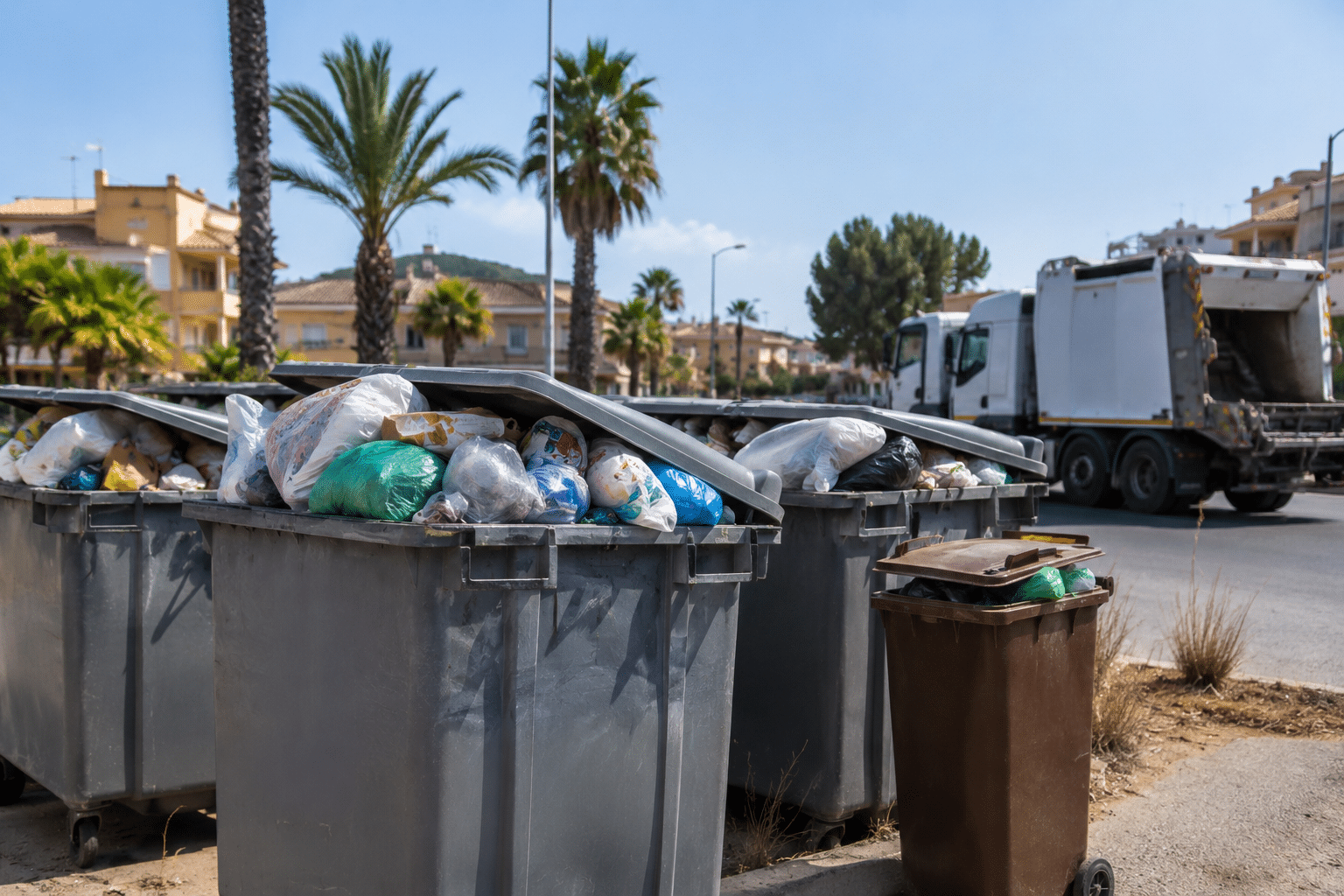
The figures mean each household deposits an average of 473.8 kilos of waste a year in the grey bin, the container for non-separated rubbish. The brown bin for organic waste, which has been compulsory since 2023, has only been partially introduced in five of the 27 municipalities. Dolores is the only town currently carrying out effective organic waste collection.
The consortium says properly designed waste separation at source could reduce the volume of general rubbish by around 40%.
Its waste management plan includes mobile and fixed ecoparks, three composting plants for organic waste and a Mechanical Biological Treatment plant, known as a TMB, for grey-bin rubbish. The proposed TMB site is west of Torremendo, in Orihuela.
However, the consortium argues that several facilities demanded by environmental and residents’ groups, including composting plants and ecoparks, have previously faced strong opposition from local residents. Plans for two composting plants were halted in summer 2024 following neighbourhood objections, with Los Montesinos among the most prominent cases.
Consortium president Francisco Cano said the organisation supports greater waste separation but stressed that the final responsibility lies with the 27 councils. He said the consortium will continue helping municipalities meet their legal obligations.
Cano also rejected claims that the proposed TMB would be a “macro-plant”, saying it would not include a landfill or incinerator, but would simply separate and recover waste produced within the Vega Baja.
Currently, Vega Baja is the only Alicante waste authority without its own treatment plant because it has still not managed to put the necessary waste infrastructure in place. The main problem is a combination of delays, inept councils, divided responsibilities and local opposition.
The consortium says it is responsible for treating waste once it is collected, but the 27 town councils are responsible for separating their own rubbish at source and introducing systems such as the brown organic waste bin. That rollout has been very limited, meaning most household rubbish still goes into the grey bin mixed together.
At the same time, proposed facilities such as composting plants, ecoparks and the planned mechanical biological treatment plant have faced resistance from residents and local groups. As a result, Vega Baja has no local plant to process its own waste, despite regional rules requiring one.
Because of this, rubbish from the area has to be transported to plants in Murcia, Almería, Valencia and Cuenca, increasing costs, lorry journeys and environmental impact.