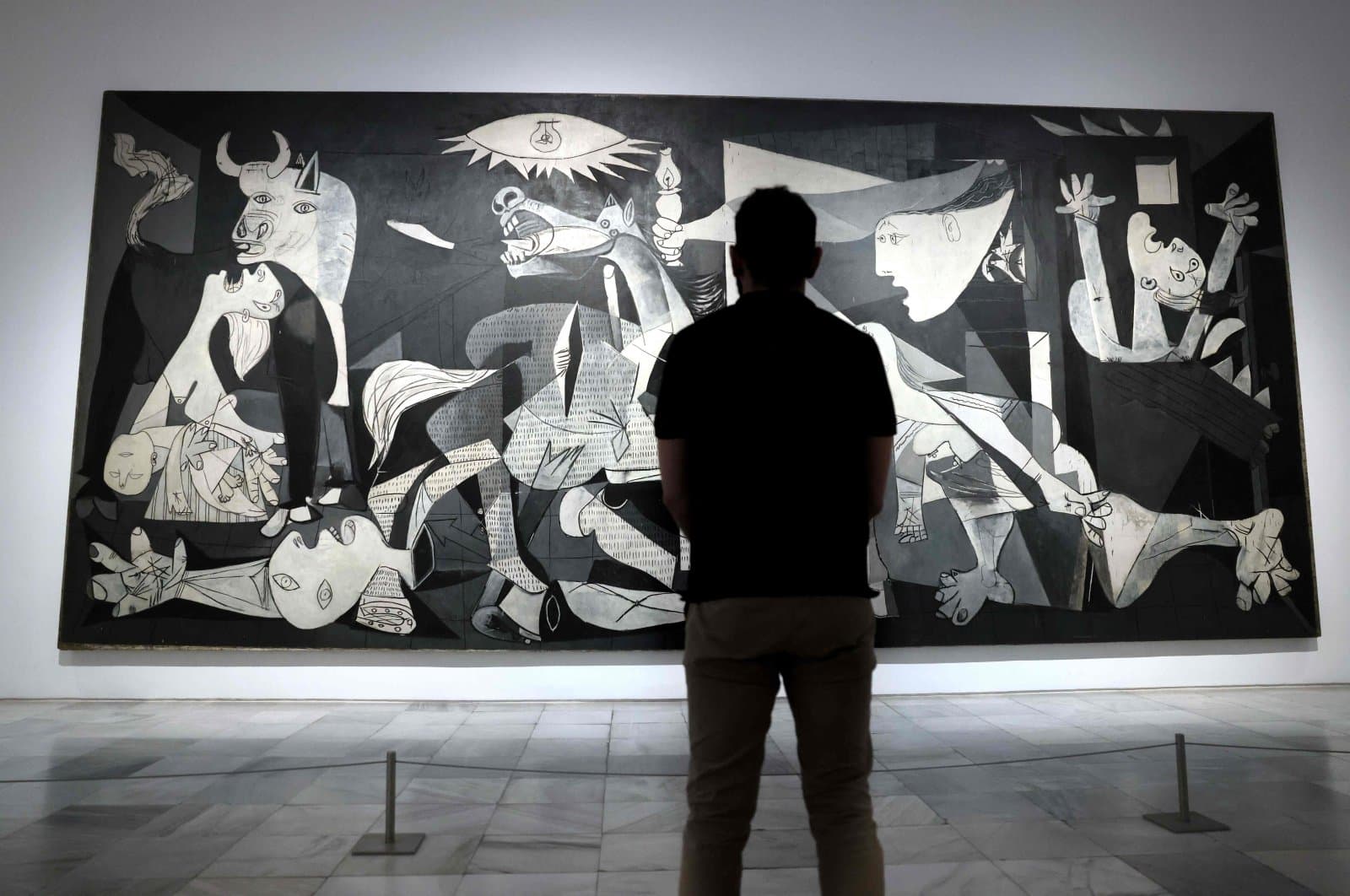
A political row has erupted in Spain after Basque leaders renewed calls for Picasso’s Guernica to be moved from Madrid to Bilbao for a temporary exhibition marking the 90th anniversary of the bombing of the Basque town that inspired the painting.
The masterpiece has been housed at Madrid’s Reina Sofía Museum since 1992, and previous demands for it to be transferred to the Basque Country have consistently been rejected. The latest request has now sparked a bitter public clash between Madrid’s regional president, Isabel Díaz Ayuso, and Basque nationalist leaders, with both sides accusing each other of being “provincial”.
Ayuso dismissed the proposal, arguing that culture is universal and cannot be tied to place of origin. She said that, by the same logic, all Picasso’s works would have to be returned to Málaga, where the artist was born. She also backed the Reina Sofía’s long-standing position that moving the painting could seriously damage it.
Basque nationalist leader Aitor Esteban hit back, saying that if anyone was provincial, it was Ayuso. Basque president Imanol Pradales also piled pressure on the Spanish government, challenging it to approve the transfer and arguing that such a symbolic gesture should not be beyond reach.
The Basque government wants Guernica to be displayed at the Guggenheim Museum in Bilbao from 1 October until 30 June as part of commemorations for the 1937 bombing of Guernica. Picasso’s black-and-white painting, created in response to the attack, has become one of the world’s best-known anti-war images and a lasting symbol of civilian suffering.
But art experts have warned that the fragile condition of the canvas must come before politics. Art historian Francisco Chaparro said the painting has already been rolled and unrolled many times in its history and remains too delicate to travel. Others have also pointed out that iconic masterpieces such as the Mona Lisa and Velázquez’s Las Meninas are not moved from their permanent homes.
The Reina Sofía has repeatedly refused loan requests for Guernica, including one from New York’s Museum of Modern Art in 2000, insisting that the work is too important and too vulnerable to leave the museum.