A new European defence architecture is rapidly emerging amid growing geopolitical tensions, but analysts warn that Spain risks being left on the sidelines as key decisions are increasingly driven by agreements between individual European nations rather than EU institutions.
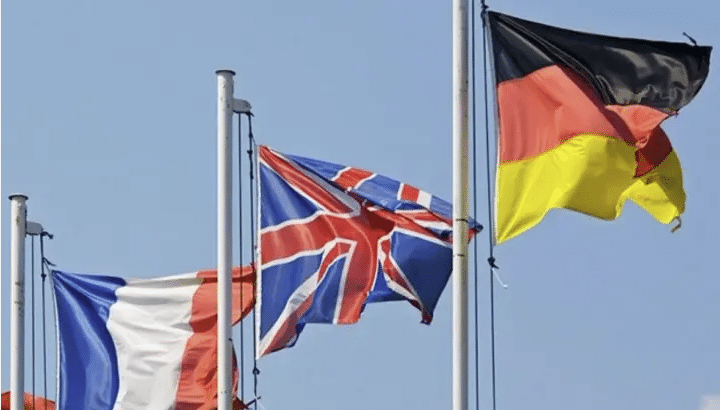
The initiative is largely being shaped by France and Germany, with the United Kingdom also playing a central role despite Brexit. Discussions focus on expanding France’s nuclear deterrent to cover more of Europe, creating a broader security umbrella as concerns grow about Russia and uncertainty over long-term US commitments to European defence.
While several European countries have moved quickly to strengthen military cooperation, Spain has remained largely outside many of the most influential forums. Madrid continues to prioritise its commitment to NATO, but it has rejected proposals by some allies to increase defence spending to 5% of GDP, a position that has drawn criticism from several Eastern European members.
Countries such as Poland and the Baltic states have interpreted Spain’s reluctance as a lack of solidarity at a time of heightened security concerns. As a result, Spain has been absent from a number of key initiatives, including the European Sky Shield Initiative, the Joint Expeditionary Force, the Northern Group, and other informal defence coalitions that have emerged in recent years.
Research by the Heinrich Böll Foundation has identified more than 160 new bilateral or multilateral defence agreements signed between European countries in response to the changing security landscape. None of these agreements involve Spain. Many of them aim to reinforce mutual defence commitments already outlined in NATO’s Article 5 or the EU’s Article 42(7) but reflect growing uncertainty about whether the United States would intervene in a future conflict with Russia.
Recent developments underline the rapid pace of change. Finland has announced the end of its long-standing ban on nuclear weapons, opening the possibility of hosting them on its territory. Denmark has signed a strategic nuclear deterrence cooperation agreement with France, while Germany has begun coordinating closely with Paris through a new high-level steering group to align defence strategy and participate in French nuclear exercises.
Other European countries—including the United Kingdom, Poland, the Netherlands, Belgium, Greece and Sweden—have also expressed interest in contributing to a strengthened nuclear deterrence framework.
Spain, however, has distanced itself from this approach. Prime Minister Pedro Sánchez publicly rejected the idea of expanding nuclear deterrence in Europe during the Munich Security Conference, calling instead for efforts to reduce the role of nuclear weapons.
Although Spain formally participates in the EU’s Permanent Structured Cooperation (PESCO) defence programme, experts warn that political hesitation and relatively low military spending could limit its influence in shaping the continent’s future security framework.
This comes despite Spain’s strong defence industrial capabilities. The country is a global leader in frigate construction, produces military aircraft such as the A400M and C-295, and has advanced expertise in electronics, drones and land systems.
According to defence industry analysts, these capabilities could make Spain a key contributor to European security if backed by stronger investment and political commitment. Without that shift, experts warn, Spain risks becoming a consumer of European security rather than one of its architects.