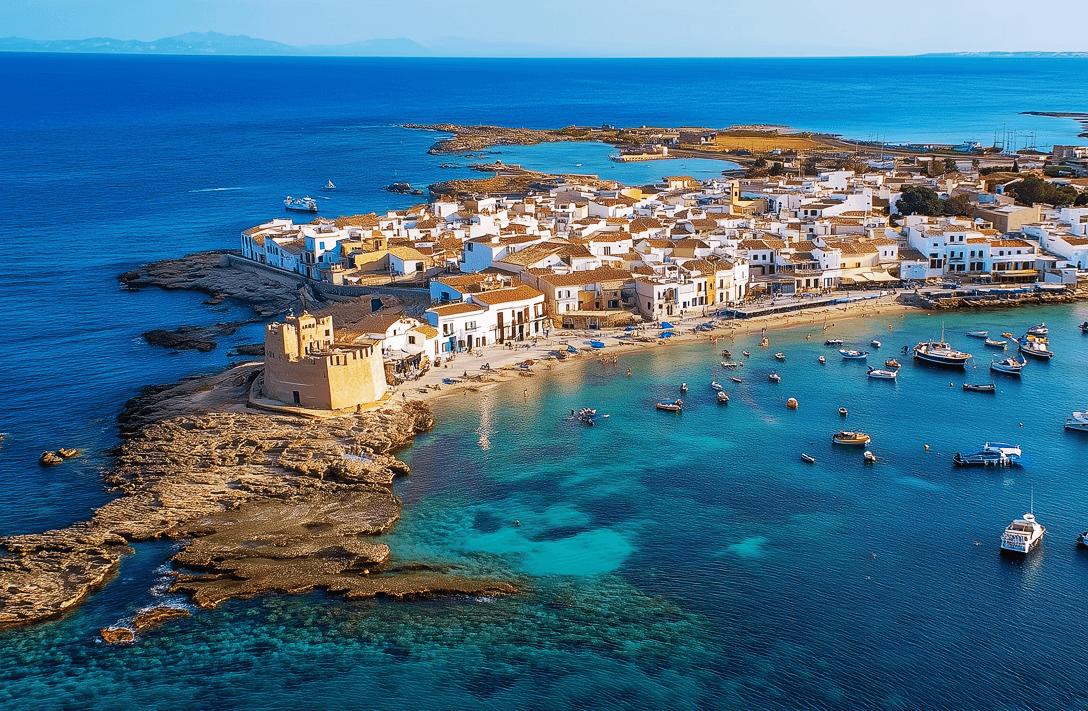
Island residents hire lawyers to pursue greater autonomy from Alicante and take direct control of essential local services
Residents of Tabarca have taken a significant step towards gaining greater independence from Alicante City Council by appointing a law firm to begin the process of turning the island into a minor local entity.
The move would not make Tabarca a fully independent municipality. However, it would give the island its own legal identity and considerably more control over the management and funding of local services.
The Tabarca Island Residents’ Association unanimously approved the appointment of the legal team during a recent meeting. Lawyers are now preparing the technical reports and documentation required to support the application, although the procedure remains at an early stage.
The identity of the firm has not been disclosed. Association president Carmen Martí said confidentiality was necessary to allow the lawyers to work without outside pressure or interference.
Residents demand local control
The initiative reflects growing frustration over what residents describe as Alicante City Council’s failure to manage the island’s particular needs satisfactorily.
Under the proposal, Tabarca would remain part of Alicante municipality but could assume responsibility for a range of services within its territory. Local policing and urban planning would continue to be controlled by Alicante City Council.
Residents insist the campaign is not simply about obtaining additional services. They want a management and funding system that recognises the island’s unusual geographical, environmental and economic circumstances.
Tabarca’s campaign is supported by Valencian regional legislation. Law 8/2010 allows minor local entities to be created where historical and cultural identity, geographical isolation or other exceptional circumstances justify a separate administrative structure.
There are already three such entities in Alicante province: Jesús Pobre and La Xara, both within the municipality of Dénia, and La Llosa de Camacho, which belongs to Alcalalí.
Campaigners argue that Tabarca has an especially strong case because of its insularity, protected marine reserve, environmental restrictions, historical identity and dependence on tourism.
Providing public services on an island is also more complicated and expensive than on the mainland, they say, making a dedicated funding arrangement essential.
Transport remains unresolved
Maritime transport is among the residents’ most pressing concerns. The association claims Tabarca is the only Spanish port without a maritime station capable of coordinating timetables, ticket prices and the frequency of crossings.
Residents say this makes it impossible to guarantee a reliable year-round public transport service adapted to the needs of the island’s permanent population.
The association has also accused Alicante City Council of neglecting Tabarca and failing to respond adequately to its concerns. Representatives say they approached the Mayor’s Office seeking a meeting but have yet to receive a reply.
Mayor Luis Barcala’s administration has so far avoided taking a clear position on the autonomy proposal, instead defending the council’s management of the island.
Any change in Tabarca’s administrative status would require majority approval from Alicante City Council, meaning the campaign still faces considerable political and procedural obstacles.
Nevertheless, the decision to bring in lawyers marks the beginning of a formal effort to secure partial self-government. If successful, Tabarca could become another example of small communities across Alicante province seeking greater control over their services while remaining part of a larger municipality.