A tragic incident has unfolded off the coast of Alicante as Spanish Maritime Rescue (Salvamento Marítimo) located a small, overcrowded migrant boat (known as a patera) adrift at sea with 16 people on board, one of whom was found deceased. The vessel was discovered 62 nautical miles from Alicante and 42 miles off the coast of Xàbia, after being detected by aerial surveillance.
The boat, carrying migrants from sub-Saharan Africa, had departed from Algeria and had been adrift for several days, leaving its occupants in a severely weakened state due to dehydration, exhaustion, and exposure. The Salvamar Fénix, a maritime rescue ship based in Xàbia, was deployed to the scene and brought the 15 survivors and the body of the deceased migrant back to the Port of Alicante, where the Center for Temporary Attention to Foreigners (CATE) is located.
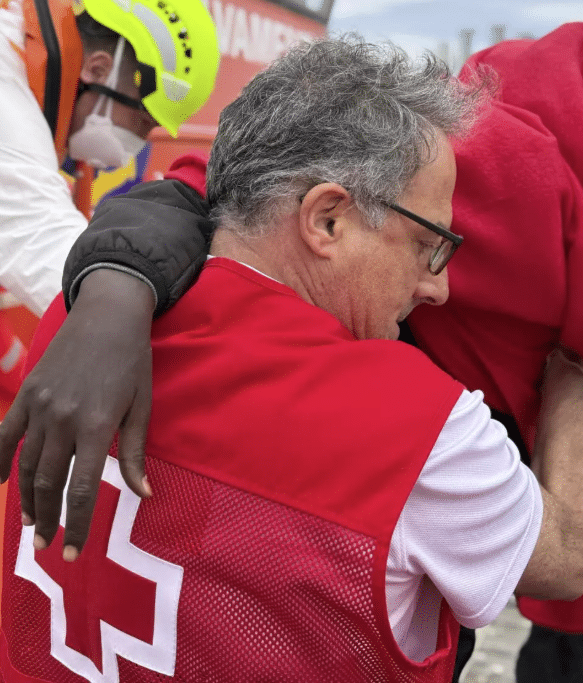
Upon arrival, Red Cross (Cruz Roja) and SAMU (Emergency Medical Services) teams began treating the rescued individuals. Some may require hospitalization due to their critical condition. The deceased migrant’s body was formally reported to the judicial authorities, and a judge and forensic team were dispatched to oversee the removal and autopsy at the Institute of Legal Medicine in Alicante.
This incident is not isolated. The Spanish Mediterranean coast, especially Alicante, Murcia, and Andalusia, has been witnessing a steady flow of migrant arrivals by sea, often in fragile, makeshift boats launched from North Africa. Many of these journeys are perilous and sometimes fatal, particularly during unfavourable sea conditions or when boats become lost and run out of supplies.
Over recent years, arrivals of small boats carrying migrants from Algeria and sub-Saharan Africa have become more frequent, part of broader migration patterns from the African continent toward Europe. Migrants often risk their lives in search of safety, stability, or better economic opportunities, fleeing poverty, conflict, or persecution.
Spanish rescue agencies, humanitarian organizations, and emergency services are frequently involved in these operations, offering care and support. However, each new arrival highlights the urgent humanitarian, political, and logistical challenges posed by irregular maritime migration in the Mediterranean.
Significant increase in arrivals
In 2024, Spain experienced a significant increase in irregular migrant arrivals, with a total of 63,970 individuals entering the country by land or sea. This marked a new record, surpassing the previous year’s total of 55,718.
The majority of these arrivals—approximately 46,843 people—undertook perilous sea journeys from northwest Africa to Spain’s Canary Islands, highlighting the Atlantic route as a primary entry point.
The Mediterranean route from Algeria to the Iberian Peninsula and the Balearic Islands also saw significant activity. Over 500 people died in 2024 along this migratory path, underscoring the dangers faced by the migrants. In the Alicante province specifically, 643 migrants arrived by sea in 2024, with a notable increase in families with very young children making the journey. This shift indicates a changing demographic among those undertaking these risky voyages.
Despite efforts by the Spanish government and the European Union to address the migration crisis, including providing aid to countries of origin, the number of arrivals has continued to rise.
The Atlantic migration route remains one of the deadliest in the world, with NGOs estimating that over 10,000 migrants died in 2024 attempting to reach the Canary Islands by sea.
These developments highlight the ongoing challenges Spain faces in managing irregular migration and the humanitarian concerns associated with these perilous journeys.
Image courtesy of Cruz Roja