Torrevieja City Council has submitted a pioneering project to support migrant children from the moment they arrive in the municipality through to their enrolment in school, while also speeding up administrative procedures for families.
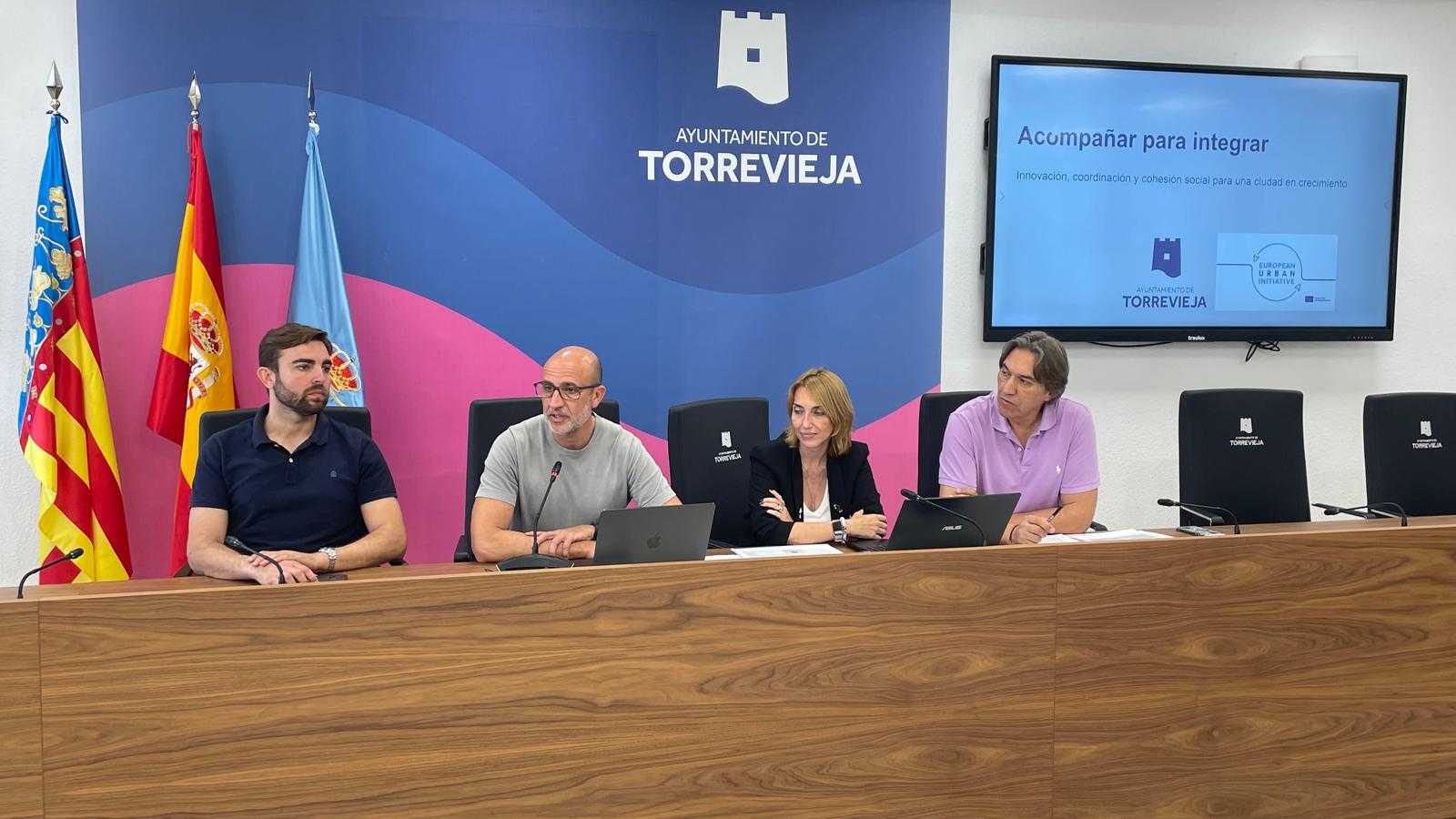
The initiative, titled “Acompañar para integrar” — “Supporting to Integrate” — is seeking €2 million in funding from the European Urban Initiative programme. The council says the project places the child at the centre of the integration process, removing administrative barriers and accelerating access to essential public services.
The project was presented by Education and Innovation councillor Ricardo Recuero, the head of the municipal European Funds Unit Fernando Domínguez, and European Grants Department technician Marga Torregrosa.
Recuero said the scheme responds to a major structural challenge for Torrevieja: ensuring that families arriving continuously in the city can effectively access public services. He noted that the municipality receives hundreds of minors each year who need to be enrolled in school, while many families arrive disoriented and unable to navigate the local administrative system.
The project is organised into three complementary phases. The first focuses on administrative access through a multilingual digital platform designed to manage empadronamiento — registration on the municipal census — before the in-person appointment. The system would use artificial intelligence to reduce queues, shorten waiting times and eliminate informal intermediaries.
The second phase covers the waiting period before school placement. It proposes a network of educational welcome hubs offering language support and socio-emotional guidance, turning the waiting period into a structured preparation stage.
The third phase supports educational incorporation through balanced school allocation tools, classroom welcome protocols and cohesion programmes. The council says school enrolment should be seen as the beginning of integration, not its final step.
Recuero said Torrevieja’s high level of diversity and rapid population growth require new solutions. He added that the project is intended not only to solve a local problem but also to serve as a transferable model for other European cities facing similar challenges.
Domínguez stressed that municipal services are under pressure from population growth and that administrative procedures must be simplified. He said municipal registration is the gateway to healthcare, education and social services, making it essential to help newcomers complete documentation correctly and without delays.
Torregrosa explained that the European Urban Initiative funds innovative urban projects in cities facing complex challenges. Only around 30 projects will be selected across Europe, and candidates must show innovation, measurable impact and transferability.
Torrevieja is applying under the programme’s fourth call. If selected, the project could receive up to €2 million in European funding. The initiative will follow a “quadruple helix” partnership model involving the council, companies, academia and civil society, with each partner contributing a 20% co-financing share.