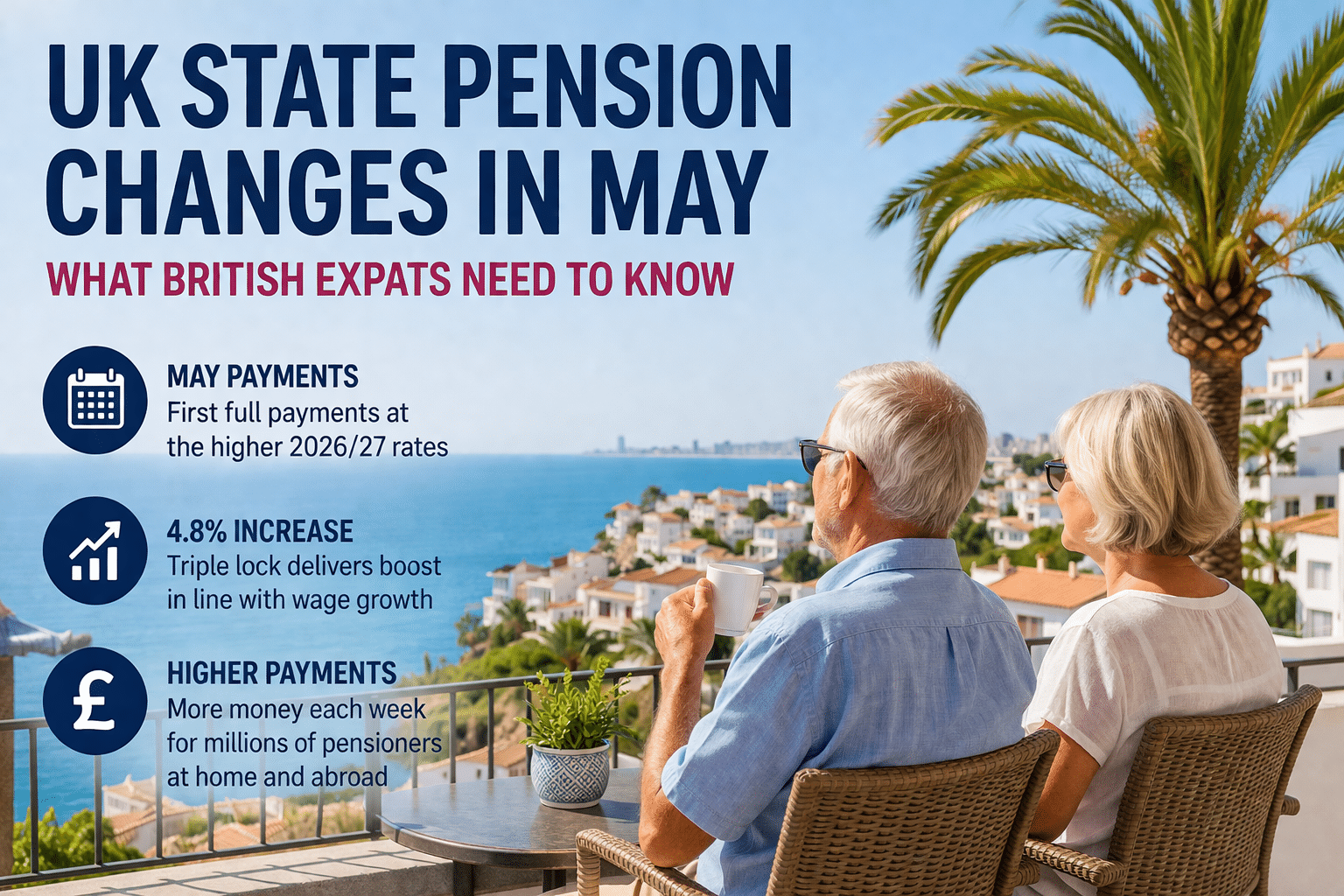
British expats receiving the UK State Pension—particularly those living in Spain and across Europe—will see a noticeable increase in their payments from May, as the 2026/27 uprating fully takes effect.
Although the new pension rates officially came into force on April 6, May is the first month when most pensioners, including those abroad, receive a full payment at the higher rate due to the timing of payment cycles. As a result, many retirees will only now feel the full impact of this year’s increase.
The rise is driven by the UK Government’s “triple lock” system, which ensures pensions increase each year by the highest of inflation, wage growth, or 2.5%. For the 2026/27 tax year, pensions have been increased by 4.8%, in line with average wage growth. For British expats, this uplift offers some relief against rising living costs, although currency fluctuations may affect the real value of payments overseas.
Those receiving the basic State Pension—typically men born before April 6, 1951, and women born before April 6, 1953—will see their weekly payments rise to £184.90, up from £176.45. This represents an increase of £8.45 per week and brings the annual total to £9,614.80 for those entitled to the full amount, an increase of around £439 a year. As always, the exact amount depends on an individual’s National Insurance record, with fewer qualifying years resulting in a reduced payment.
Meanwhile, most newer retirees abroad receive the new State Pension, which has also increased by 4.8%. The full rate now stands at £241.30 per week, up from £230.25, delivering an extra £11.05 weekly. Over the course of a year, this equates to £12,547.60, meaning those on the full rate will receive roughly £574 more annually. This increase is particularly significant for expats who rely heavily on their UK pension as a primary source of income.
For UK pensioners living overseas, especially in Spain, May represents the point when the increase is fully reflected in their bank accounts. However, it is important to note that not all expats benefit equally. The UK’s frozen pension policy still applies in certain countries, and exchange rates can influence the real purchasing power of payments received abroad.
The UK Government has indicated that pension spending will continue to rise in the coming years, reinforcing its commitment to supporting retirees. For now, the May payments mark a meaningful boost for millions of pensioners, including the large British expat community, offering some financial reassurance amid ongoing economic uncertainty.