A massive power outage disrupted daily life across parts of Europe on Monday, with Spain bearing the brunt of the crisis.
The blackout struck unexpectedly around midday, impacting the Iberian Peninsula, and was traced back to a sudden and significant power loss of 15 gigawatts in just five seconds, reported by Spain’s national grid operator, Red Eléctrica de España (REE).
This massive drop in power triggered a series of events that disconnected Spain’s grid from the French power network, setting off a chain reaction that caused the complete collapse of Spain’s electrical system.
The Portuguese grid operator, REN, pointed to unusual oscillations in very high-voltage transmission lines, which were linked to extreme temperature fluctuations across Spain. These dramatic swings in temperature appear to have destabilized the interconnected European grid, exacerbating the situation.
Although some speculations have suggested wildfires in southern France or even cyberattacks as potential causes, no conclusive evidence supporting these theories has emerged, and the primary explanation remains the combination of thermal instability and grid vulnerabilities.
The blackout’s immediate effects in Spain were severe and widespread. Major transportation systems ground to a halt, with all Renfe-operated trains suspended and the Madrid metro system completely shut down. Traffic lights failed in major cities, causing major traffic congestion.
Critical infrastructure struggled to stay online: hospitals switched to backup generators, and mobile networks, internet services, ATMs, and electronic payment systems went offline. Public events, including the Madrid Open tennis tournament, were cancelled. At Madrid-Barajas Airport, delays and cancellations mounted, although contingency power systems allowed limited operations.
In response to the crisis, Spanish Prime Minister Pedro Sánchez convened an emergency meeting and deployed over 30,000 police officers to assist in managing the fallout. King Felipe VI also led a special session of the National Security Council to coordinate the nation’s response. While the Canary Islands were impacted, their isolation from the mainland grid meant they experienced less severe consequences.
Prime Minister Sánchez spoke publicly about the situation, describing the outage as the result of a “strong fluctuation” in the European electricity system. Although he confirmed that an official investigation was ongoing, he urged the public not to speculate about the causes.
Sánchez emphasized that the government’s primary focus was on restoring power as quickly as possible and assured citizens that the country had established restoration plans in place. He also warned against the spread of misinformation, calling on people to rely only on official sources for updates.
The outage began at approximately 12:20 PM and caused immediate disruptions. In some areas, hospitals were forced to delay surgeries and medical procedures due to power loss, and emergency services had to be deployed to rescue people trapped in elevators. For example, in Alicante, over 20 people had to be rescued when they became stranded due to power cuts.
Many of these individuals needed urgent medical attention, as their oxygen supplies had run out.
By mid-afternoon, Red Eléctrica confirmed that efforts were underway to restore power, starting in areas less affected by the outage and moving inward toward the epicenter. The restoration was expected to take between six to ten hours, provided there were no additional complications.
The blackout also severely impacted transport systems. While airports continued to operate on contingency power systems, delays were inevitable. Spanish air traffic control reported disruptions, although operations gradually resumed, with the Madrid-Barajas Airport experiencing a temporary shutdown of departures and arrivals.
Airlines like Iberia and Vueling confirmed that while there had been some delays, they had not cancelled flights, and systems were operating on backup power. However, the impact on trains was more pronounced, with Renfe reporting that all its trains had been halted.
Some long-distance trains were stranded for several hours, with passengers experiencing significant delays. On one train traveling from Alicante to Madrid Leader reporter Mark Nolan reported that his train came to a complete stop just north of Albacete. The train remained stationary for over five hours until a diesel engine was sent to assist.

When the train finally started moving again, it was operating at only a quarter of its usual speed and with no air conditioning. Due to the disruption, the train had to make an unscheduled stop to allow a passenger who had fallen ill to be removed and receive medical treatment.
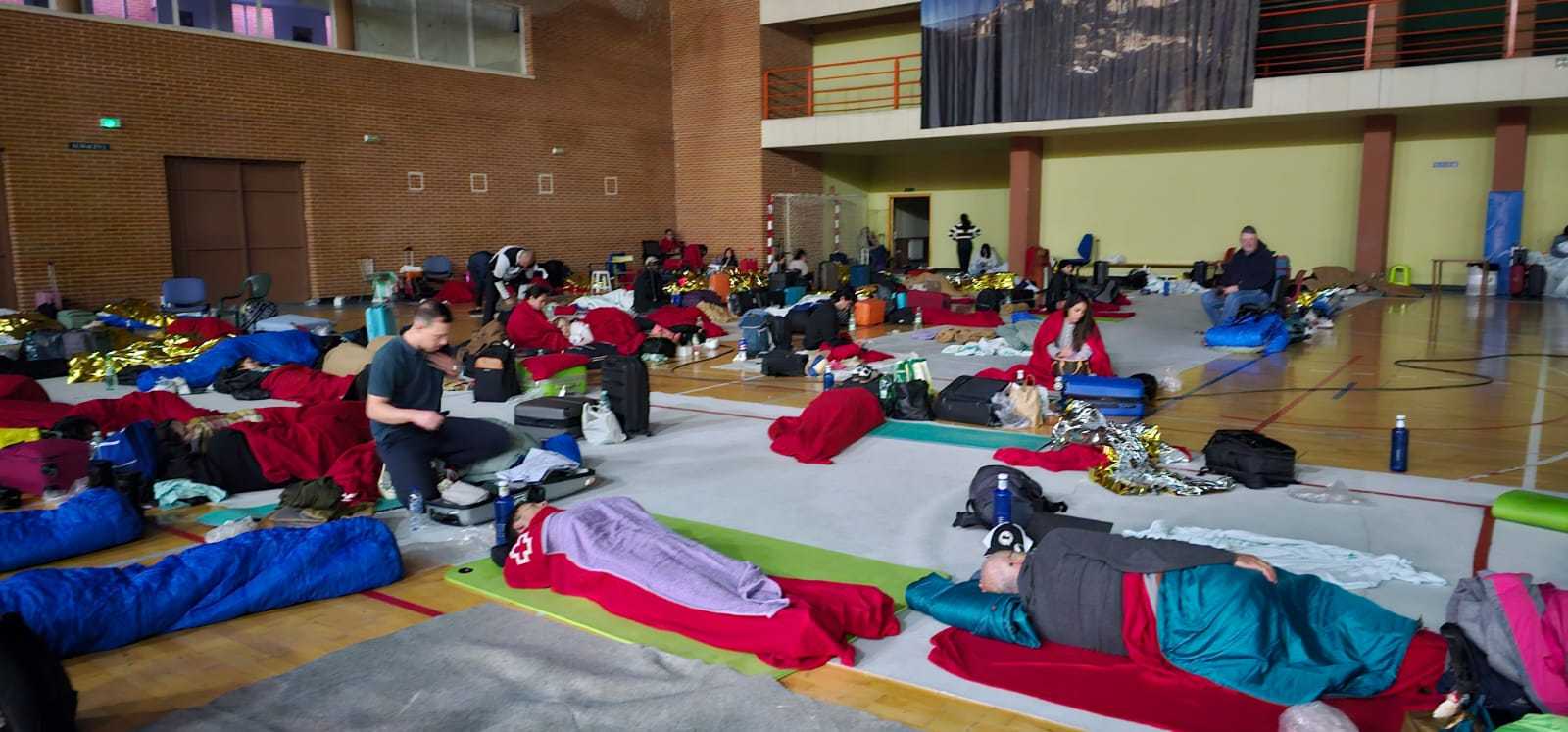
Suffering severe discomfort as a result of the loss of aircon, over 500 passengers were also allowed to leave the train briefly to get some fresh air before it was finally brought to a halt in Cuenca where passengers were shipped on 14 buses to a local sports centre to spend the night. “But at least we all got a camp bed, an emergency stove and a packet of hummus”, he mused.
In Torrevieja, the power outage disrupted daily operations for many establishments, particularly those reliant on electronic systems. Retailers, restaurants, and service providers faced interruptions in point-of-sale systems, refrigeration, and lighting, leading to temporary closures and financial losses.
This event highlighted the vulnerability of local infrastructure and underscored the importance of energy resilience. In response, the Torrevieja City Council has initiated plans to explore solar energy potential across municipal buildings and promote the formation of Local Energy Communities, aiming to enhance energy self-sufficiency and reduce future disruptions.
Orihuela Costa’s businesses found themselves in a similar situation with the area’s largest shopping centre, Zenia Boulevard closed completely by mid afternoon.
Panic buying of fuel at El Campo petrol station saw queues stretching back over 500 metres as residents rushed to fill their vehicles and stockpile fuel for generators
As the area already grappled with a series of challenges prior to the impacting the local economy, particularly in the tourism and hospitality sectors, shops and restaurants across the region were particularly affected.
In the regions of Vega Baja, Torrevieja, Orihuela Costa, and Pilar de la Horadada, power began to be restored by around 7:30 PM, although internet connectivity remained problematic for much of the evening. Despite these efforts, the crisis underscored the vulnerability of Europe’s interconnected power grid, particularly when faced with extreme weather conditions and high interdependence between national grids.
In summary, the blackout was one of the most severe power outages in recent European history, exposing vulnerabilities in the continent’s complex and interconnected energy infrastructure.
The primary cause was likely a combination of sudden power loss, temperature-induced instability in the grid, and the cascading effects of a failure in one of Europe’s most interconnected grids.
While investigations into other potential causes are still ongoing, the blackout revealed significant weaknesses in both infrastructure resilience and crisis management.
As Spain and Portugal worked to restore power, the event raised critical questions about the future of energy grid security in the face of climate change and technological challenges.