Torrevieja Town Hall has begun using biological pest-control treatments to protect trees in public spaces, as part of a more sustainable approach to the care of the municipality’s parks and gardens.
The initiative is being led by the Department of Parks and Gardens, which says the town is among the first in the area to introduce this type of treatment in a planned and progressive way for urban trees.
The first action has been carried out in Plaza de Oriente, focusing on the ficus trees in the square. Specialists are targeting the ficus psyllid, Macrohomotoma gladiata, a tiny invasive insect measuring between two and three millimetres.
This pest affects ficus trees and can weaken them, deform their leaves and create nuisance problems through the sticky honeydew produced by the insects.
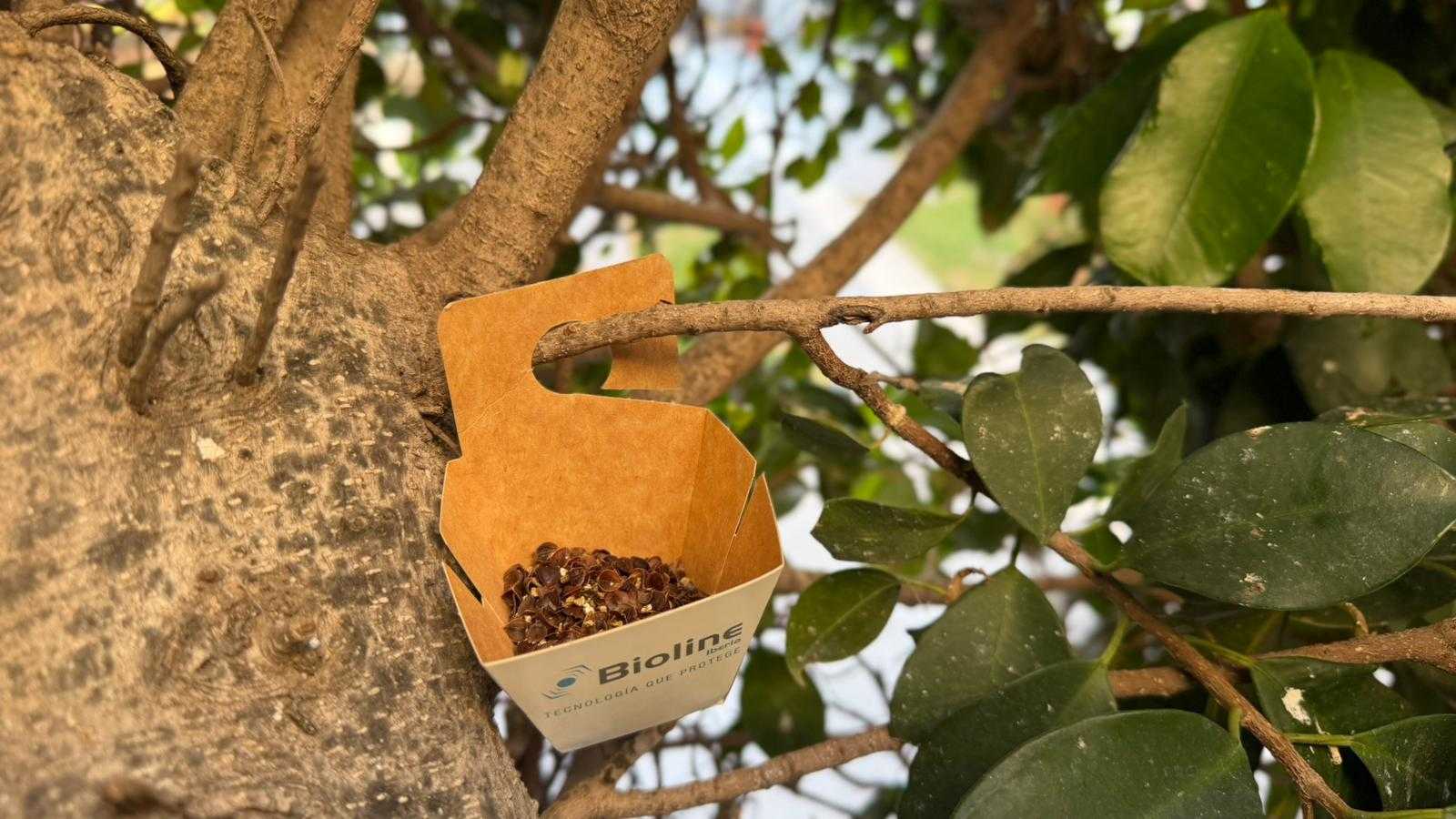
To control the outbreak, technicians have released natural predator insects, specifically Anthocoris nemoralis. This beneficial insect feeds on the ficus psyllid and helps reduce its population naturally.
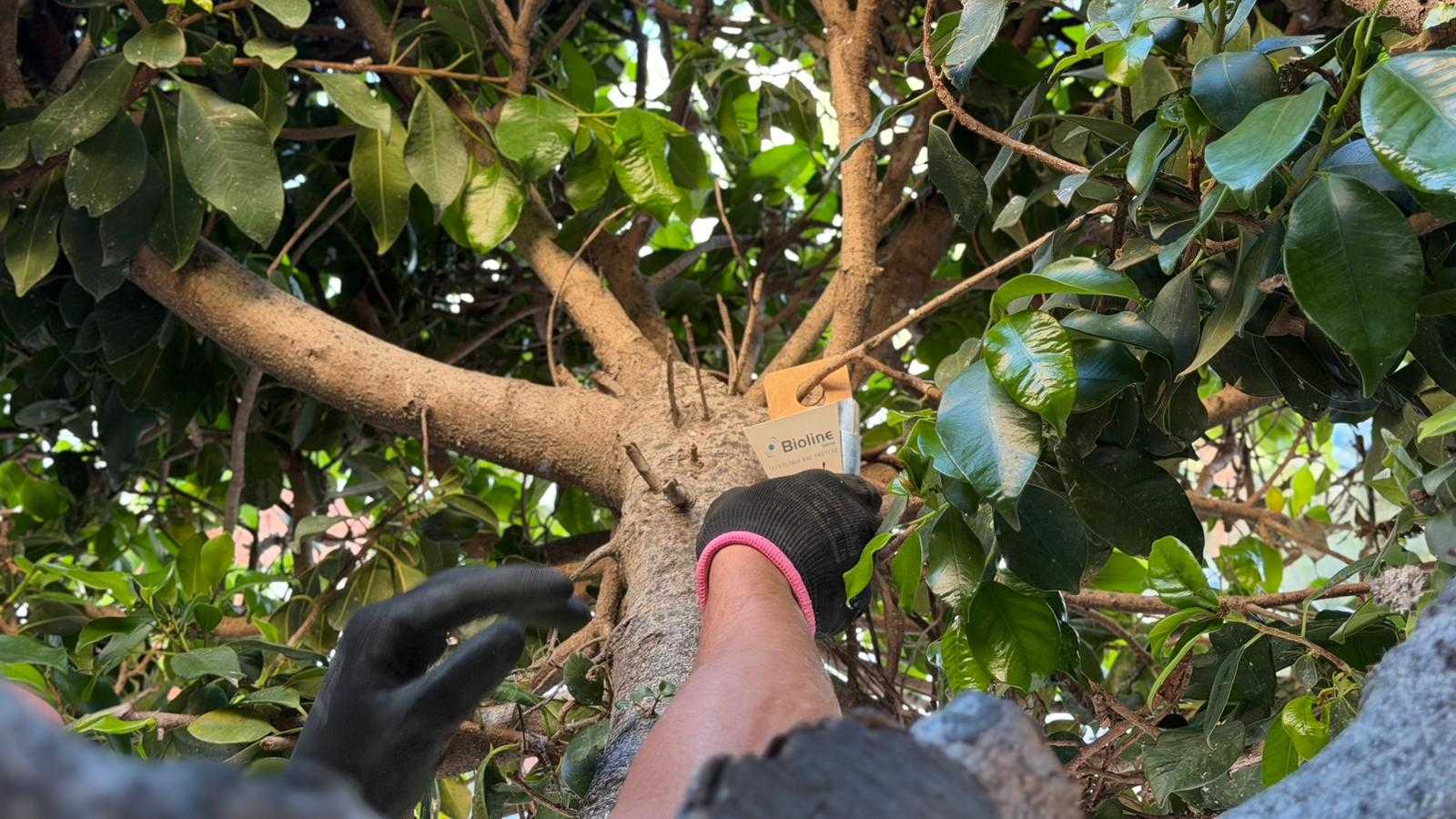
Biological pest control uses living organisms to prevent or control insects, mites and other problems that can damage urban trees. The method allows specialists to act effectively without relying on chemical products.
Parks and Gardens councillor Concha Sala said the approach offers major environmental advantages. She said it helps reduce the risk of soil, air and water pollution, while encouraging biodiversity and supporting the natural balance of the urban ecosystem.
The council also says these treatments improve the safety and environmental health of public spaces by avoiding the use of conventional chemical treatments. This reduces exposure for residents, pets and urban wildlife.
Torrevieja plans to continue using sustainable and environmentally friendly methods in different parts of the municipality as part of its long-term strategy for maintaining green areas and protecting the town’s urban tree population.