Torrevieja is to become the first municipality in the Valencian Community to implement the PAO Guide, a national programme focused on preventing addictions in leisure environments.
The initiative is financed by Spain’s National Plan on Drugs and is already being developed in municipalities in the Balearic Islands, Andalusia and Castilla y León.
Torrevieja Town Hall has now launched a participatory process aimed at designing prevention strategies based on scientific evidence and community involvement. The project is being promoted by the Department of Public Health and the town’s Community Prevention Unit for Addictive Behaviours, known as UPCCA.
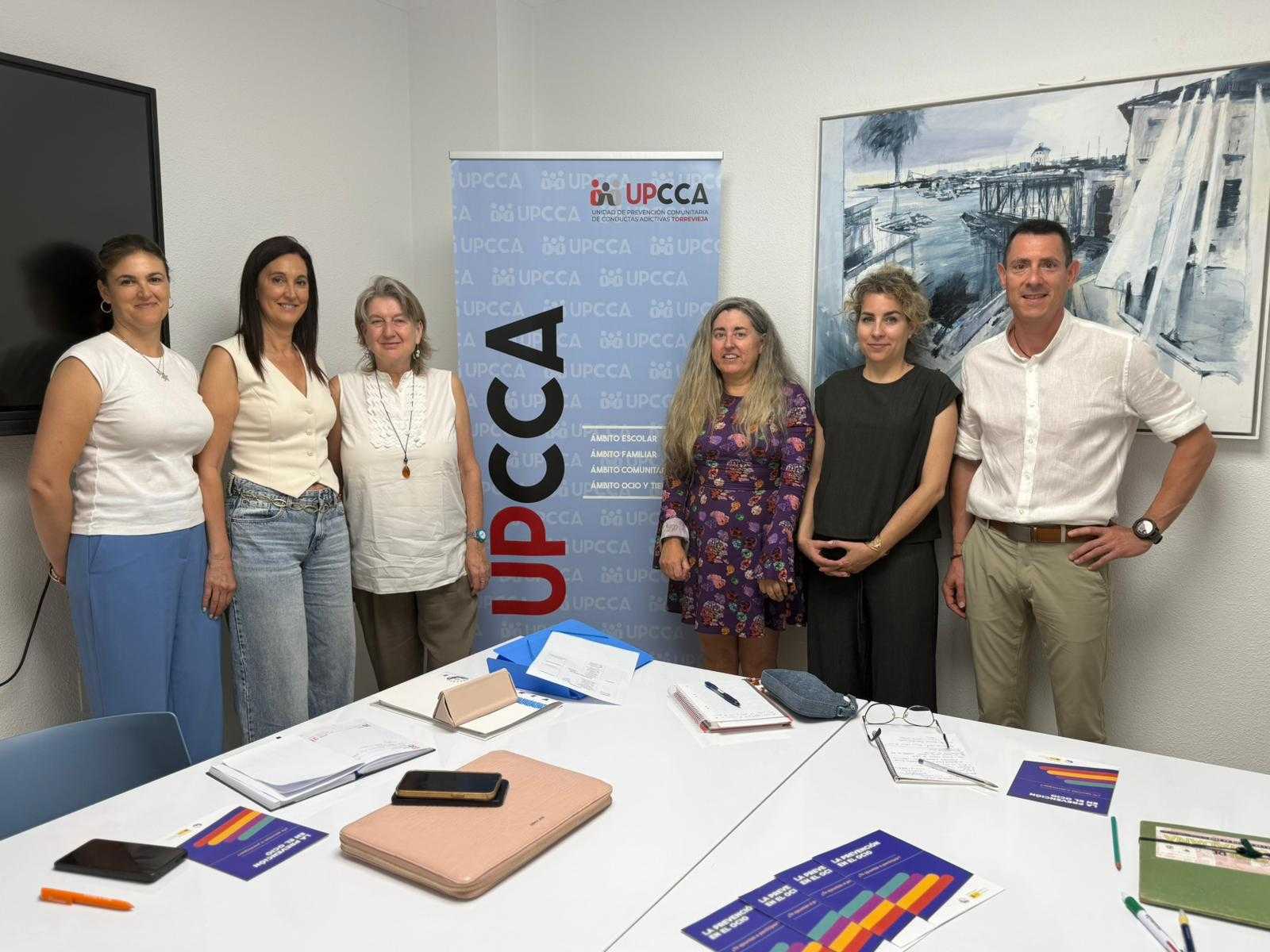
The agreement was reached after a meeting between Public Health councillor Rosa Cañón, UPCCA technicians and representatives of IREFREA, the European Institute of Studies on Prevention, a leading body in addiction research and prevention.
The PAO Guide promotes a community-based and participatory approach to prevention. Rather than focusing only on information campaigns, it seeks to identify risks in leisure settings and develop practical measures to create safer, healthier and more inclusive environments.
As part of the project, Torrevieja will involve associations, social organisations, youth groups, professionals, families and community representatives. Their input will help produce a shared diagnosis of local risks linked to leisure and addictive behaviours.
The process will also identify needs, risk factors and protective factors, allowing future strategies to be adapted to the reality of Torrevieja.
The council says the project will strengthen cooperation between public administrations, professionals and civil society, creating a stable prevention network for the coming years.
Officials say Torrevieja’s inclusion in the programme is recognition of the town’s work in health promotion and addiction prevention. It will also serve as a pilot experience for the possible future rollout of the model in other municipalities across the Valencian Community.
The Department of Public Health said the aim is to make leisure spaces safer through participation, education and shared responsibility.
The council added that addiction prevention must begin before problems appear, by listening to the community and building healthier local environments.